
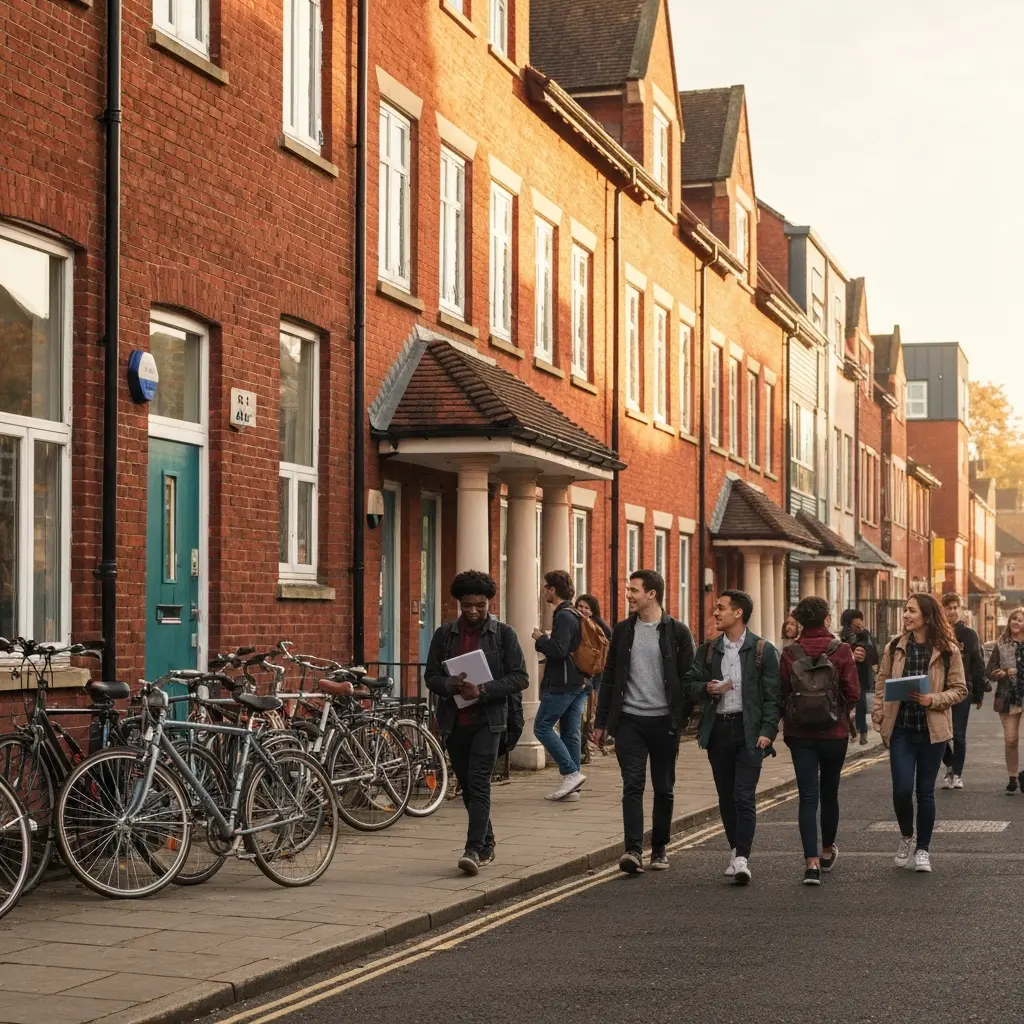
Student Accommodation UK: The Complete Guide for 2026
Finding the right student accommodation in the UK is the first real logistical challenge of university life — and in 2026, it is also one of the most expensive. Rents across UK university cities have risen significantly over the past three years, with London averaging £812/month for student rooms and even traditionally affordable cities like Sheffield and Nottingham now demanding £500+ for decent shared housing. Getting this decision right can save you thousands of pounds over an academic year and make the difference between a sustainable student budget and constant financial stress.
This guide covers everything from understanding the types of accommodation available and what they actually cost across different UK cities, to the application process, what to check before signing a contract, and evidence-based strategies for cutting costs without sacrificing safety or quality of life. Whether you are an incoming first-year, an international student navigating the UK system for the first time, or a postgraduate researching your housing options, this is the reference you need.
Types of Student Accommodation in the UK
University Halls of Residence
Halls are owned and managed by the university, typically located on or near campus, and almost always guaranteed to first-year students who apply by the stated deadline. Standard rooms (shared bathroom corridor) cost £120–£180/week. En-suite rooms add £20–£50/week on top. Catered options are available at some older universities, though they are becoming less common. Bills (gas, electricity, water, broadband) are included in nearly all hall contracts — a significant budgeting advantage over private renting.
The social environment in halls is hard to replicate. The majority of students find their core friendship groups in first year, and proximity in halls is a primary driver of that. For thesis-writing students in particular, being physically close to the library, supervisors, and study spaces in first year establishes working habits that pay dividends later.
Private Shared Houses
From second year onwards, most students move into privately rented shared houses. These are standard residential properties let to groups of 3–6 students by private landlords or letting agents. Costs range from £400/month per person in lower-cost cities to £700+ in Bristol, Edinburgh, or London. Unlike halls, bills are usually separate — budget an additional £80–£120/month for utilities, broadband, and council tax (students are exempt from council tax in the UK, but must apply for the exemption).
Shared houses offer significantly more independence than halls and are usually the cheapest per-person cost for students not in London, particularly in years 2–4 of undergraduate or the second year of a taught postgraduate course.
Purpose-Built Student Accommodation (PBSA)
PBSA developments are privately operated blocks specifically designed for students. They offer en-suite or studio rooms, on-site gyms, cinema rooms, communal kitchens, and 24-hour concierge services. The premium is substantial — typical PBSA costs £900–£1,400/month in city centres, all-inclusive. For international students who value a managed environment with all bills included and no need to deal with private landlords, PBSA can be a rational choice despite the price. For domestic students on a tight budget, it is generally too expensive.
Private Halls (Managed by Companies like Unite Students)
Somewhere between university halls and PBSA, private halls companies like Unite Students, Scape, and iQ offer managed accommodation at prices slightly below the PBSA premium. They typically offer guarantor-free contracts and shorter lease terms, which suits international students.
Homestay / Living with a Host Family
Less common but available at many UK universities, homestay places students in a local family home, usually with meals included. Costs vary (£600–£900/month all-in in many cities) and the experience suits students who prefer a quieter, more structured environment. Particularly popular with language learners for the English immersion benefit.
Costs by City in 2026
| City | Avg Monthly Rent (Shared House) | Avg Monthly Rent (PBSA) | Total Monthly Budget |
|---|---|---|---|
| London | £812 | £1,200–£1,600 | £1,300–£1,800 |
| Edinburgh | £650 | £950–£1,300 | £1,100–£1,500 |
| Bristol | £620 | £900–£1,200 | £1,000–£1,400 |
| Manchester | £580 | £850–£1,150 | £950–£1,300 |
| Leeds | £540 | £820–£1,100 | £900–£1,200 |
| Birmingham | £520 | £800–£1,050 | £880–£1,200 |
| Sheffield | £500 | £780–£1,000 | £860–£1,150 |
| West Midlands (avg) | £466 | £750–£950 | £820–£1,100 |
London can cost 40–60% more than most other UK university cities. Students at University College London, King’s College, or Imperial College should budget for London costs even if they are living in outer boroughs. Students at universities in the East or West Midlands benefit from the lowest average rents in the country.
Application Timeline and Process
Missing application deadlines is the single most common and most avoidable student accommodation mistake. The timeline below applies to the standard September intake:
- November–January: University accommodation portals open for the following year. Begin researching hall options even before you have a confirmed offer.
- January–March: Apply for university halls as soon as you receive a conditional or unconditional offer. Do not wait for A-level results.
- February–April: For private housing, form your house group and begin searching platforms like Rightmove, Zoopla, SpareRoom, and local letting agencies. The best private housing in popular student areas typically lets by March–April for September.
- May–July: Confirm university accommodation allocation or sign private tenancy agreement. Read the contract carefully (see below) before signing.
- August: Results day (mid-August for A-levels). If you are through Clearing, contact the accommodation office immediately — many universities hold a small number of rooms for Clearing students.
International students: Apply for halls on the same timeline and specify your international status on the application. Most UK universities guarantee halls to international first-years regardless of domestic guarantee policies.
What to Check Before Signing
A tenancy agreement is a legally binding contract. Before signing any private rental agreement, verify the following:
- Landlord registration: In Scotland, all private landlords must be registered on the Scottish Landlord Register. In England, landlords must be registered with the local authority’s selective licensing scheme if applicable.
- Deposit protection: Your deposit must be protected in a government-approved scheme (DPS, MyDeposits, or TDS) within 30 days of payment. Ask for written confirmation and the scheme reference number.
- Contract length: Most student contracts run 51 or 52 weeks (avoiding the legal definition of a full year). Check the break clause — many contracts have none, making them legally binding for the full term even if you withdraw from university.
- Bills included or excluded: Confirm which utilities are included. “All bills included” contracts are common in PBSA but rare in private houses.
- Council tax exemption: Full-time students are exempt. Ensure you apply for the exemption through your university student portal before your first council tax bill arrives.
- HMO licence: Properties rented to five or more unrelated people sharing facilities require an HMO (House in Multiple Occupation) licence. Ask to see this before signing.
Advice for International Students
International students face additional complexity: no UK credit history, no UK guarantor, and often no familiarity with UK tenancy law. Most university halls and PBSA providers accept international students without a UK guarantor — this is the primary reason many international students choose these options over private shared housing.
If you want to rent privately, guarantor services (Rent Guarantor, Housing Hand, Homeppl) will act as your UK guarantor for a fee, typically 3–5% of annual rent. This unlocks private rental options and is often cheaper overall than the PBSA premium.
Students from European countries can find detailed university guidance in other languages: the German-language guide to doctoral requirements on tesify.io covers postgraduate study structures that affect housing duration planning. The French-language doctorate guide on tesify.fr similarly addresses how degree timelines affect accommodation planning for European students.
For visa-holding students: your accommodation address must match your CAS (Confirmation of Acceptance for Studies) and any subsequent address changes must be reported to UKVI through your university’s student immigration team.
How to Save Money on Student Rent
Based on student cost-of-living data for 2026, here are the most effective strategies for reducing accommodation costs:
- Book early, not late. Early applicants get first choice of cheaper room types — standard rooms versus en-suite, or inner-city versus peripheral halls. The premium en-suite rooms fill first; the cheaper standard rooms remain available longer.
- Choose a standard room over en-suite. En-suite rooms cost £20–£50/week more than standard corridor-bathroom rooms. Over a 40-week contract, that is up to £2,000 extra per year for the convenience of a private bathroom.
- Move into shared private housing from second year. After first year, a four-person shared house typically costs significantly less per person than halls, particularly in lower-cost cities.
- Live slightly off the main student strip. Properties 10–15 minutes walk from campus rather than immediately adjacent often cost 10–20% less. The time cost is real but manageable.
- Compare contract lengths. Some PBSA and hall providers offer 44-week contracts as well as 51-week contracts. If you go home during summer, a shorter contract avoids paying rent on an empty room.
- Negotiate on private rentals. Private landlords, particularly in lower-demand periods (late summer), are sometimes willing to reduce rent slightly or include a month’s free period at contract start. It costs nothing to ask.
For information on student grants and funding that affect how much you can afford to spend on accommodation, the UK scholarship and funding guide on tesify.app covers maintenance loan rates, hardship funds, and bursary options that directly affect your housing budget. The authenova.site guide on content strategy is useful for students who run academic blogs or side projects to supplement their income during study.
Managing Your Thesis Around Housing Stress
Accommodation stress is one of the most commonly cited factors in thesis submission delays. Students who move into unsuitable housing — noisy shared houses, poor broadband, no dedicated study space — lose hundreds of productive hours over an academic year. When evaluating accommodation, treat the writing environment as seriously as the rent figure.
Specifically: check broadband speeds before signing (many student landlords still offer sub-50Mbps connections, which makes cloud-based thesis tools and video calls with supervisors unreliable), verify that communal study or quiet spaces are available if your room is not suitable for concentrated writing, and consider library access hours when choosing how far to live from campus.
For German students studying in the UK or planning joint degrees, the comprehensive Masterarbeit guide on tesify.io discusses how the German thesis writing process adapts to UK academic norms — relevant context for joint-degree or visiting students navigating both systems simultaneously. Students writing their thesis in a second language may also benefit from the AI thesis writing guide on tesify.app, which covers tools that reduce the time pressure that makes housing stress worse.
FAQ
How much does student accommodation cost in the UK in 2026?
University halls typically cost £120–£250/week (£520–£1,080/month) with bills included. Private shared houses average £400–£700/month per person outside London and £600–£1,000/month in London with bills extra. Purpose-built student accommodation (PBSA) ranges from £900–£1,400/month in city centres. The average total monthly student budget in the UK in 2026 is £900–£1,200 outside London and £1,300–£1,800 in London.
When should I apply for student accommodation in the UK?
Apply for university halls as soon as you receive your offer, typically between January and March for a September start. For private accommodation, begin searching in February or March. The best private student houses in popular areas let by March–April, well before A-level results in August.
Is university accommodation guaranteed for first-year UK students?
Most UK universities guarantee accommodation to first-year students who apply by the stated deadline. International students are almost always included in this guarantee. The guarantee typically covers the first year only and requires you to have applied on time — late applications are not covered.
What is PBSA and is it worth it?
PBSA (Purpose-Built Student Accommodation) is privately managed student housing with en-suite rooms, amenities like gyms and study rooms, and all-inclusive bills. It typically costs £900–£1,400/month. It is worth considering for international students who lack a UK guarantor, students who value a managed all-inclusive environment, and those in cities where the PBSA premium over private housing is relatively small. For budget-conscious domestic students, shared private houses are usually cheaper.
Do students pay council tax in the UK?
Full-time students in the UK are exempt from council tax. You must apply for the exemption through your university’s student portal, which issues a Council Tax Exemption Certificate. If you live in a mixed household (some students, some non-students), the non-students will pay a reduced rate. University halls automatically include the exemption; private renters must apply themselves.
Write your thesis with AI
Structure, draft, cite, and format your thesis faster with Tesify’s AI writing tools, automatic bibliography, and plagiarism checker. Free to start, no credit card required.






Leave a Reply