

If you last studied more than a decade ago, the hard part of coming back is rarely the subject. It is that the machinery around studying has changed completely — submission is online and timestamped, sources are expected to be findable, and there are now rules about AI that did not exist when you left.
None of that is difficult once you know it exists. The problem is that nobody explains it, because it is assumed knowledge for everyone who was in education five years ago. Here is what actually changed, and what to do about assignment one.
What has changed since you last studied
| Then | Now | What it means for you |
|---|---|---|
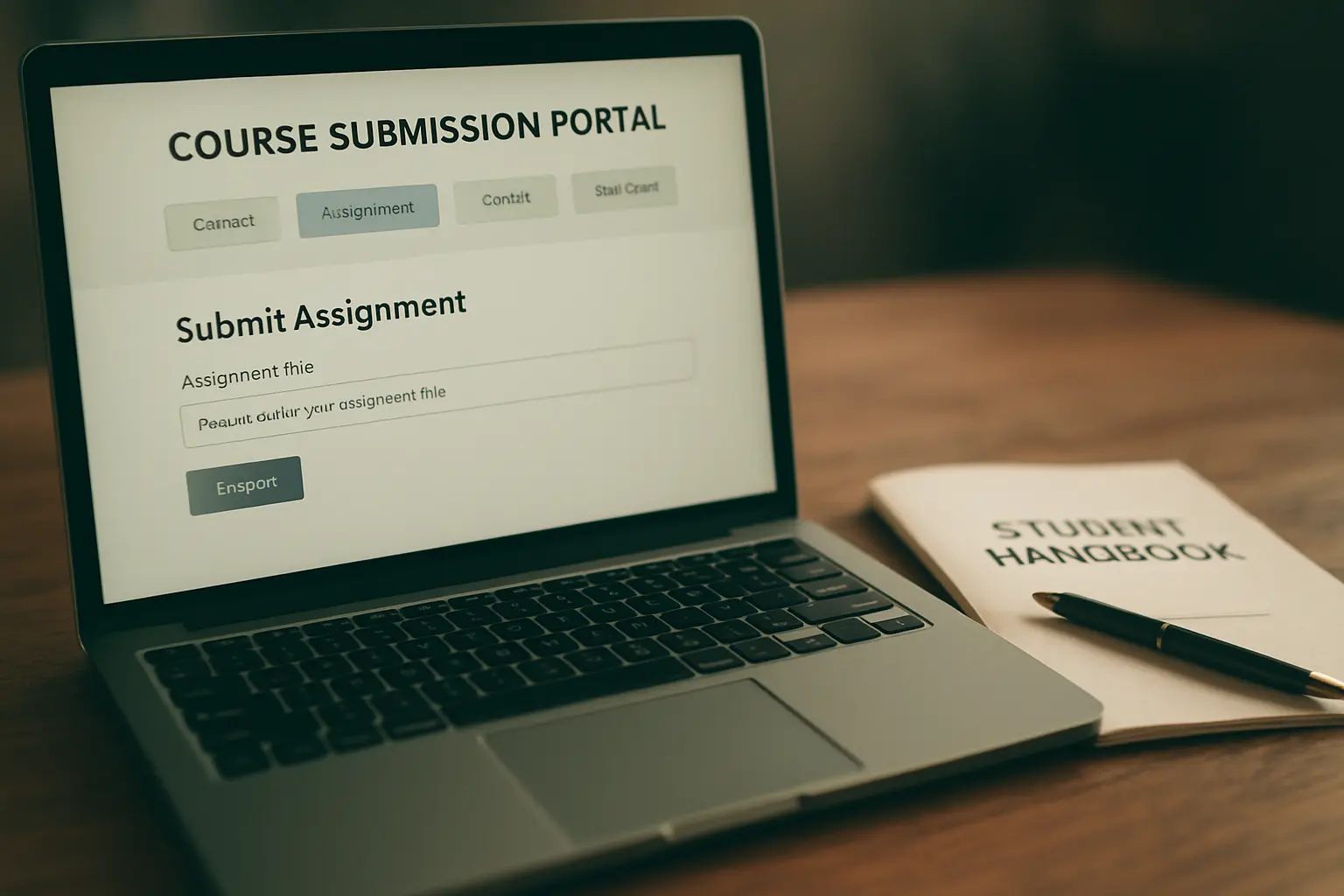
| Hand it in at the office | Upload to a portal, timestamped to the minute | A late upload is late; test the portal days early, not at 23:50 |
| Reading list of books | Reading list of links, behind a library login | Get your library access working in week one |
| Bibliography typed at the end | Reference managers and generators | Build references as you read; retyping at the end is where errors creep in |
| Plagiarism checked by eye | Similarity software as standard | Quote and cite precisely; paraphrase properly rather than lightly reword |
| AI did not exist | Formal AI-use policies and declarations | Read your policy in week one; most now require a declaration |
The last row is the one returners most often get wrong, in both directions. Some assume AI is banned outright and avoid tools they are permitted to use; others assume it is unremarkable and use it in ways their policy prohibits. Read the actual policy — our guide to writing an AI-use declaration covers what a declaration normally has to say.
The thing that surprises returners most

Not the technology. It is that being right is not enough.
If you have worked in a field for fifteen years, you know things. But an assignment does not credit you for knowing them — it credits you for showing where the knowledge comes from and how you reasoned to a conclusion. An answer that is entirely correct, drawn from experience, and cites nothing will score poorly.
This feels absurd at first and it is not arbitrary. The marker cannot distinguish informed judgement from confident guessing unless you show the working. Treat citation as evidence for a claim rather than as a formality, and the requirement stops feeling like bureaucracy.
The practical version: when you write a sentence you know to be true, ask where a reader could check it. If the answer is “because I have done this job”, find a source that supports it — and if no source does, that is genuinely interesting and worth saying explicitly.
Assignment one: what to do in the first fortnight
- Find the assessment criteria and read them before you read anything else. Most courses assess against stated criteria rather than marking out of 100, which changes how you should draft — see criterion-referenced versus norm-referenced assessment.
- Confirm the level of your module and what it demands. Level 4 asks you to apply a method; Level 6 asks you to evaluate it. Our guide to RQF and FHEQ levels sets out the difference.
- Test the submission portal with a dummy file. Format restrictions and file size limits are discovered at the worst possible moment otherwise.
- Get library access working, including off-campus. This takes ten minutes in week one and half a day in week nine.
- Find the referencing style your department uses and stick to one. Our Harvard referencing guide covers the most common one.
- Write something badly, early. A rough 500 words in week two is worth more than a perfect plan, because it surfaces what you do not yet understand while there is still time.
Use the support — it is not remedial

Almost every provider has study skills support, an academic librarian, and tutors with office hours. Returners systematically under-use all three, usually because asking feels like admitting they should not be there.
It is worth reframing: these services exist because writing to academic conventions is a learned skill rather than a measure of intelligence, and the eighteen-year-olds around you were taught those conventions eighteen months ago. You are not behind on ability. You are behind on a specific, teachable set of conventions, and the fastest way to close that is to ask someone whose job it is.
Book a session before your first assignment rather than after a disappointing mark. Bring the assignment brief and ask what a strong answer would look like.
If English is not your first language, or you have a specific difficulty
Say so early. Providers have processes for learning support and reasonable adjustments, and these generally need to be arranged before an assessment rather than applied retrospectively. A diagnosis you received twenty years ago at school may still be relevant; so may one you have never formally had.
What Tesify does not do
It will not produce something you can submit as it is, and it cannot make work undetectable — nor should you want that. The reason detection matters is that the assessment is trying to establish whether the understanding is yours, and on a course you are paying for and returning to on purpose, submitting work you cannot explain defeats the point of being there.
It also cannot supply the thing you actually have that younger students do not: fifteen years of context. That is your advantage, and it only counts if you write it up yourself.
What it can do is remove the parts that have changed since you last studied — an outline mapped to your assessment criteria, references formatted consistently in your department’s style, and an AI-use declaration ready to submit. You get a starting draft to rewrite in your own words, with your own evidence.
Frequently asked questions
Am I too old to go back to studying?
No, and the cohort is less unusual than it looks. On the Access to HE route into higher education, a majority of students are over 25 on both published measures — it is a route built specifically for adults returning to education.
What has changed most since I last studied?
Submission is online and timestamped, reading lists are digital and behind logins, similarity software is standard, and there are now formal policies on AI use that usually require a declaration.
Why am I losing marks when my answer is correct?
Because assignments credit evidenced reasoning rather than correct conclusions. Knowledge from professional experience still needs a source behind it, or the marker cannot distinguish informed judgement from assertion.
Do I have to use a reference manager?
Not usually required, but building references as you read rather than retyping them at the end prevents most citation errors. Whatever you use, apply one style consistently.
Is study skills support only for struggling students?
No. Academic writing conventions are a learned skill, and study support exists to teach them. Booking a session before your first assignment is more useful than booking one after a poor mark.
Can I use AI as a returning student?
It depends entirely on your provider’s policy, which you should read in week one. Most now permit some uses and require a declaration of what you used and how.
What should I do first?
Read the assessment criteria, confirm the level of your module, test the submission portal with a dummy file and get library access working. All four take under an hour and all four cause problems if left.
Write your thesis with AI
Structure, draft, cite, and format your thesis faster with Tesify’s AI writing tools, automatic bibliography, and plagiarism checker. Free to start, no credit card required.




Leave a Reply