
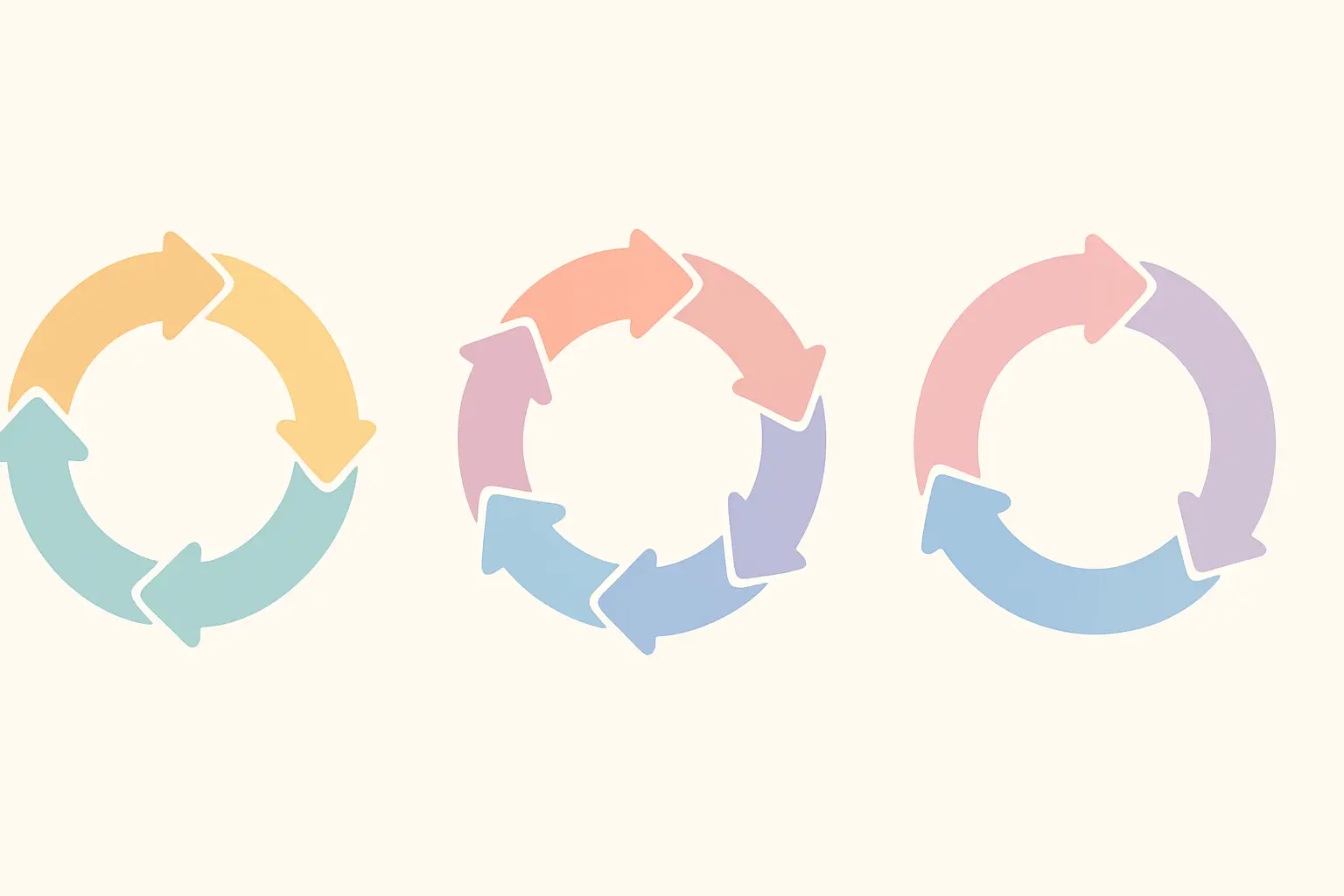
Reflective Practice Models Compared 2026: Gibbs, Kolb, Schön, Rolfe and Driscoll
Reflective models give assessed reflection a structure. The main choice is between cyclical models such as Kolb and Gibbs, question-based frameworks such as Driscoll and Rolfe, and conceptual distinctions such as Schön’s reflection-in-action. Your programme usually specifies which to use.
What follows is a reference list of the models most commonly set on UK professional and academic programmes, with what each is good for and where each falls short.
1. Kolb’s experiential learning cycle
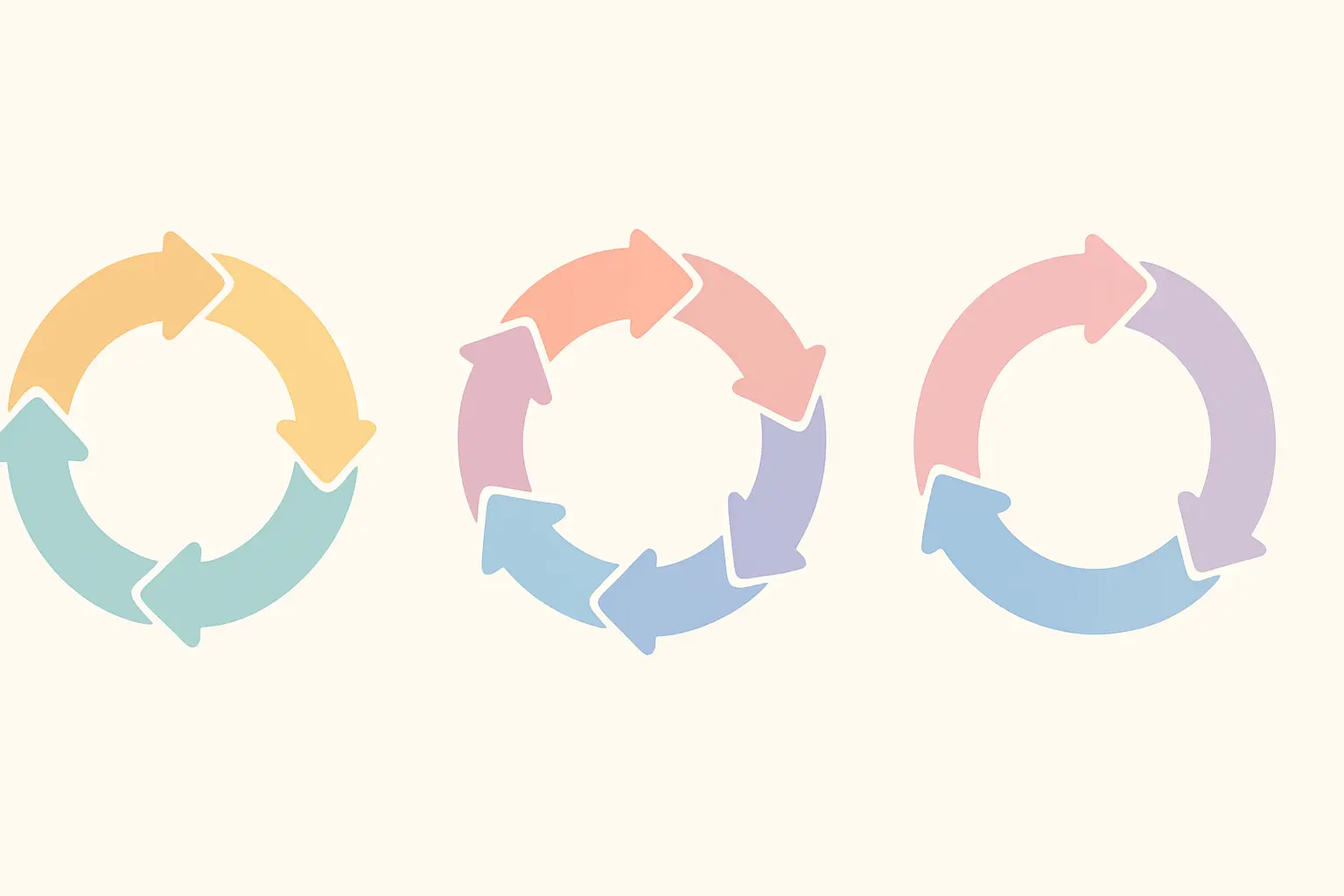
Four stages: concrete experience, reflective observation, abstract conceptualisation, active experimentation.
Kolb’s model is the theoretical ancestor of most of the others. Its distinctive contribution is the third stage — abstract conceptualisation — which insists that reflection must produce a generalisable principle rather than a conclusion about one incident.
Best for: skill development, technical learning, anything where you are trying to extract a transferable rule.
Weakness: no explicit place for emotion, which makes it a poor fit for reflection on difficult interpersonal or clinical events.
2. Gibbs’ reflective cycle
Six stages: description, feelings, evaluation, analysis, conclusion, action plan.
Gibbs built on Kolb by adding explicit stages for feelings and for an action plan. It is the most widely taught reflective model in UK higher education and the safest default when your handbook does not specify one.
Best for: first-time reflective writers, incidents with an emotional dimension, and any assessment where the marker wants to see structure clearly.
Weakness: its own popularity. Because the six headings are so easy to follow, students frequently write to the headings without analysing — producing a well-organised description that scores poorly.
If you use Gibbs, put your weight on analysis. Description and feelings should together take up less space than analysis and conclusion.
3. Schön: reflection-in-action and reflection-on-action
Not a cycle: a distinction between thinking while you act and thinking afterwards.
Schön’s contribution was conceptual rather than procedural. Reflection-in-action is the real-time adjustment a skilled practitioner makes mid-task; reflection-on-action is the retrospective analysis afterwards. He also introduced the idea of professional artistry — the tacit knowledge experienced practitioners cannot fully articulate.
Best for: framing your discussion, and for programmes in education, healthcare and social work where the vocabulary is expected.
Weakness: it gives you no structure to write to. Use it alongside a cyclical model rather than instead of one.
4. Driscoll’s What? So what? Now what?
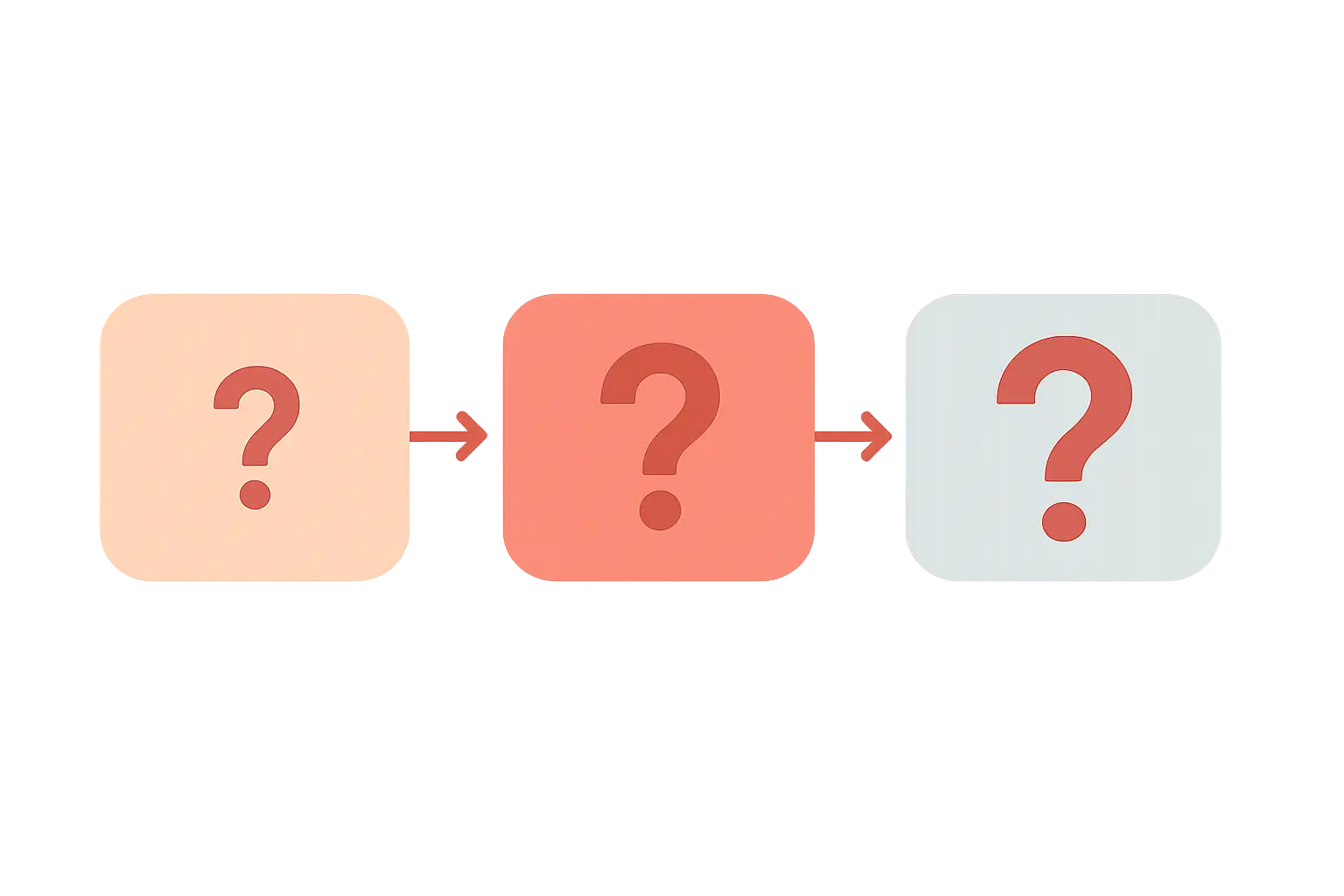
Three questions: What happened? So what does it mean? Now what will I do?
Driscoll adapted a three-question structure originally set out by Borton into a model for clinical supervision and nursing practice. Its strength is economy: it strips reflection to the minimum that still works.
Best for: short reflective entries, portfolio logs, and situations where you need many reflections rather than one long one.
Weakness: the compression that makes it usable also makes it easy to answer superficially. Nothing in the structure forces you to engage with theory.
5. Rolfe, Freshwater and Jasper’s framework
Same three questions, expanded: each of What, So what and Now what is broken into a series of prompting sub-questions.
Rolfe and colleagues took the three-question structure and gave it depth, adding cue questions under each heading that push towards critical analysis rather than description.
Best for: deeper written reflection where you want the economy of three questions but need more prompting than Driscoll offers.
Weakness: answering every sub-question mechanically produces bloated, repetitive writing. Select the prompts that matter.
6. Johns’ model of structured reflection
Guided reflection using a set of cue questions, drawing on Carper’s ways of knowing — empirical, personal, ethical and aesthetic knowledge.
Johns’ model is the most demanding on this list and the most explicitly ethical. It asks not only what happened and what you learned, but what ethical knowledge informed your action and how your personal responses shaped it.
Best for: nursing and healthcare reflection, incidents with an ethical dimension, and postgraduate-level reflective work.
Weakness: too heavy for routine entries, and the ways-of-knowing vocabulary needs explaining if your marker is outside healthcare.
7. Brookfield’s four lenses
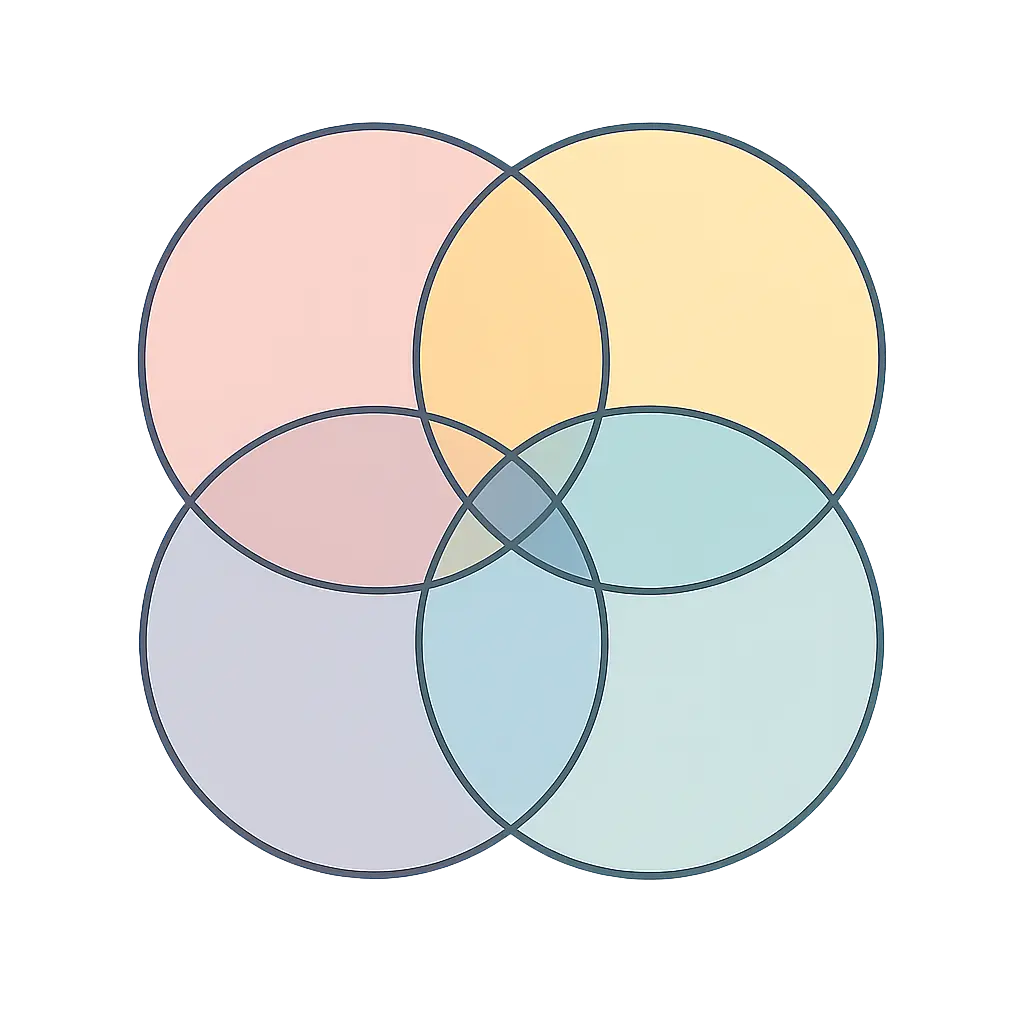
Four viewpoints: your own autobiography as a learner and practitioner, your students’ or clients’ eyes, your colleagues’ perceptions, and the theoretical literature.
Brookfield’s framework is not a cycle but a set of perspectives, designed for teaching practice. Its value is that it forces you outside your own account of events, which is exactly where uncritical reflection fails.
Best for: teaching, training and education portfolios; anywhere you can gather feedback from others.
Weakness: requires access to other people’s perspectives, which you may not have for a one-off incident.
Comparison table
| Model | Shape | Stages | Handles emotion | Best suited to |
|---|---|---|---|---|
| Kolb | Cycle | 4 | No | Skill and technical learning |
| Gibbs | Cycle | 6 | Yes | General default; first-time reflectors |
| Schön | Distinction | — | Indirectly | Framing and vocabulary |
| Driscoll | Questions | 3 | Lightly | Short portfolio entries |
| Rolfe et al. | Questions | 3 plus prompts | Yes | Deeper written reflection |
| Johns | Guided cues | Multiple | Yes | Healthcare; ethical incidents |
| Brookfield | Perspectives | 4 lenses | Indirectly | Teaching practice |
How to choose
- Check your handbook first. If a model is specified, use it. Markers assess against the model they taught, and substituting another loses marks even when your reflection is good.
- Match the model to the incident. Emotional or interpersonal events need a model with a feelings stage. Technical learning suits Kolb.
- Match the model to the length. Driscoll for a 300-word log entry; Gibbs or Johns for a 1,500-word critical incident analysis.
- Use one model consistently. Mixing frameworks within a single piece reads as uncertainty. If you want Schön’s vocabulary, layer it onto a cyclical model rather than alternating.
- Name it explicitly. State which model you are using and cite it. Unnamed reflection is the most common reason reflective writing is marked down.
What markers actually reward
Across every model, the same distinction separates strong reflection from weak. Weak reflection describes what happened and asserts that something was learned. Strong reflection analyses why it happened, connects it to theory or professional standards, and states specifically what will change.
Three habits that consistently raise marks:
- Choose incidents that went wrong. A successful episode gives you nothing to analyse. Markers reward candid analysis of difficulty far above polished accounts of success.
- Cite literature inside the reflection. Reflective writing is still academic writing. Connecting your experience to published work is what moves it from diary to analysis.
- Make the action plan specific and testable. “I will communicate better” is worthless. “I will confirm understanding by asking the patient to restate the plan before I leave” can actually be done and checked.
These models are applied in assessed work across a range of deliverables — the placement year report, the apprenticeship end-point assessment project, and reflective portfolios on professional programmes. Our catalogue of final-year deliverables sets out where each appears.
Reflective practice is not the same as reflexivity
These terms are often confused, and using the wrong one signals to a marker that you have not grasped the distinction.
Reflective practice, the subject of this article, is about learning from professional experience to improve future practice. Reflexivity, in research, is about examining how your own position, assumptions and presence shape the research you produce. The first belongs in a portfolio; the second belongs in a methodology chapter. Our guide to reflexivity in qualitative research covers the research-methods sense, and the closely related positionality statement is where it is usually written down.
Frequently asked questions
Which reflective model should I use?
Use the one your programme specifies. If none is specified, Gibbs’ reflective cycle is the safest default for most UK assessed reflection because it is widely taught, includes a feelings stage and produces an action plan. Match the model’s depth to the length of the piece.
What is the difference between Gibbs and Kolb?
Kolb’s four-stage cycle is the older, more abstract model and centres on drawing a generalisable principle from experience. Gibbs expanded it to six stages, adding explicit steps for feelings and for an action plan, which makes it more practical for assessed writing about real incidents.
Is Driscoll the same as Rolfe?
They share the same three questions — What, So what, Now what — originally set out by Borton. Driscoll’s version is the compact form used widely in nursing; Rolfe, Freshwater and Jasper expanded each question with cue prompts to push reflection towards deeper critical analysis.
Can I use more than one reflective model?
Not within a single piece, as a rule. Alternating structures reads as uncertainty and makes the piece hard to follow. What works is layering Schön’s reflection-in-action and reflection-on-action vocabulary onto a cyclical model, since Schön supplies concepts rather than a competing structure.
Do I need to cite the reflective model I use?
Yes. Reflective writing is academic writing, and the model is a source like any other. Naming and citing it also signals to the marker that your structure is deliberate rather than accidental — one of the easiest marks available in reflective assessment.
What is the difference between reflection and reflexivity?
Reflection looks back at experience to improve future practice, and belongs in professional portfolios and placement reports. Reflexivity examines how your own assumptions and position shape the research you produce, and belongs in a methodology chapter. They are related but not interchangeable.
Writing assessed reflection? Tesify helps you structure it — a section outline mapped to your chosen model and learning outcomes, a formatted bibliography for the sources you cite, and an AI-use declaration for submission.
Write your thesis with AI
Structure, draft, cite, and format your thesis faster with Tesify’s AI writing tools, automatic bibliography, and plagiarism checker. Free to start, no credit card required.






Leave a Reply