

Quit Smoking While Writing Your Thesis (2026 Guide): Managing Deadline Stress Without Cigarettes
If you reach for a cigarette every time a chapter stalls, you are not alone, and you are not weak. Trying to quit smoking while writing your thesis means removing your favourite coping tool at the exact moment you feel you need it most. This guide explains why deadline stress and heavy cognitive load drive cravings, how to place a quit date around the academic calendar, which routines can replace the cigarette break during long writing sessions, and where to find free, proven help.
It is written for graduate students who smoke more as submission approaches. It does not promise that quitting will be easy or that your word count will stay untouched in week one. It does show that the two projects, finishing a thesis and stopping smoking, can be planned together instead of one sabotaging the other.
Pick a quit date in a lighter stretch of your thesis calendar rather than the final deadline fortnight, tell your supervisor or a friend, and prepare replacement routines before day one. Combine support with medicine where suitable: the Cochrane review of nicotine replacement therapy (133 studies, 64,640 participants) found it raised the chance of quitting by about 55% compared with controls. Expect concentration to dip for a short while, then recover.
Why it is hard to quit smoking while writing your thesis
A thesis combines the conditions that make cravings loudest: long unstructured hours, high stakes, isolation and constant low-level worry. Add caffeine, late nights and screen fatigue, and the cigarette becomes a built-in ritual. Every smoke break marks the end of a paragraph, a reward for a page, or an escape from a bad one. After months of that pairing, the desk itself becomes a trigger.
Many smokers believe cigarettes calm them down. The evidence points the other way. A systematic review and meta-analysis in the BMJ pooled 26 longitudinal studies and found that people who quit had lower stress scores than those who carried on smoking, with a standardised mean difference of -0.27 for stress. The authors also reported lower anxiety and depression scores among quitters. The studies were observational, so this shows an association rather than proof of cause, but it undercuts the idea that smoking is a reliable stress-management tool. You can read the abstract on PubMed: change in mental health after smoking cessation.
A common explanation is that the relief a cigarette brings is largely the end of the withdrawal discomfort the previous cigarette created. Stress then feels worse between cigarettes, which keeps the cycle running. Seeing the pattern is useful, because it turns each craving into something you can plan for rather than a verdict on your coping skills.
If thesis pressure is already wearing you down, it helps to read about the wider picture. Our summary of PhD student mental health statistics sets out how common distress is among doctoral candidates, and our guide to beating thesis burnout in the final stretch covers workload and support decisions that apply whether or not you smoke.
Nicotine, concentration and the withdrawal dip
Smokers often report that a cigarette sharpens their focus. The more cautious reading is that part of that sharpness is relief from withdrawal: a smoker who has gone a couple of hours without nicotine may be below their normal baseline, and the next cigarette brings them back to it. That is not the same as nicotine making you a better thinker than a non-smoker.
What you should plan for is a temporary dip. People commonly report restlessness, irritability, poor sleep, stronger appetite and difficulty concentrating in the first days and weeks after stopping. These symptoms are strongest early and ease with time, which is why CDC quit-smoking guidance includes advice on identifying and handling withdrawal symptoms. Exact timing varies from person to person, so treat any day-by-day schedule as a rough guide rather than a promise.
For a thesis writer this has a practical consequence. The first one to two weeks are a poor time to attempt your hardest analytical writing if you can avoid it. Schedule lighter tasks such as formatting, reference checking, tidying figures and reading, and keep a smaller daily word target. The goal in that window is to protect the quit attempt, not to produce your best prose.
| Withdrawal experience | What it can feel like at the desk | Writing adjustment |
|---|---|---|
| Trouble concentrating | Rereading the same sentence, losing the thread of an argument | Shorter sessions, outlines before drafting, editing instead of generating |
| Irritability and restlessness | Snapping at feedback, unable to sit still | Delay difficult supervisor emails, add movement breaks |
| Disturbed sleep | Slow mornings, mid-afternoon crash | Do demanding work after your best-rested hours, protect bedtime |
| Cravings | A pull toward the old break routine | Planned replacement break, delay the urge, then decide |
If a writing block arrives on top of a craving, our guide to overcoming thesis writer’s block has techniques for starting a paragraph when your mind feels foggy.
How to time a quit attempt around the academic calendar
There is no perfect week to quit smoking while writing your thesis. Waiting for a stress-free stretch can mean waiting until after the viva. Still, some windows are clearly better than others, and choosing one deliberately beats quitting on impulse at 2 a.m. in the middle of a deadline panic.
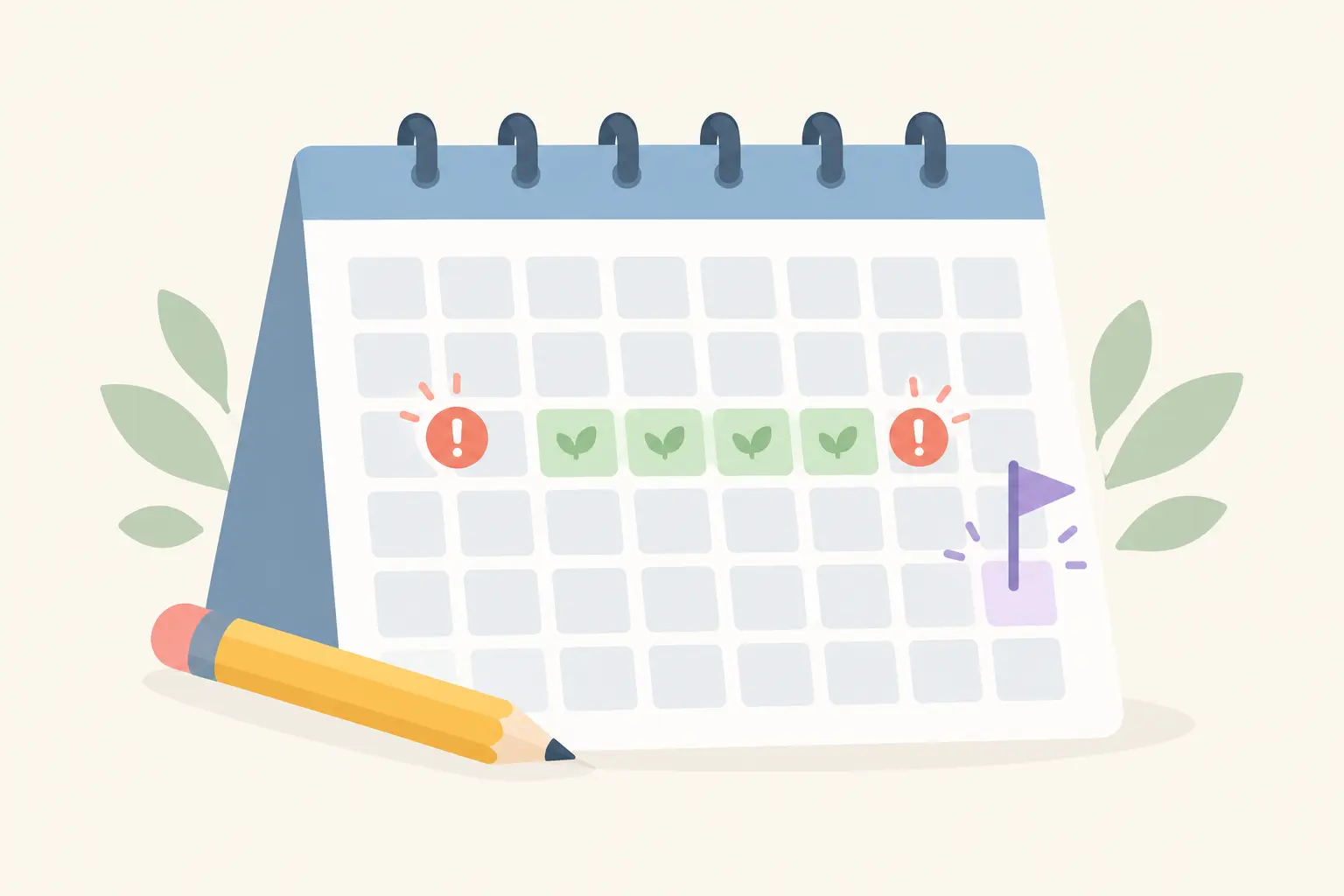
- Look at your calendar backwards from submission. Mark the submission date, the supervisor meetings, any progress reviews and the viva or defence. The final two or three weeks before a hard deadline are usually the worst time to start.
- Look for a lighter stretch. Good candidates include the days right after you hand in a draft chapter, the gap while you wait for feedback, the start of a new semester or a university break when you are not teaching or marking.
- Choose a date and commit to a 28-day target. The NHS states that reaching 28 days smoke-free makes you five times more likely to quit for good, and it runs an annual October campaign built around that goal. See the NHS Better Health quit smoking page for its free tools, personal quit plan and app.
- Prepare two weeks ahead. Book your pharmacist or GP appointment, buy any products, remove ashtrays and lighters, and decide what replaces each cigarette break.
- Tell your people. A supervisor does not need details, but a short note such as “I’m stopping smoking and may be a bit short-tempered for a fortnight” can prevent misreadings. A friend or writing partner who checks in daily is even better.
- Lower the writing load in advance. If you can, bank a few extra pages beforehand so the first fortnight does not require peak output.
If your deadline is imminent and you smoke heavily, do not treat this as a reason to postpone forever. A reasonable middle path is to start preparing now (book support, track your cigarettes, practise the replacement routines) and set the quit date for the first lighter window after submission.
For the bigger planning picture, the phase-by-phase timeline in our complete guide to writing a thesis helps you spot which weeks demand the most from you.
Replacement routines for long writing sessions
If you want to quit smoking while writing your thesis, start by listing the slots cigarettes fill in your day: the first break, the post-meal break, the stuck-paragraph break and the end-of-day wind-down. A quit plan works best when each slot has a named replacement. Willpower alone is a poor strategy over a four-hour session.
Keep the break, change the content
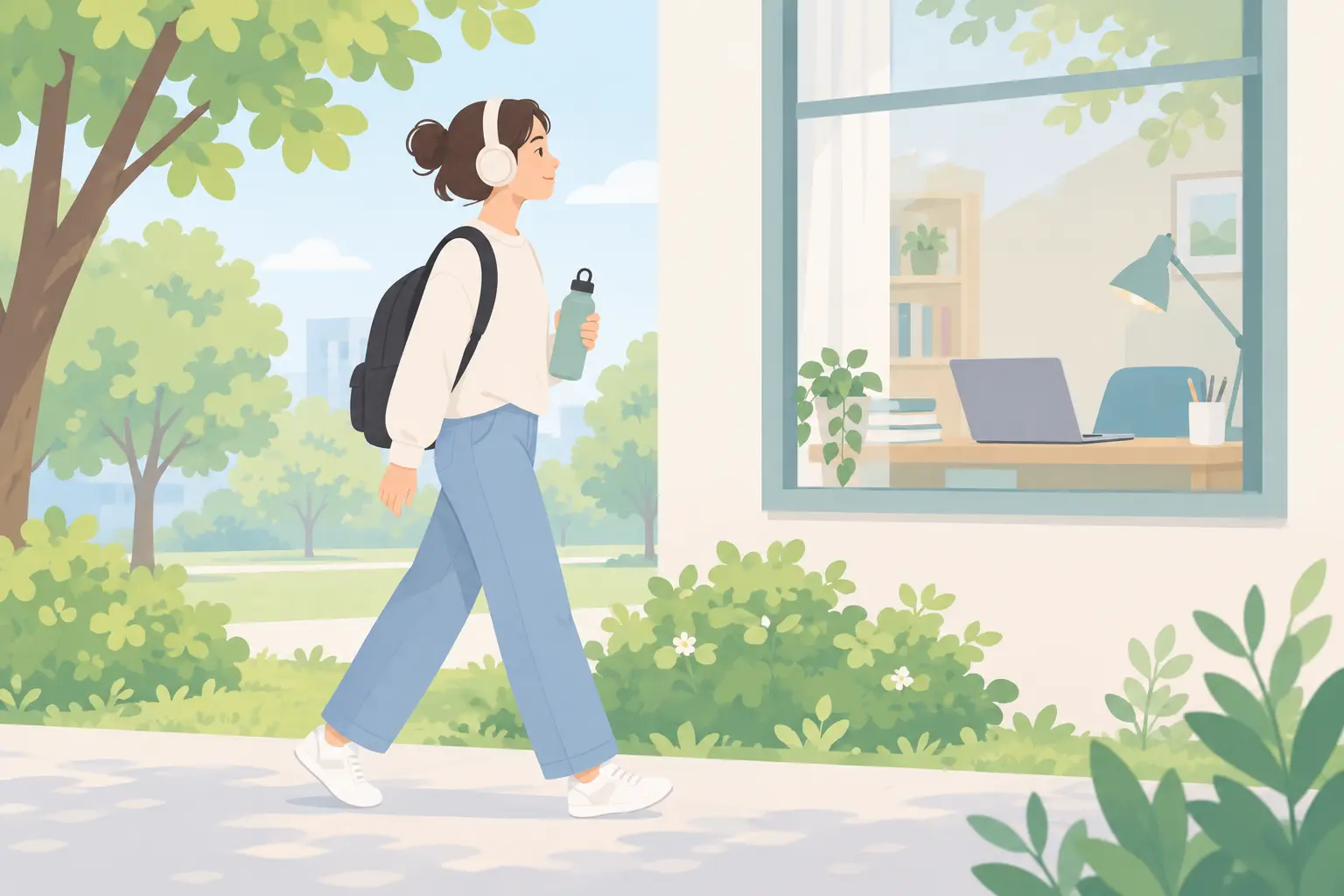
The five-minute break is not the problem; the cigarette is. Keep the structure of working for a block, then pausing. Replace the cigarette with a short walk, a glass of water, a stretch, a call to a friend or stepping outside to breathe. Fresh air and movement preserve the sense of leaving the desk, which is much of what the cigarette provided.
Use a stuck-paragraph rule
Many smokers light up when a paragraph will not come. Set a rule in advance: when stuck, write a bracketed placeholder, move to an easier section, and take the break after you have written something. This breaks the pairing between difficulty and cigarette. Keep it time-boxed with a timer.
Give your hands and mouth something to do
Many people miss the physical habit. Sugar-free gum, a toothpick, a stress ball, a pen to doodle with, or a straw can fill the gap. Nicotine gum or lozenges, if you choose them, also cover the oral habit, though they are medicines and should be used as directed.
Move your caffeine and meal triggers
If coffee and a cigarette were a pair, swap the coffee for tea or change where you drink it. After meals, leave the table straight away and brush your teeth or take a short walk. Moving the trigger is often easier than resisting it.
Delay and decide
A craving is a wave. When it hits, tell yourself you will decide in ten minutes, then do something else. If you still want to smoke afterwards you can reassess, but most people find the urge has faded. Do this daily and it becomes automatic.
Offload the mechanical work
Thesis pressure rises with tasks that eat time but not thought: reformatting references, rebuilding tables, checking style consistency. Taking those off your plate frees energy for the quit attempt. A writing assistant such as the Tesify AI Editor can help with phrasing and formatting tasks, as long as you review its output against your own sources and your institution’s AI policy.
Build a wind-down that is not a cigarette
The end-of-day cigarette often marks “work is over”. Replace it with a ritual such as a shower, a short walk, tidying your desk or a ten-minute phone call. Closing your laptop and writing tomorrow’s first task on paper does the same job and helps you start the next morning with less friction.
Preparing for a viva is another peak-stress stretch, and cravings often rise again around it. Our thesis defence tips can help you plan that period so it does not catch your quit attempt off guard.
Where to get help: quitlines, pharmacists and NRT
Willpower is not the only tool, and you do not have to pay for most of what works. The strongest evidence is for combining behavioural support with medicine.
Nicotine replacement therapy
Nicotine replacement therapy (NRT) provides nicotine without tobacco smoke to ease withdrawal while you change your habits. The Cochrane review of NRT pooled 133 studies with 64,640 participants and found a risk ratio of 1.55 (95% CI 1.49 to 1.61) for quitting with any form of NRT compared with control. The authors graded the evidence as high certainty. Put simply, NRT improves the odds, though it does not guarantee success. The summary is on Cochrane: can nicotine replacement therapy help people quit smoking?
The CDC lists the nicotine patch, lozenge, gum, oral inhaler and nasal spray among the available medicines, together with the prescription medicines varenicline and bupropion SR. Read its overview of quit smoking medications, then talk to a professional about what suits you.
A pharmacist or doctor
A community pharmacist can explain the products, doses and combinations, and tell you what is available without a prescription where you live. If you are pregnant, take other medication, have a heart or mental health condition, or have struggled with earlier attempts, ask a doctor or pharmacist before choosing a product.
Quitlines and national services
- United States: the quitline at 1-800-QUIT-NOW provides free coaching over the phone, according to the CDC.
- United Kingdom: the NHS offers free tools and practical advice, a free personal quit plan and the free NHS Quit Smoking app.
- Elsewhere: most countries run a national quitline or local stop-smoking service. Search your national health service website or ask your university’s student health centre.
Your university may also run free stop-smoking support, counselling or peer groups for students. Ask the student wellbeing team, because many do not advertise it prominently.
Tracking progress so the first weeks feel finite
The first month can feel endless when you are also facing a deadline. Making progress visible helps. Free quit-smoking apps and progress trackers can count smoke-free days, show money saved and explain what to expect as the weeks pass; one example is the week-by-week nicotine withdrawal timeline from the iQuit app. Pair whichever tool you choose with a paper calendar on your desk where you mark each smoke-free day, much as you would mark thesis milestones.
Treat the first month as a project with milestones: day 3, day 7, day 14 and day 28. Reward each one with something unrelated to cigarettes, such as a meal out, a book or a night off the thesis. The mental model you already use for chapters, small deliverables with clear targets, works equally well here.
What to do if you slip
A single cigarette during a hard week does not erase your progress. Treat it as data. Write down what happened: the time, the trigger, how you felt and what you could have done instead. Return to your plan the same day, tell your support person and adjust the routine that failed. If you keep slipping at the same trigger, strengthen the replacement for that moment or speak to a pharmacist about whether your medicine plan needs changing.
It also helps to be kind to yourself. Self-criticism and thesis perfectionism go hand in hand, and a harsh reaction to a slip can push people straight back to the habit. Treat yourself as you would a friend in the same position.
FAQ
Is it a bad idea to quit smoking while writing your thesis?
Not necessarily. Withdrawal can make concentration harder for a short time, so many people choose a quit date outside the heaviest deadline weeks. Waiting for a stress-free moment may mean never starting, so pick the best realistic window and prepare support.
Does nicotine actually help me concentrate?
Smokers often feel sharper after a cigarette, but much of that feeling is relief from withdrawal rather than a net gain. Concentration dips after quitting tend to ease as withdrawal fades.
Does nicotine replacement therapy work?
Yes. The Cochrane review of nicotine replacement therapy covered 133 studies with 64,640 participants and found people using any form were about 55% more likely to quit than controls (risk ratio 1.55, 95% CI 1.49 to 1.61).
Where can I get free help to quit?
In the US, the 1-800-QUIT-NOW quitline offers free phone coaching. In the UK, the NHS offers free tools, a personal quit plan and an app. A pharmacist can advise on nicotine replacement products.
What if I slip during a deadline week?
A slip is information, not failure. Note the trigger, return to your plan the same day and tell your support person. Adjust the routine that failed rather than abandoning the attempt.
Write your thesis with AI
Structure, draft, cite, and format your thesis faster with Tesify’s AI writing tools, automatic bibliography, and plagiarism checker. Free to start, no credit card required.





Leave a Reply