

Marshall Scholarship Guide 2026: Eligibility, Benefits & How to Apply
The Marshall Scholarship is a fully funded award that sends high-achieving American students to study at any university in the United Kingdom, usually for one or two years. Created by the UK Parliament in 1953 as a living thank-you for the post-war Marshall Plan, it covers tuition, a living stipend, and travel, and funds up to around 50 scholars each year. Unlike the Rhodes, it is not tied to a single university.
For American graduates who want a fully funded UK degree with the freedom to choose their institution, the Marshall is one of the most prestigious routes available. This guide breaks down eligibility, what the award covers, how it compares to the Rhodes and other options, and the timeline you need to hit to apply successfully in 2026.
1. What Is the Marshall Scholarship?
The Marshall Scholarship was founded in 1953 by an Act of the UK Parliament as a national gesture of gratitude for the American aid delivered under the Marshall Plan. Administered by the Marshall Aid Commemoration Commission, it finances American students of high ability to study for a degree in the United Kingdom, with the broader aim of strengthening the enduring relationship between the two countries. Scholars become part of a distinguished alumni network that spans government, academia, science, and the arts.
2. What Does the Marshall Scholarship Cover?
The award is comprehensive, removing the financial barriers to a UK degree:
- Tuition fees at the chosen UK university, paid in full.
- A living stipend to cover accommodation and daily costs, adjusted for location (London carries a higher rate).
- Travel to and from the United Kingdom.
- Additional grants that can include a book allowance, thesis grant, research and daily travel support, and, where relevant, a contribution toward the cost of a partner accompanying the scholar.
Most awards run for two years, with one-year and (in select cases) three-year options available depending on the programme and the scholar’s plan.

3. Who Is Eligible?
The core requirements are consistent year to year:
- US citizenship at the time of application.
- A bachelor’s degree from an accredited four-year US college or university, completed before taking up the scholarship.
- A strong academic record — a minimum GPA of around 3.7 is expected, and successful candidates typically sit well above that.
- Graduation recency conditions that limit how long ago you completed your undergraduate degree.
Candidates apply through one of the regional US consulate regions, and most home universities run their own endorsement process, since a strong institutional nomination is a central part of a competitive application.
4. Marshall vs Rhodes vs Other Awards
American students weighing prestigious UK funding options should understand how the Marshall sits alongside its peers:
| Award | Where you can study | Who can apply | Approx. scholars/year |
|---|---|---|---|
| Marshall | Any UK university | US citizens | ~50 |
| Rhodes | University of Oxford only | Many countries incl. US | ~100 global (~32 US) |
| Gates Cambridge | University of Cambridge only | Non-UK citizens | ~80 global |
| Chevening | Any UK university (1 yr master’s) | Many countries | ~1,500 global |
Figures are approximate and vary year to year; confirm current numbers on each programme’s official site. See our full guides to the Rhodes Scholarship, Gates Cambridge Scholarship, and Chevening Scholarship for full comparisons.
The headline distinction is flexibility: the Marshall’s ability to fund study at any UK institution is its biggest advantage over the Oxford-only Rhodes and Cambridge-only Gates. If your ideal programme sits at Imperial, LSE, Edinburgh, or UCL, the Marshall is often the natural fit. If you are also considering an Oxford route, our Clarendon Scholarship guide covers Oxford’s largest graduate funding scheme.
5. What Are the Selection Criteria?
Marshall selectors look well beyond grades. A competitive candidate demonstrates:
- Academic distinction — a record that marks you out even among strong applicants.
- Leadership potential — evidence you have made an impact and will continue to.
- Ambassadorial qualities — the ability to represent the United States and build lasting US–UK ties.
- A clear, credible study plan — a specific reason this programme, at this university, now.
6. How Do You Apply, Step by Step?
- Confirm eligibility early against the current citizenship, degree, and GPA requirements.
- Identify your UK programme and university, and articulate exactly why the UK and that institution.
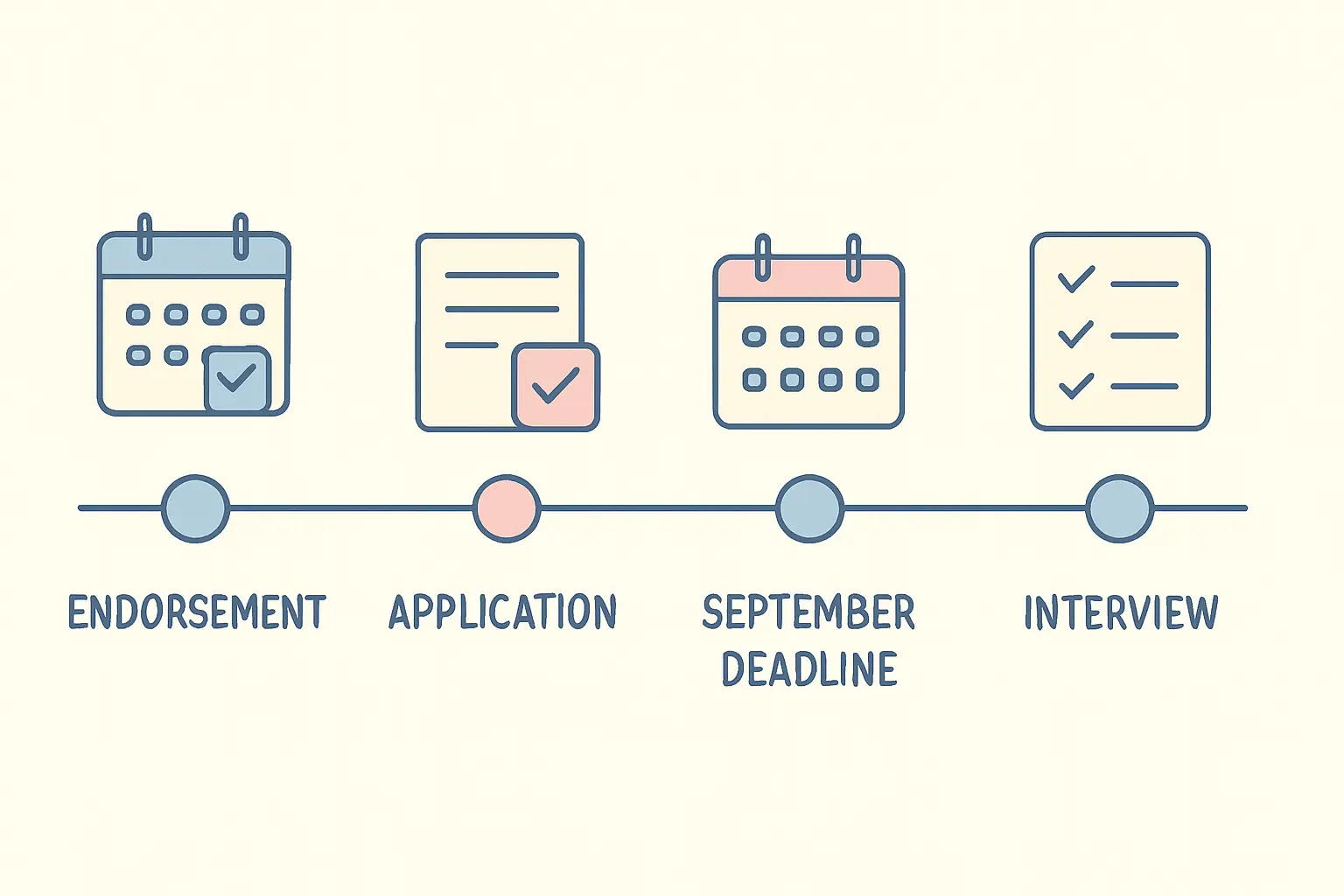
- Seek your university’s endorsement, since most US institutions nominate candidates through a fellowships office — start months ahead.
- Secure strong letters of recommendation from people who can speak to both your scholarship and your character.
- Write a compelling personal statement and proposed academic programme, the heart of the application.
- Submit before the national deadline, typically late September of the year before study begins.
- Prepare for interview if shortlisted — regional panels probe your motivation, plan, and ambassadorial potential.
A precise, well-argued personal statement is where many strong candidates separate themselves. Our guide to writing university personal statements shows what a persuasive one looks like, and tools like Tesify can help you structure and refine your written materials before you submit.
FAQ
What is the Marshall Scholarship?
The Marshall Scholarship funds high-achieving American students to pursue graduate study at any university in the United Kingdom, usually for one or two years. Established by the UK Parliament in 1953 as a living gift of thanks for the post-war Marshall Plan, it covers tuition, a living stipend, and travel, and finances up to around 50 scholars each year.
Who is eligible for the Marshall Scholarship?
Applicants must be US citizens, hold a bachelor’s degree from an accredited US college or university by the time they take up the award, and typically have a strong GPA (a minimum around 3.7 is expected). There are age and graduation-recency conditions, and candidates apply through one of the regional US consulate regions.
What is the difference between the Marshall and Rhodes Scholarships?
The Rhodes Scholarship funds study specifically at the University of Oxford, while the Marshall Scholarship lets you study at any UK university. Both are prestigious, fully funded awards for Americans, but the Marshall offers wider institutional choice, whereas the Rhodes is tied to Oxford and draws applicants from many countries.
How competitive is the Marshall Scholarship?
It is highly competitive. With only around 50 scholarships awarded from a large national applicant pool each year, selection is rigorous, weighing academic distinction, leadership, ambassadorial potential, and a well-defined plan for study in the UK.
When is the Marshall Scholarship deadline?
Applications typically close in late September of the year before study begins, with most universities running an internal endorsement process earlier in the year. Because many institutions require candidates to be nominated, students should start the process months ahead of the national deadline.
Related Reading
Write your thesis with AI
Structure, draft, cite, and format your thesis faster with Tesify’s AI writing tools, automatic bibliography, and plagiarism checker. Free to start, no credit card required.






Leave a Reply