
How to Write a Dissertation Introduction with AI: Step-by-Step Guide for 2026
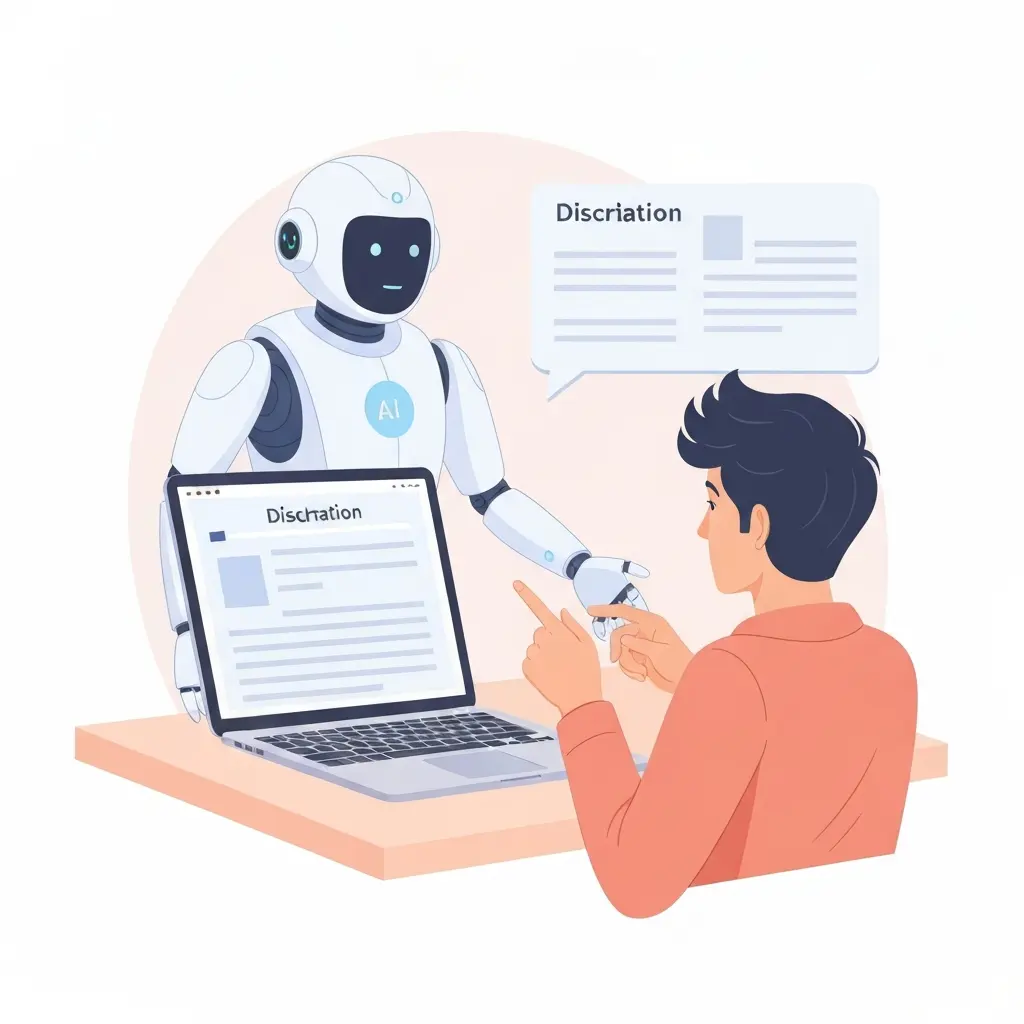
The dissertation introduction is one of the most difficult sections to write — and one of the most important. It must establish your research context, justify your study, state your aims and research questions, and map the entire dissertation for the reader in fewer than 3,000 words. Using AI for dissertation writing can help you overcome the blank page problem and structure your introduction correctly, but only if you know how to use it properly. This guide walks you through every step, from your first prompt to a submission-ready draft.
The key distinction between students who benefit from AI and those who create problems for themselves is understanding what AI should and should not do. AI excels at structure, phrasing, and identifying logical gaps. It cannot know your specific research context, your supervisor’s expectations, or the exact gap in the literature you have identified. Your job is to provide that; AI’s job is to help you express it clearly.
What Is the Standard Structure of a Dissertation Introduction?
A well-structured dissertation introduction follows a move-based structure first described by Swales (1990) in the CARS (Creating a Research Space) model. The three moves are: establishing the field, identifying the gap, and occupying the niche (stating what your research does). Most dissertation introductions include these components:
- Background and context — situates the topic within the broader field (300–500 words)
- Problem statement / rationale — establishes why this specific study is needed (200–300 words)
- Research gap — identifies what existing research has not addressed (150–250 words)
- Aims and objectives — states the overall aim and 3–5 specific objectives (150–200 words)
- Research questions or hypotheses — the questions your study will answer (100–200 words)
- Scope and limitations — defines what the study does and does not cover (150–200 words)
- Dissertation structure overview — brief signposting of each chapter (200–300 words)
Understanding this structure before using AI is essential. If you ask AI to “write my dissertation introduction,” you will get a generic, poorly-grounded output. If you ask it to “write the background section of my introduction, situating [your specific topic] within the context of [your field],” you get something structurally useful that you can adapt.
What Should You Prepare Before Using AI?
Before opening any AI tool, have the following written down in a document:
- Your working title — the more specific, the better the AI output
- Your field and sub-field — e.g., “clinical psychology, specifically adolescent eating disorders”
- 3–5 key authors or papers you have already read and plan to cite — these ground the AI’s output in real scholarship
- Your identified research gap — written in your own words, 2–4 sentences
- Your aims statement — one sentence beginning “This study aims to…”
- Your research questions — 2–4 specific questions
- Your methodology in one sentence — “This study uses a qualitative case study approach with semi-structured interviews”
This preparation takes 20–30 minutes and transforms your AI interaction from generic to specific. Students who skip this step receive output that reads like a Wikipedia summary — academic in style but not grounded in their actual study.
Step-by-Step: Writing Each Section with AI
Step 1: Background and Context
Provide the AI with your topic, field, and 2–3 key themes. A good prompt structure:
“Write the background section of a dissertation introduction for a study on [topic] in the field of [discipline]. The section should be 400–500 words and cover: (1) the broader context of [theme 1], (2) the development of [theme 2] over the past decade, and (3) the current state of [theme 3]. Write in formal academic English using hedged language.”
Review the output critically. Check that every factual claim is accurate — AI language models sometimes produce plausible-sounding statistics that are incorrect. Replace any claim you cannot verify with your own cited evidence. For structured AI chapter drafting with academic integrity built in, Tesify is designed specifically for this workflow.
Step 2: Problem Statement and Rationale
This section must connect directly to your specific study. Provide the AI with your research gap and ask it to write a rationale. Then critically check that the rationale accurately describes your actual study, not a generic version of it. Personalise every sentence.
Step 3: Aims, Objectives, and Research Questions
These should be written by you first, then refined by AI for clarity and academic language. The logic and specificity of your research questions must come from you — AI cannot know what your data will actually address. Use AI to improve phrasing: “Rewrite these research questions using precise academic language: [paste your draft questions].”
Step 4: Chapter Overview
The structure overview is the section most safely delegated to AI. Provide the AI with your list of chapters and a one-sentence description of each, and ask it to write a 200-word signposting paragraph. This is formulaic writing where AI adds genuine value with minimal integrity risk.
How to Review and Revise Your AI-Assisted Draft
After generating your initial introduction with AI assistance, apply this four-step review:
- Fact-check every claim. Any statistic, date, or factual assertion must be traced to a source you can cite. Delete or rewrite uncited claims.
- Voice alignment. Read each paragraph aloud. If it does not sound like how you write, rewrite it in your own style. Your examiner knows your writing from your essays and may notice a sudden shift to AI-polished prose.
- Source integration. Replace any vague references (“studies show that…”) with specific in-text citations from your actual literature review. Your introduction should cite 10–20 sources by the time it is complete.
- Gap accuracy. Re-read your research gap statement carefully. This is the intellectual core of your introduction and must accurately reflect what you found — and did not find — in the literature. AI cannot write this for you; it can only help you phrase what you already know.
Should You Declare AI Use in Your Introduction?
More than 60% of UK universities now require AI use declarations for assessed work, according to JISC’s 2025 survey of institutional AI policies. Most require a statement in the Methods section or an appendix describing how AI was used, not in the introduction itself.
The declaration should state: what tool you used, what tasks you used it for (e.g., “AI was used to generate draft text for section 1.1, which was subsequently revised”), and how you verified the accuracy of AI-assisted content. See our complete guide to AI in dissertation writing for declaration templates and university-specific policy summaries.
Common Mistakes When Using AI for Dissertation Introductions
- Accepting AI-generated references without checking. Many AI tools hallucinate citations — they generate plausible-looking references that do not exist. Always verify every citation in your university library or Google Scholar.
- Starting with AI before thinking. AI produces better output when you have already thought through your argument. Students who open the AI tool before writing anything themselves produce weaker introductions.
- Not personalising your gap statement. The research gap is the most important intellectual contribution in your introduction. It must describe your actual study, not a generic one.
- Submitting the first AI draft without revision. AI output is a starting point. Examiners assess your thinking, not your ability to prompt AI. A first-draft AI introduction will read as thin and generic without your scholarly judgment layered in.
- Overlong introductions. AI tends to produce verbose output. Most dissertation introductions should be 2,000–3,000 words. Edit ruthlessly.
Frequently Asked Questions
How many words should a dissertation introduction be?
A master’s dissertation introduction is typically 1,500–3,000 words, representing approximately 10% of the total word count. A PhD thesis introduction is typically 3,000–8,000 words. The introduction should be proportionate to the scope of the study — a focused 15,000-word master’s dissertation does not need an 8,000-word introduction.
Can AI write my research questions for me?
AI can help you phrase research questions clearly and check that they are specific enough to be answerable within your methodology. However, the intellectual content of your research questions — what you want to find out and why — must come from your own engagement with the literature. AI writing generic research questions produces a study that cannot be completed, because it has not been grounded in your actual research design.
Will my university’s plagiarism checker detect my AI-assisted introduction?
Turnitin’s AI Writing Indicator, which is in use at most UK and US universities, can detect AI-generated text with approximately 85% accuracy. Text that has been substantially rewritten and integrated with original thought is much less likely to be flagged. If you have followed the review process described above — rewriting in your own voice, integrating specific sources, and personalising your argument — the detection risk is low.
What is the best AI tool for writing a dissertation introduction?
Tesify is purpose-built for academic chapters including introductions, with outputs that follow academic conventions rather than producing general-purpose text. It also integrates citation management and plagiarism checking, reducing the number of tools you need. For inline suggestions while writing in your own editor, Jenni AI is a strong alternative. For language polishing of a completed draft, Paperpal or Grammarly are appropriate.
How do I avoid plagiarism when using AI to write my dissertation introduction?
Use AI to generate structure and draft text, then rewrite substantially in your own words. Verify and cite every factual claim. Integrate your own sources rather than relying on AI-generated references. Run a pre-submission check using Tesify’s plagiarism checker to identify any passages that overlap with existing published material. Declare your AI use according to your institution’s policy.
Write Your Dissertation Introduction with Tesify
Tesify is built for exactly this: structuring dissertation chapters with academic precision. Provide your topic, gap, and research questions — Tesify generates a structured introduction draft you can review, revise, and make your own. Includes auto-bibliography and plagiarism checking.
Write your thesis with AI
Structure, draft, cite, and format your thesis faster with Tesify’s AI writing tools, automatic bibliography, and plagiarism checker. Free to start, no credit card required.





Leave a Reply