
Environmental science sits across natural science, policy and social science, and a literature review built on a single general database systematically misses whole categories of relevant work — the ecology paper in a biology-indexed journal, the policy analysis in a public-affairs journal, and the underlying dataset in a geoscience repository rarely show up in the same search. This guide maps the journals, open-access resources and data repositories an environmental science thesis literature review actually needs, and how to search across disciplinary boundaries without missing a whole evidence tier.
Open-access journals worth searching directly
Environmental Research Letters (ERL), published by IOP Publishing (ISSN 1748-9326), is fully open access and focuses on rapid publication of concise, policy-relevant interdisciplinary environmental research, with curated collections across climate change, biodiversity, sustainable development and environmental justice. Because it is open access, ERL is a reliable first stop for a thesis literature review regardless of institutional subscription access — every article is readable without a paywall, which matters for students without full institutional database coverage. Searching ERL directly (rather than only through a general aggregator) also surfaces its topic-collection structure, which can help scope a literature review around an established sub-literature rather than starting from an unstructured keyword search.
Government and agency data as a primary source
The U.S. Environmental Protection Agency (EPA) maintains an environmental topics portal linking to datasets and reports across air quality, water resources, chemical toxics (including PFAS), and land and waste management, alongside modeling and measurement tools and a searchable archive of news releases covering recent findings. For an environmental science thesis making claims about US regulatory status, chemical toxicity thresholds, or national environmental trends, the EPA’s own record is the correct primary source — cite the agency’s own page directly rather than a secondary summary, which can misstate a dataset’s scope, vintage, or access conditions.
PANGAEA: the data repository underneath the papers
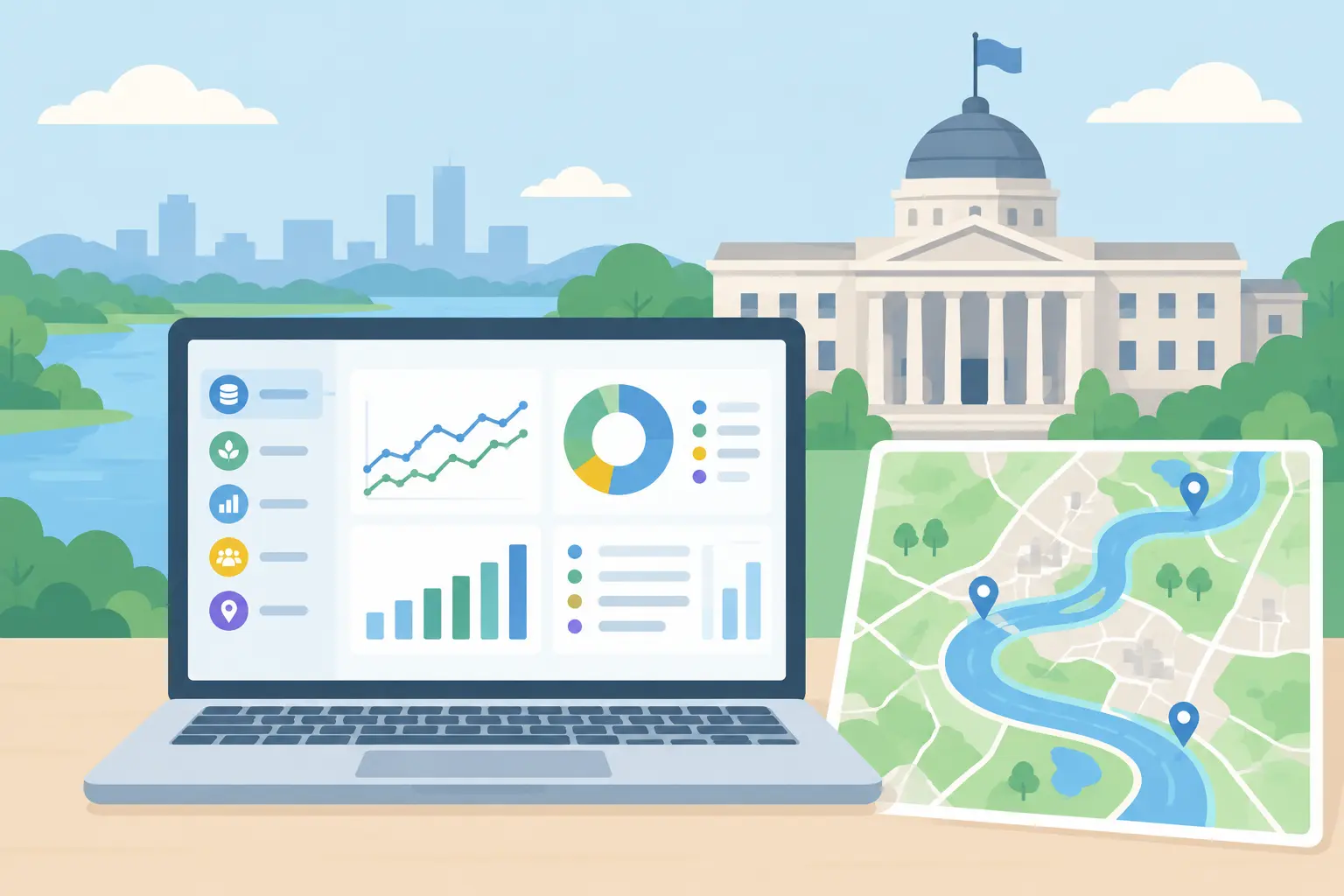
PANGAEA is a free, open-access data publisher for earth and environmental science, a World Data Center operated jointly by the Alfred Wegener Institute (Helmholtz Center for Polar and Marine Research) and the University of Bremen’s Center for Marine Environmental Sciences (MARUM). It holds certification from the World Data System, the World Meteorological Organization and CoreTrustSeal, and archives georeferenced datasets spanning chemistry, atmospheric science, oceanography and paleontology. For a thesis proposing secondary analysis of existing environmental data — rather than new fieldwork — PANGAEA is often the fastest route to a real, citable dataset with a permanent identifier, and searching it directly (rather than relying on a paper’s supplementary materials link, which can rot) is the more reliable approach.
Statutes and regulations as a primary source, not a secondary one
Where an environmental science thesis discusses a specific regulatory requirement — a permitted emissions threshold, an environmental review process, a designated protected status — the statute or implementing regulation itself is the primary source, not a news article or advocacy summary describing it. In the U.S. context, this most often means citing the specific section of the relevant federal statute (the Clean Air Act, the Clean Water Act, the National Environmental Policy Act, or the specific implementing regulations in the Code of Federal Regulations) directly, via the government’s own published text, rather than a secondary paraphrase. Where your thesis discusses a state-level requirement, the same principle applies to the state’s own statute or regulatory code. Getting the current version matters specifically here — environmental regulations are amended relatively often, and citing a superseded threshold or requirement as current is a factual error a committee will catch.
Google Scholar as a cross-disciplinary discovery layer
Google Scholar indexes across disciplinary boundaries more broadly than most single subject database, which makes it a useful discovery tool specifically for environmental science’s cross-disciplinary literature — a search there can surface the policy paper, the ecology paper and the economics paper together in one results list, even though each would sit in a different specialist database. Use it as a discovery and citation-tracking layer (its “cited by” feature is particularly useful for tracing how a foundational paper has been used across disciplines) rather than as a replacement for the specialist databases and repositories above, since Google Scholar’s coverage and indexing transparency are less well documented than a purpose-built academic database.
Why one database is never enough for this field
Environmental science’s disciplinary breadth means a search built for one tradition will under-retrieve in another. A search strategy calibrated for ecology and biology (heavy MEDLINE/biology-database overlap) will miss environmental policy and economics literature indexed in public-affairs or economics databases; a search calibrated for atmospheric or earth science will miss environmental sociology and environmental justice work indexed in social-science databases. A thesis whose research question spans more than one of these traditions — most do, even where the primary framing is natural-science — needs to run a deliberately separate search pass for each disciplinary angle rather than assuming one database’s coverage extends across the whole field.
Combining literature search with your data-source search
An environmental science thesis often needs both a literature search (what has been studied and found) and a data search (what raw data exists to study something new or replicate a prior finding), and these two searches use different tools and should be tracked separately in your methods chapter. Our directory of free datasets and open data repositories covers the broader cross-disciplinary data landscape beyond PANGAEA specifically, useful where your thesis needs data outside the earth-science-specific scope PANGAEA covers best. Once you have both literature and data mapped, the analytical choices — which statistical test fits your specific design — are covered separately in our guide to statistical tests for an environmental science dissertation, and the software layer (GIS, R) needed to actually run that analysis is covered in our environmental science software stack guide.
Regional and international data sources beyond the US federal layer
Many environmental science theses need data or literature beyond the US federal sources described above — state environmental agency records for a state-specific question, or international sources (the UN Environment Programme’s data portal, the European Environment Agency’s datasets) for a comparative or non-US study. The same sourcing discipline applies regardless of jurisdiction: cite the agency’s or body’s own published record directly, note the exact date the data or regulation was accessed (since environmental data updates and regulations amend on different cycles across jurisdictions), and be explicit in your methods chapter about which jurisdiction’s definitions and thresholds you are using where a concept (a protected-species designation, an emissions threshold) differs meaningfully across countries.
Grey literature: reports that never become journal articles
A meaningful share of environmental science findings — environmental impact assessments, consultancy reports commissioned by agencies, NGO monitoring reports — never appear as peer-reviewed journal articles at all, yet can be directly relevant to a thesis’s local or applied question. This grey literature needs its own search step, typically through the commissioning agency’s or organization’s own publications page rather than any academic database, and should be flagged explicitly as grey literature in your methods chapter rather than presented alongside peer-reviewed sources without distinction, since the two carry different evidentiary weight and your committee will expect you to have noted the difference.
Building a documented search strategy
Because environmental science literature spans multiple databases by necessity, documenting your search strategy explicitly matters even more than in a single-discipline field. Record, for each database searched: its name, the search string used, the date run, the number of results, and a brief note on which disciplinary angle it was intended to cover (natural science, policy, social science, or data-only). This documentation both demonstrates rigor to your committee and gives you a reusable record if a reviewer or examiner asks why a specific paper or dataset was or was not included.
A worked example

Narrow search: A thesis on microplastic pollution in coastal waters searches only a biology-indexed database for “microplastics” and “marine ecology,” missing the policy literature on regulatory response and the PANGAEA-hosted oceanographic datasets that could supply comparison baseline data.
Full search: The same thesis runs three separate search passes — a natural-science pass (biology/ecology databases and ERL), a policy pass (public-affairs or environmental-law databases for regulatory response literature, plus the relevant statute’s own text), and a data pass (PANGAEA and EPA data portals for baseline and comparison datasets) — and documents each pass separately in the methods chapter’s search-strategy table.
Mistakes that leave an environmental science literature review thin
- Single-database searches that miss an entire disciplinary angle relevant to the thesis’s actual scope.
- Citing a secondary summary of government data or a statute instead of the agency’s or government’s own record.
- No documented multi-pass search strategy, leaving a committee unable to judge coverage.
- Relying on a paper’s supplementary-materials link for data access instead of searching a permanent repository like PANGAEA directly.
- Treating “environmental science” as one search when it is really three — natural science, policy, and data — each needing its own pass.
- Citing a superseded regulatory threshold without checking the current version of the statute or regulation.
- Mixing jurisdictions’ definitions without stating explicitly which country’s thresholds or designations are being used.
- Grey literature presented as peer-reviewed without flagging the distinction.
Frequently asked questions
Is Environmental Research Letters open access?
Yes, it is fully open access, published by IOP Publishing, and focuses on rapid publication of interdisciplinary environmental research relevant to policymakers.
What is PANGAEA and is it free?
PANGAEA is a free, open-access data publisher for earth and environmental science, operated by the Alfred Wegener Institute and the University of Bremen’s MARUM center, archiving georeferenced datasets from earth-system research.
Does the EPA publish research data I can cite?
Yes. The EPA’s environmental topics portal links to datasets on air quality, water resources, chemical toxics, and land and waste management, along with modeling tools and grant-funded research.
Why does environmental science need more than one database?
Because the field spans natural science, policy and social science, a single database indexed for one disciplinary tradition will systematically miss the policy or social-science literature relevant to many environmental science theses.
Should I cite a government agency’s data page directly, or a secondary summary?
Cite the agency’s own record directly wherever possible. A secondary summary can misstate a dataset’s scope, vintage or access conditions.
Should I cite an environmental statute directly, or a news article describing it?
Cite the statute or implementing regulation directly via the government’s own published text, and check that you are citing the current version, since environmental regulations are amended relatively often.
Is Google Scholar a good primary tool for environmental science literature?
It is a useful cross-disciplinary discovery layer, particularly for tracing how a paper has been cited across fields, but it should supplement rather than replace the specialist databases and repositories, since its coverage and indexing transparency are less well documented.
What is grey literature and does my thesis need it?
Grey literature is material like environmental impact assessments and agency or NGO reports that never appears as a peer-reviewed journal article. It is often directly relevant to applied or local questions and needs its own search step through the commissioning organization’s publications page, flagged explicitly as grey literature.
Search the full range of sources your environmental science thesis needs
Tesify’s thesis workspace, used by 9,000+ students and 15,000+ chapters, helps environmental science researchers structure a multi-pass search across natural-science, policy and data sources. Every word stays 100% written by you.
Write your thesis with AI
Structure, draft, cite, and format your thesis faster with Tesify’s AI writing tools, automatic bibliography, and plagiarism checker. Free to start, no credit card required.






Leave a Reply