

Clarendon Scholarship (Oxford) Guide 2026: Eligibility, Benefits & How to Apply
The Clarendon Scholarship is the University of Oxford’s largest graduate funding scheme, awarding around 140 new fully funded scholarships every year purely on academic merit. It covers 100% of tuition and college fees plus a generous living-cost grant, is open to applicants of any nationality, and — crucially — requires no separate application beyond your Oxford course application submitted by the funding deadline.
For anyone aiming at a master’s or DPhil at Oxford, the Clarendon is often the single most important source of funding to understand, because so many applicants miss out simply by applying after the January funding deadline. This guide explains who qualifies in 2026, what the award covers, how selection works, and the timing that decides whether you are considered at all.
1. What Is the Clarendon Scholarship?
Established in 2001, the Clarendon Fund is Oxford’s central, University-wide graduate scholarship programme. It is funded largely through Oxford University Press and works in partnership with Oxford colleges and other donors. Each year it makes around 140 new awards, with roughly 230 Clarendon Scholars in residence at any one time, making it a substantial and visible community within the University rather than a handful of isolated awards.
2. What Does It Cover?
- 100% of tuition and college fees for the full duration of your course.
- A generous annual grant for living costs, set at a level intended to cover accommodation and everyday expenses in Oxford.
- Full-course funding, covering the standard length of a master’s or DPhil rather than a single year.
- College membership and community, since many Clarendon awards are made jointly with an Oxford college through partnership arrangements.
3. Who Is Eligible?
The Clarendon is notable for how open it is:
- Any nationality. There are no nationality restrictions or quotas — UK, EU, and international students compete on the same merit basis.
- Graduate applicants. It supports new master’s and DPhil students across almost all Oxford departments and faculties.
- Merit-based selection. Awards go to those with the strongest academic record and future potential; there is no financial-need test.
Because selection turns on demonstrated excellence, meeting Oxford’s course-level entry standards is a baseline — our breakdown of Oxford admission requirements covers what those look like across subjects.
4. How Does Selection Work, and Why Is There No Separate Form?
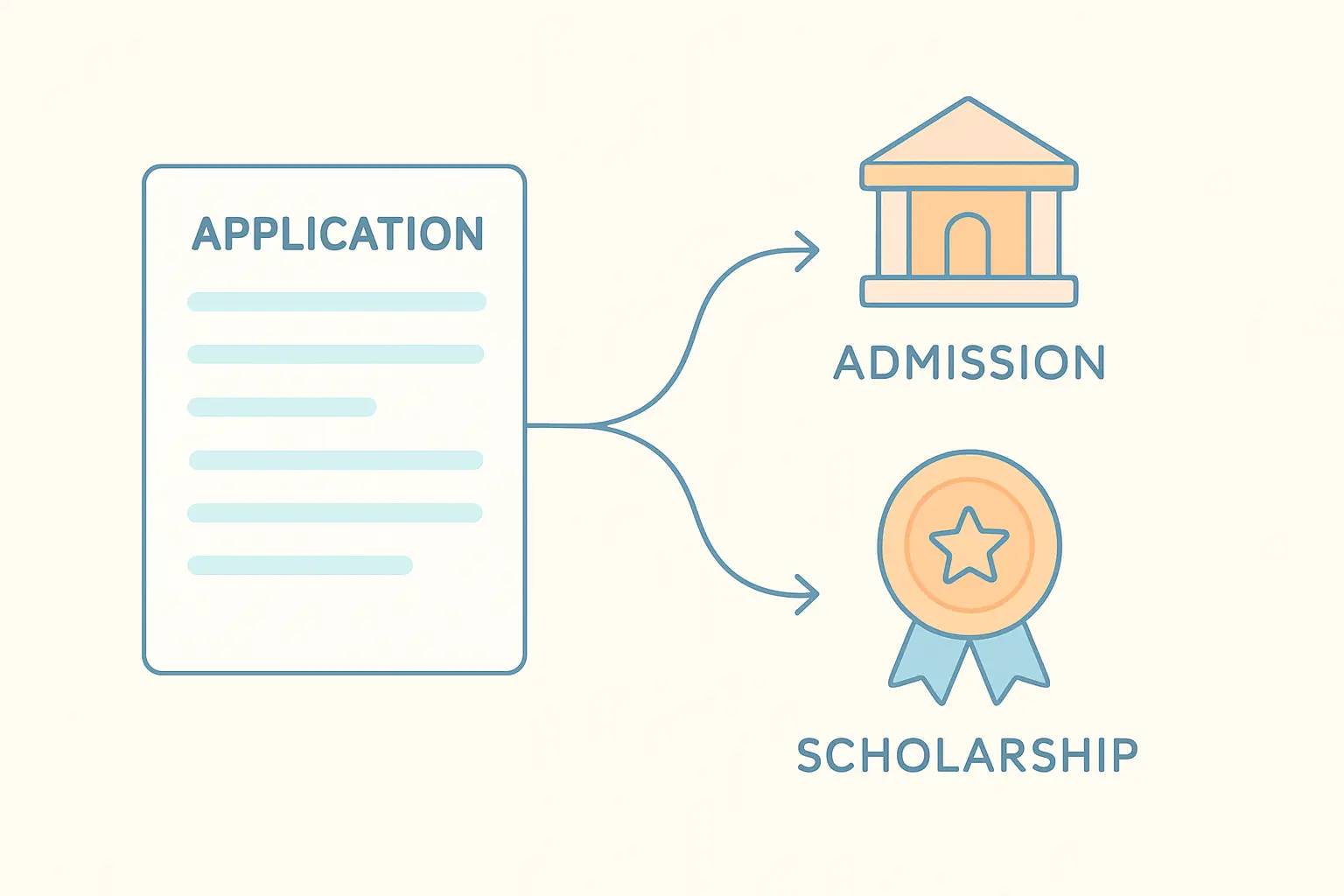
This is the point most applicants get wrong. There is no separate Clarendon application. When you apply for your graduate course at Oxford, you are automatically assessed for a Clarendon Scholarship — but only if your application is complete by the relevant January funding deadline, which falls earlier than the final admissions deadline for many courses.
Departments nominate their strongest applicants, and the Clarendon Fund makes final decisions based on academic merit and potential. In practice this means your course application — personal statement, references, transcripts, and (for research degrees) research proposal — is your scholarship application. There is no second chance to impress separately, so every element has to be strong the first time.
5. How Do You Maximise Your Chances?
- Apply by the January funding deadline, not the later course deadline — this single step disqualifies many otherwise strong candidates who miss it.
- Choose your course and department carefully, and make sure you meet or exceed its entry requirements.
- Build an outstanding academic case, since merit is the sole criterion.
- Secure excellent references from academics who can speak specifically to your ability and potential.
- Write a precise, compelling statement and research proposal, tailored to the exact programme.
For research degrees especially, the research proposal carries real weight. Tools like Tesify can help you structure and sharpen a proposal, and our guide to university personal statements shows how to make the written case convincingly.

6. How Does It Compare to Other Oxford and UK Awards?
The Clarendon sits alongside other elite UK funding, and understanding the differences helps you target the right one:
| Award | University | Separate application? | Nationality |
|---|---|---|---|
| Clarendon | Oxford (any subject) | No — via course application | Any |
| Rhodes | Oxford only | Yes | Eligible countries |
| Gates Cambridge | Cambridge only | Yes (with course app) | Non-UK |
| Marshall | Any UK university | Yes | US citizens |
Figures and conditions are indicative for 2026; always confirm on official programme pages. See our full guides to the Rhodes, Gates Cambridge, and Marshall scholarships.
The Clarendon’s defining advantages are its openness to all nationalities and its no-separate-form simplicity — but that simplicity is a trap for applicants who assume there is a later scholarship deadline. There is not.
FAQ
What is the Clarendon Scholarship?
The Clarendon Scholarship is the University of Oxford’s flagship graduate scholarship scheme, awarding around 140 new fully funded scholarships each year on the basis of academic excellence. It supports master’s and DPhil students across almost all subjects and covers full tuition plus a generous grant for living costs.
Who is eligible for the Clarendon Scholarship?
Clarendon Scholarships are open to graduate applicants of any nationality applying for a full-time or part-time master’s or DPhil at Oxford. Selection is purely merit-based, considering academic record and future potential. There are no separate nationality quotas, which makes it one of the most open elite scholarships.
Do you have to apply separately for the Clarendon Scholarship?
No. There is no separate Clarendon application. You are automatically considered when you submit your graduate course application to Oxford by the relevant funding deadline, usually in January. Meeting that earlier funding deadline, rather than the final course deadline, is essential to be considered.
What does the Clarendon Scholarship cover?
The scholarship covers 100% of university and college fees and provides a substantial annual grant for living costs for the full duration of the course. Many Clarendon Scholars are also linked to an Oxford college through partnership awards, adding a further community and support dimension.
How competitive is the Clarendon Scholarship?
It is highly competitive: around 140 scholarships are awarded from a very large pool of academically outstanding Oxford graduate applicants each year. Because selection is based on demonstrated excellence and potential, a strong academic record, references, and research proposal are decisive.
Related Reading
Write your thesis with AI
Structure, draft, cite, and format your thesis faster with Tesify’s AI writing tools, automatic bibliography, and plagiarism checker. Free to start, no credit card required.






Leave a Reply