
AI Thesis Writing Tools for Dissertation Completion: Tesify vs ChatGPT (2025 Guide)
Your deadline is in two weeks. Your thesis document is half-empty. Your bibliography is a disaster. And every time you open ChatGPT, you get a wall of generic text that your supervisor would spot from orbit. Sound familiar?
Here’s the uncomfortable truth most students discover too late: not all AI thesis writing tools are built the same. Using the wrong one doesn’t just waste time — it actively makes your dissertation worse. The difference between finishing strong and scrambling at 3am comes down to which tool you pick, and how you use it.
This guide breaks down the best AI thesis writing tools for dissertation completion, puts Tesify head-to-head against ChatGPT, and gives you a realistic 2-week plan to actually cross the finish line.

Why Generic AI Fails Dissertation Students
Most students reach for ChatGPT first. It’s free, it’s fast, and it sounds smart. But within a week, the cracks appear.
ChatGPT doesn’t know your university’s citation style. It invents references — a phenomenon researchers now call “hallucinated citations.” A Duke University Library perspective on ChatGPT for research and writing warns specifically that AI-generated citations frequently point to sources that don’t exist, putting academic integrity at serious risk.
What most people miss is that the problem isn’t intelligence — it’s context. ChatGPT has no idea what your supervisor expects, what your institution’s plagiarism threshold is, or what APA 7th edition looks like in practice. You end up spending more time correcting its output than you would have writing from scratch.
The three failure points students hit most often:
- Fake references that won’t survive a supervisor’s scrutiny
- Generic academic prose that reads nothing like your own voice
- Zero plagiarism feedback until the submission stage — when it’s too late
Purpose-built academic AI tools exist precisely because general chatbots weren’t designed for dissertation writing. A Springer Nature study on generative AI’s impact on graduate student writing productivity and quality found that AI tools significantly improved output quality when used within structured academic workflows — but only when the tools included academic guardrails, not when students used open-ended chatbots alone.
Tesify vs ChatGPT: Feature-by-Feature Comparison
Before you commit to any tool, you need a clear picture of what each one actually delivers. Here’s where the rubber meets the road.
| Feature | Tesify | ChatGPT (GPT-4) | Why It Matters |
|---|---|---|---|
| Academic Writing AI | ✅ Purpose-built for dissertations | ⚠️ General-purpose | Tone, structure, and depth calibrated for academic standards |
| Auto Bibliography | ✅ APA, MLA, Chicago, Vancouver | ❌ Generates fake citations | Verified sources from JSTOR, PubMed, Google Scholar |
| Plagiarism Detection | ✅ Real-time, multi-database | ❌ None | Checks against JSTOR, ProQuest, EThOS, ERIC before submission |
| Structured Thesis Editor | ✅ Chapter templates, section guidance | ❌ Blank chat interface | Keeps your dissertation structured from introduction to conclusion |
| Export Options | ✅ PDF, Word, LaTeX | ⚠️ Copy-paste only | Saves hours of formatting before final submission |
| Coherence Feedback | ✅ Real-time AI feedback | ⚠️ Only on request | Catches weak arguments and logical gaps as you write |
| Free to Start | ✅ No credit card required | ✅ Free tier available | Both accessible from day one |
| Academic Compliance | ✅ Built for university standards | ❌ Requires manual compliance | Institutions increasingly scrutinise undeclared AI use |
For a deeper breakdown of how specific platforms stack up on features, accuracy, and workflow integration, the 2025 review of the best AI writing tools for dissertations covers the technical differences in granular detail.
Tesify Platform: What It Actually Does for Your Thesis
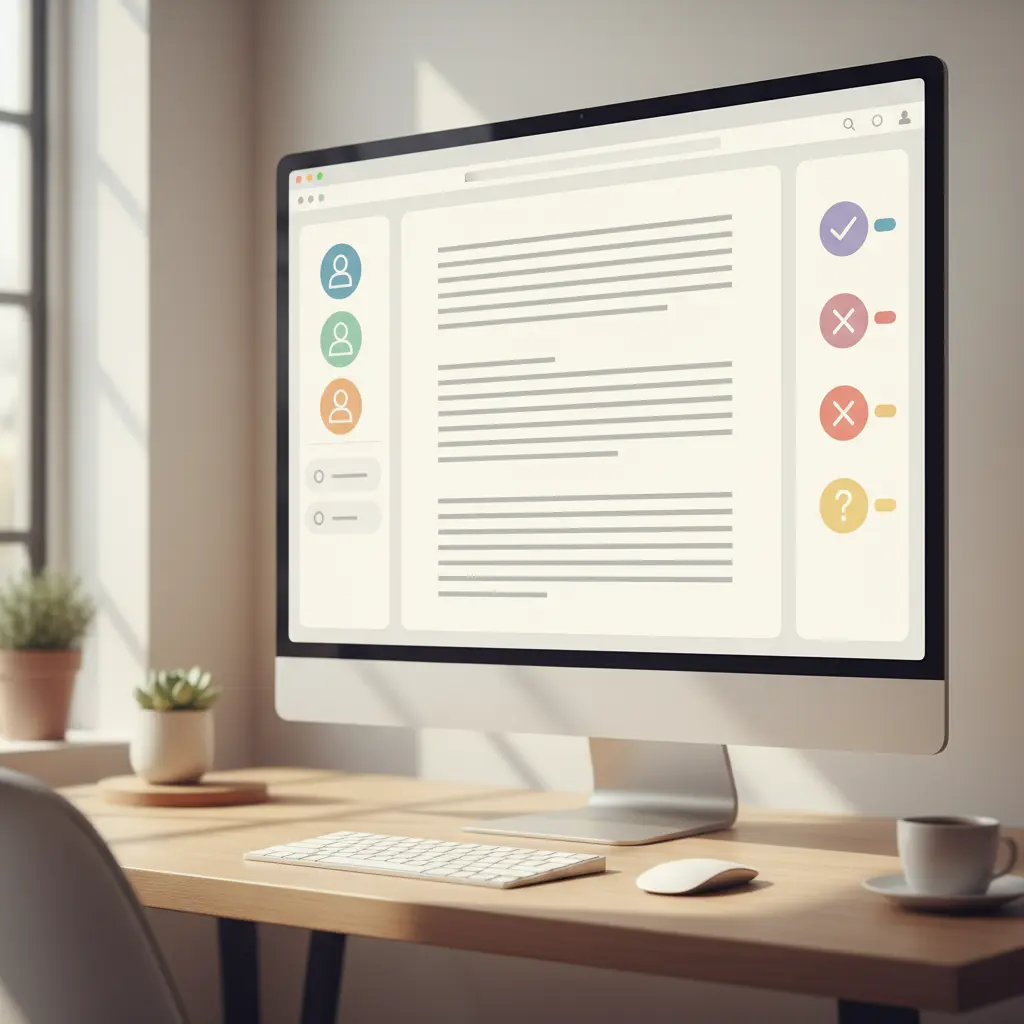
Over 9,000 students already use Tesify to finish their thesis twice as fast. But what does that mean in practice — and why does a dedicated academic platform outperform a general AI assistant?
The short answer: Tesify is built around the actual structure of a dissertation, not around a chat window.
When you open Tesify’s AI thesis writing platform, you’re not staring at a blank prompt box. You’re working inside a structured editor that mirrors how dissertations are actually written — chapter by chapter, section by section. The AI knows you’re writing a methodology section differently from a literature review, and it responds accordingly.
The Tesify AI Editor: More Than Just Autocomplete
The Tesify AI Editor rewrites weak paragraphs, expands underdeveloped concepts, and corrects academic language on the fly. But here’s where it gets interesting: it also provides real-time feedback on coherence — flagging logical gaps between your argument and your evidence before your supervisor ever sees them.
Think of it as a writing partner who has read 10,000 dissertations and knows exactly what examiners pick apart.
Professional Templates That Save Formatting Hours
Formatting is the silent time thief. Students routinely spend 8–12 hours fixing margins, heading styles, and chapter numbering — hours that could be writing time. Tesify’s professional templates eliminate that entirely. You can also export directly to LaTeX-compatible formats for Overleaf, PDF, and Word with one click.
This isn’t a minor convenience. For anyone writing a science or engineering dissertation where LaTeX is standard, this feature alone is worth the signup.
The Bibliography Time Sink (And How to Fix It in Minutes)
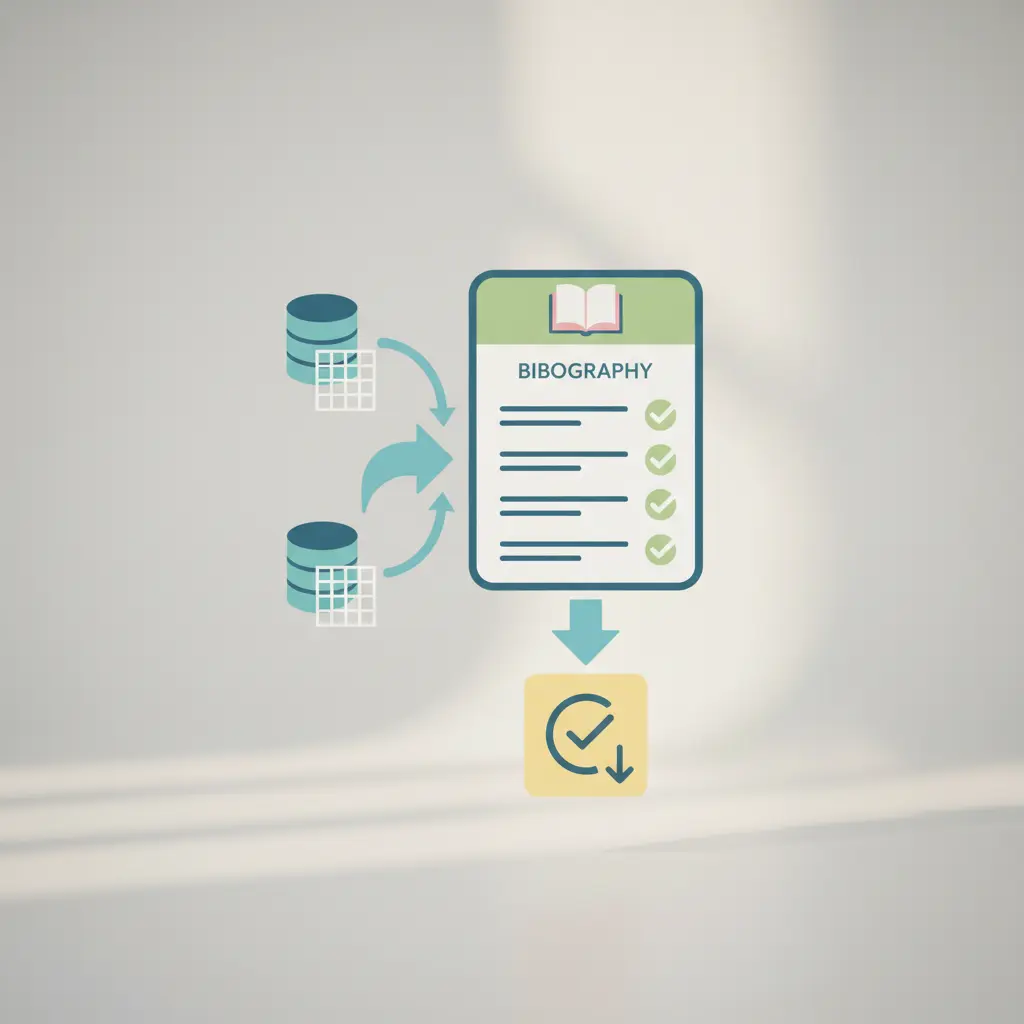
Ask any dissertation student what they hate most, and bibliography management comes up within the first three answers. It’s tedious, error-prone, and the consequences of getting it wrong are disproportionate to the effort involved.
Most students are managing 40–80 sources. Manually formatting each one in APA 7th edition — checking author order, italics, DOIs, page ranges — takes hours. Then one source changes format and you have to go back through everything again.
Tesify’s Auto Bibliography system generates citations and reference lists in APA 7th edition, MLA, Chicago, and Vancouver formats with a single click. It pulls verified sources directly from Google Scholar, PubMed, JSTOR, and ProQuest — so you’re citing real papers, not AI-invented ones.
Why This Matters More Than You Think
A hallucinated citation isn’t just embarrassing. At many universities, submitting references to non-existent papers is treated as academic misconduct — the same category as plagiarism. The ChatGPT citation problem is real and documented, and it has ended academic careers.
Tesify’s bibliography tool doesn’t guess. It searches live databases, confirms the source exists, and formats it correctly. The difference between a fake citation and a verified one is the difference between passing and failing your viva.
Fair warning: this won’t completely replace your own critical reading. You still need to read the sources you cite. But it eliminates the hours of manual formatting that drain your energy without contributing to your actual argument.
Stop Formatting References by Hand
Generate your entire bibliography in APA, MLA, Chicago or Vancouver in minutes — with verified sources from JSTOR, PubMed and Google Scholar.
Plagiarism Anxiety: Why Students Fear AI and How to Stay Compliant
There’s a particular kind of dread that hits students who’ve been using AI tools: “What if the plagiarism checker flags my work?”
It’s a legitimate concern. AI-generated text often contains phrasing that appears across multiple outputs — and some institutional plagiarism detectors are now also checking for AI-generated patterns. Using any AI writing tool without understanding your university’s policy is genuinely risky.
The good news is that the rules are clearer than most students realise. A detailed analysis of ChatGPT usage regulations in academic thesis work shows that most institutions permit AI use for editing, paraphrasing, and structural assistance — as long as the core ideas and arguments are your own, and AI use is disclosed where required.
The Karolinska Institutet guidance on using generative AI in doctoral education takes a similar position: AI assistance is not inherently prohibited, but transparency and originality standards must be maintained.
How Tesify’s Plagiarism Checker Removes the Guesswork
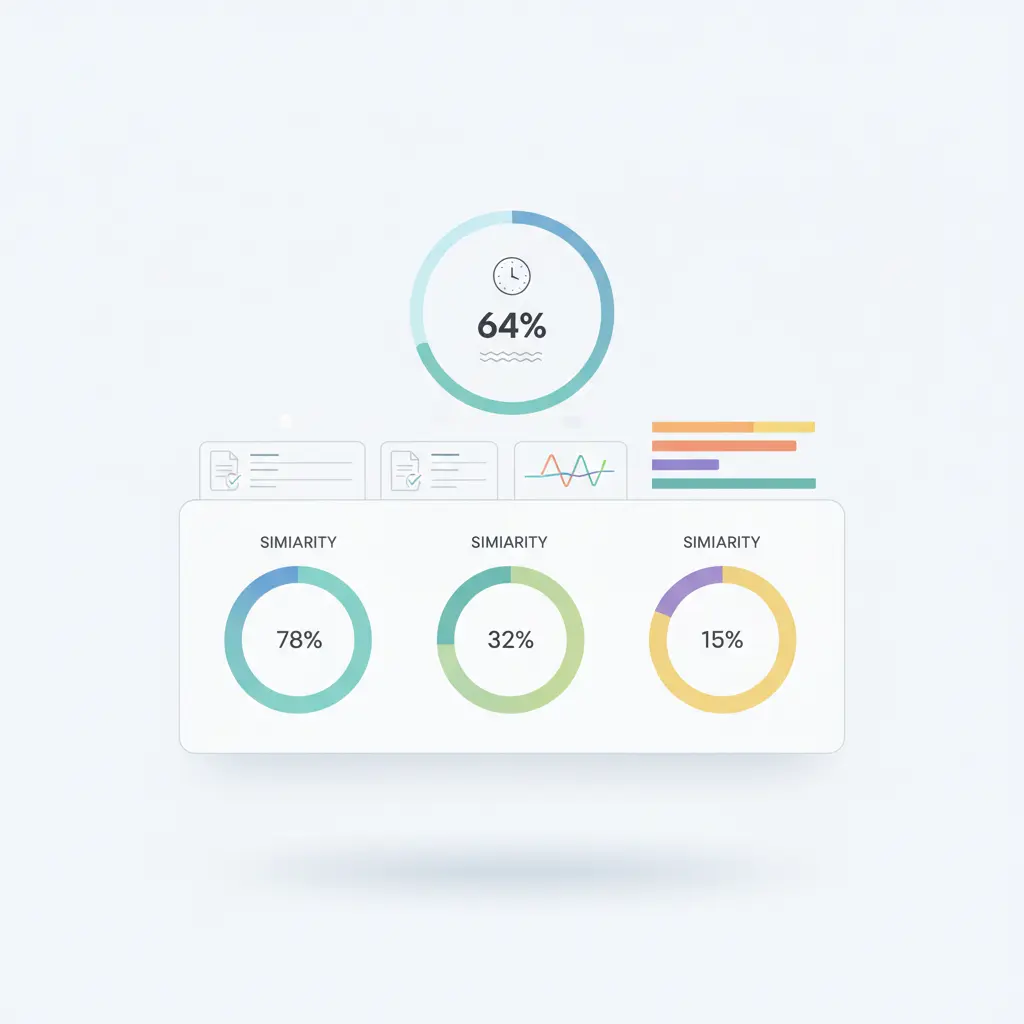
The Tesify Plagiarism Checker runs real-time text analysis against millions of scholarly sources including JSTOR, ProQuest, EThOS, ERIC, Google Scholar, and international databases. You see your similarity scores before submission — not after.
What most students don’t realise is that catching a plagiarism issue at the draft stage is trivial to fix. Catching it after submission is catastrophic. Running your chapters through Tesify’s plagiarism checker as you write — not just at the end — gives you certified originality confidence well before you’re staring down a submission deadline.
The 2-Week Thesis Completion Plan Using AI Tools
This is where abstract claims meet concrete reality. Can you actually cut significant thesis time using AI tools? Yes — but it requires a specific approach, not just “asking ChatGPT to write your dissertation.”
This plan assumes you have a topic, supervisor approval, and access to your primary sources. It’s built around Tesify’s workflow, but the structure itself is solid regardless of your tool choice. For a broader timeline context, the proven 6-week dissertation draft completion plan offers a more conservative pacing approach — useful if two weeks feels too aggressive for your situation.
Days 1–3: Foundation and Structure
- Set up your Tesify project — Choose your thesis type (bachelor’s, master’s, PhD), select your template, and configure your citation style. This takes 20 minutes, not 3 hours.
- Generate your chapter outline — Use Tesify’s AI to draft a chapter structure based on your research question. Revise it to match your actual argument. Don’t skip this — a weak structure is why dissertations stall.
- Import your key sources — Add your primary references to Tesify’s bibliography manager. Verify each one. This is your academic foundation.
- Write your introduction skeleton — Even a rough 500-word introduction locks in your argument scope and stops you from drifting later.
Days 4–8: Core Writing Sprint
- Write one chapter per day — Aim for 1,500–2,000 words per session. Use Tesify’s AI Editor to expand underdeveloped paragraphs and fix academic tone, but keep the core argument yours.
- Run plagiarism checks daily — Don’t wait until the end. Check each completed chapter immediately. Fix similarities while the writing is fresh.
- Build your bibliography as you write — Add sources the moment you cite them. Tesify’s Auto Bibliography formats them instantly. No catch-up session required.
- Use AI for transitions and coherence — One of the best uses of AI assistance is strengthening the logical flow between sections. Ask Tesify’s editor to review section transitions specifically.
Days 9–11: Literature Review and Methodology Deep Dive
- Expand your literature review — Use Perplexity AI to identify recent papers you may have missed, then verify and add them through Tesify’s bibliography system.
- Tighten your methodology section — This is the section supervisors scrutinise most. Use Tesify’s coherence feedback to ensure your research design logic is airtight.
- Fill all identified gaps — Your daily plagiarism checks and coherence reviews will have flagged weak spots. Address them now, not in the final 48 hours.
Days 12–14: Polish, Check, and Submit
- Full plagiarism scan of complete document — Run the entire dissertation through Tesify’s plagiarism checker. Resolve any remaining similarity flags.
- Final bibliography audit — Confirm every in-text citation has a reference list entry. Tesify’s system flags orphaned citations automatically.
- Export and format check — Export to your required format (PDF, Word, or LaTeX). Check page numbers, margin consistency, and heading hierarchy.
- Supervisor submission — Submit with confidence, not panic.
Real-World Scenarios: How Students Used AI to Finish Faster
Theory is one thing. Here’s what the actual experience looks like.
Scenario 1: The Master’s Student With 3 Weeks Left
Sarah, an MSc Psychology student at a UK university, came to Tesify with 11,000 words written out of a required 15,000 — and a methodology section her supervisor had sent back twice for “insufficient rigour.” She had 3 weeks to submission.
Using Tesify’s AI Editor, she rebuilt her methodology section in a single afternoon, with the coherence feedback catching two logical gaps she’d missed entirely. Her bibliography — previously a patchwork of inconsistent APA formatting — was corrected in under an hour through the Auto Bibliography tool. She submitted on time with a clean plagiarism report.
Scenario 2: The Procrastinating Final-Year Undergraduate
James, a final-year History undergraduate at an Irish university, had avoided his dissertation for weeks. Classic writer’s block — too many ideas, no clear structure. He used Tesify’s AI to generate three possible chapter outlines based on his research question, picked the one that matched his argument, and had a working draft structure within 45 minutes.
The structured template stopped the paralysis. Having a clear skeleton meant every writing session had a defined goal. He finished his 10,000-word dissertation in 12 days.
Scenario 3: The PhD Student Drowning in Sources
Maria, a second-year PhD student, had over 200 sources to manage. She’d been using Zotero, but formatting consistency across her chapters was still breaking down. Migrating to Tesify’s bibliography system gave her one consistent source of truth for all her references, with automatic APA 7th edition formatting throughout.
The time saved wasn’t dramatic in any single session. But across weeks of writing, eliminating the constant low-level friction of reference management freed up significant cognitive bandwidth for the actual research.
Where ChatGPT Still Has a Role in Your Research Process
This article isn’t an anti-ChatGPT manifesto. That would be dishonest. ChatGPT has genuine strengths that are worth knowing about — the key is deploying it at the right stage of your process.
The ChatGPT tutorial for researchers examining whether it’s a real productivity shift makes a fair point: ChatGPT excels at brainstorming, exploring counterarguments, and stress-testing your hypotheses. It’s a powerful thinking partner when you treat it as a sparring partner rather than a ghostwriter.
Legitimate Uses of ChatGPT in Dissertation Research
- Brainstorming research questions — Use it to generate 20 possible angles on your topic, then pick the strongest one
- Explaining complex concepts — Ask it to explain a statistical method or theoretical framework in plain language before you write about it
- Reviewing your argument logic — Paste your argument and ask it to find weaknesses or counterarguments
- Creating rough outlines — Generate 5 different possible structures for a chapter, then adapt the best one
- Paraphrasing practice — Use it to see how a dense academic sentence could be simplified, then write your own version
What ChatGPT should never be used for: generating references, writing entire sections verbatim, or producing content you’ll submit as your own analysis without verification. The guide to using ChatGPT as a genuine research partner makes this distinction clearly — partnership, not substitution.
The smart workflow uses ChatGPT for exploratory thinking, then Tesify for actual thesis writing, editing, citation management, and plagiarism checking. They’re not competitors in your workflow — they’re different tools for different stages.
AI Thesis Tool Selection Framework: A Decision Guide
Different students need different things. Here’s a practical decision framework to figure out which tools belong in your thesis workflow.
Step 1: Identify Your Biggest Time Drain
- If your biggest problem is starting and structuring → Tesify’s structured editor and chapter templates are your priority
- If your biggest problem is bibliography chaos → Tesify Auto Bibliography solves this immediately
- If your biggest problem is plagiarism anxiety → Tesify Plagiarism Checker, run throughout writing, not just at the end
- If your biggest problem is weak academic prose → Tesify AI Editor for real-time rewriting and tone correction
- If your biggest problem is finding gaps in your research → Use Perplexity AI to surface recent literature, then add to Tesify’s bibliography
- If your biggest problem is understanding your own topic → ChatGPT for conceptual exploration, then transfer to Tesify for structured writing
Step 2: Know Your University’s AI Policy
Before using any AI tool for your dissertation, spend 30 minutes reading your institution’s academic integrity policy. Most now have specific AI-use clauses. Disclosure requirements vary by institution, but the academic AI usage compliance guide gives you a solid framework for navigating these rules safely.
Step 3: Test Before You Commit
Both Tesify and ChatGPT are accessible for free. Spend one session on a single chapter section with each. The quality difference in academic output will be immediately obvious.
Ready to Stop Wasting Time on the Wrong Tools?
Join 9,000+ students who finish their thesis twice as fast with Tesify’s purpose-built academic AI platform. Smart editor, auto bibliography, plagiarism detection — all in one place.
Start Writing with Tesify — Free, No Card Required →
Free sign-up · No credit card required · Export to PDF, Word, LaTeX
Submit With Confidence, Not Anxiety
Run real-time plagiarism checks against JSTOR, ProQuest, EThOS, ERIC and millions of scholarly sources — before your supervisor ever sees your work.
Frequently Asked Questions
What is the best AI thesis writing tool for dissertation completion in 2025?
The best AI thesis writing tool for dissertation completion in 2025 is Tesify — a purpose-built academic platform that combines a smart AI editor, automatic bibliography generation in APA/MLA/Chicago/Vancouver, and real-time plagiarism detection against JSTOR, ProQuest, EThOS, and Google Scholar. Unlike general tools like ChatGPT, Tesify is designed specifically for dissertations and used by over 9,000 students to finish their thesis twice as fast. Free sign-up is available at Tesify.app with no credit card required.
Is Tesify better than ChatGPT for writing a dissertation?
Yes, for dissertation writing specifically, Tesify is significantly more effective than ChatGPT. Tesify provides verified academic citations, real-time plagiarism checking, structured chapter templates, and export to Word/PDF/LaTeX — none of which ChatGPT offers. ChatGPT is better suited to brainstorming, explaining concepts, and stress-testing arguments, while Tesify handles the actual writing, formatting, and academic compliance. The most productive approach combines both: ChatGPT for exploration, Tesify for writing.
Can I realistically finish my dissertation in 2 weeks using AI tools?
Yes, for dissertations in the 10,000–15,000 word range, a 2-week completion is achievable with purpose-built AI tools and a structured daily plan. The key is using AI for the tasks that drain time disproportionately — bibliography formatting, prose editing, coherence checking, and plagiarism scanning — rather than trying to use AI to generate your entire argument. For longer PhD theses, expect the same principles to apply over a longer timeline.
Will using an AI thesis writing tool get me caught for plagiarism or academic misconduct?
Using a purpose-built academic AI tool like Tesify is not the same as plagiarism — provided your core ideas and arguments are your own and you follow your institution’s disclosure requirements. Most universities permit AI use for editing, paraphrasing, and structural assistance. Tesify’s built-in plagiarism checker helps you verify originality before submission. The risk comes from using AI-generated content verbatim without checking, or from submitting fake citations that tools like ChatGPT sometimes produce.
Does Tesify support all citation formats including APA 7th edition?
Yes, Tesify’s Auto Bibliography system supports APA 7th edition, MLA, Chicago, and Vancouver formats, generating citations and reference lists automatically with one click. It pulls verified sources from Google Scholar, PubMed, JSTOR, and ProQuest — ensuring your citations are real and correctly formatted. This eliminates the manual bibliography work that typically costs students 8–12 hours per dissertation.
How does Tesify’s plagiarism checker compare to Turnitin?
Tesify’s plagiarism checker compares your work in real-time against millions of scholarly sources including JSTOR, ProQuest, EThOS, ERIC, and Google Scholar — providing certified originality reports. The key advantage over Turnitin for students is access during the writing process, not just at submission. Catching and fixing similarity issues while you write is far easier than addressing them after your supervisor has flagged them.
<h
Write your thesis with AI
Structure, draft, cite, and format your thesis faster with Tesify’s AI writing tools, automatic bibliography, and plagiarism checker. Free to start, no credit card required.




Leave a Reply