
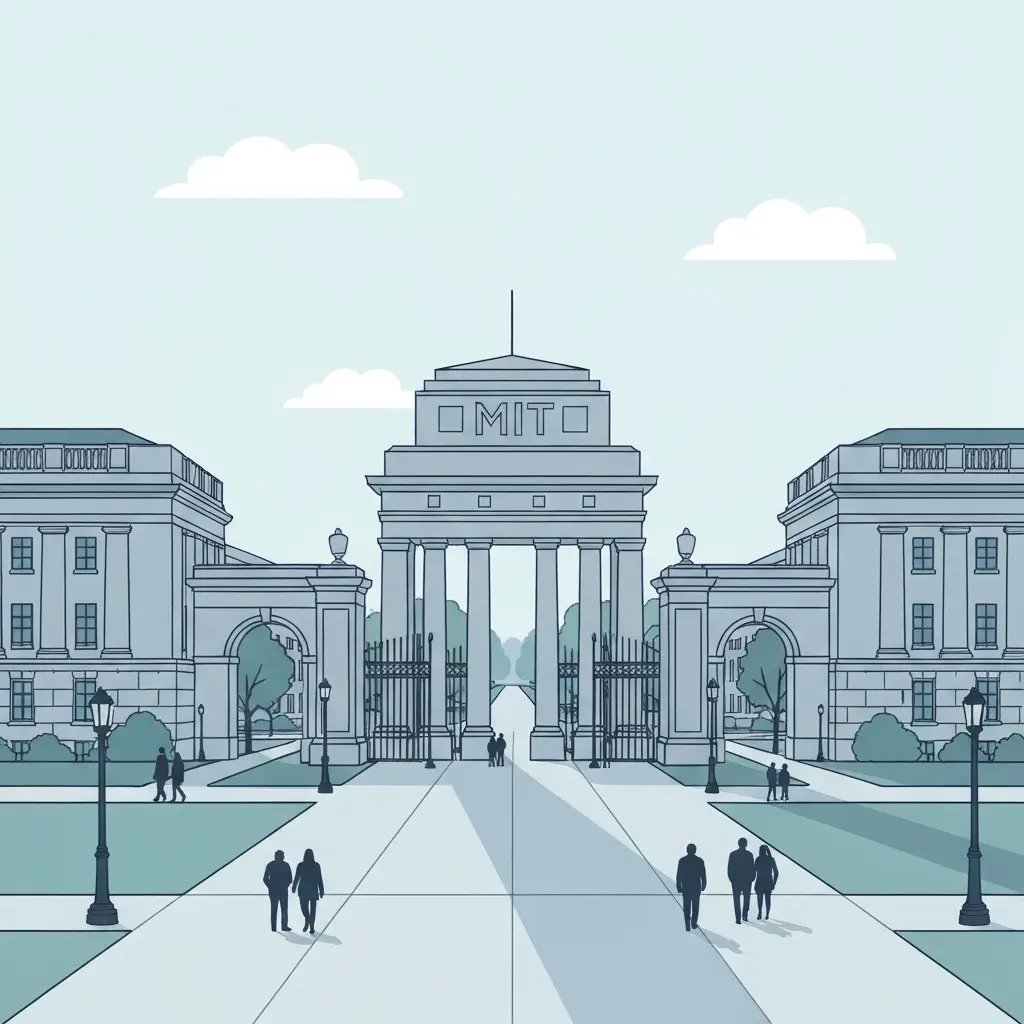
MIT Application Process: Complete Guide 2026
The MIT application process is one of the most competitive and nuanced in the world. Whether you are aiming for a graduate programme in engineering, computer science, economics, or architecture, understanding exactly what MIT expects — and how the process works — gives you a meaningful advantage. This guide breaks down every stage of the application, from eligibility to decision timelines, so you can approach MIT with confidence in 2026.
MIT received over 26,000 undergraduate applications for the Class of 2028, admitting just 3.9% of applicants. At the graduate level, acceptance rates range from under 4% (EECS) to roughly 10–15% in smaller departments. The process is decentralised: each department runs its own admissions, sets its own deadlines, and weighs criteria differently. What works for the Sloan School of Management will not mirror what EECS expects. This guide covers the common framework and the key differences across departments.
Overview of the MIT Application System
MIT does not operate a single centralised admissions office for graduate study. Instead, each of the five schools — Engineering, Science, Architecture and Planning, Humanities/Arts/Social Sciences (SHASS), and the Sloan School of Management — manages applications independently through the MIT Office of Graduate Education.
All graduate applications are submitted through the MIT Slate portal. After creating an account, applicants fill in personal and academic information, upload materials, and pay the $75 application fee (fee waivers available for eligible applicants). Applications are reviewed by departmental admissions committees — not a central office — which means direct faculty contact before and during the process can matter far more than at most universities.
Undergraduate applications go through MIT Admissions (MyMIT portal) with a single annual early action deadline in November and regular decision deadline in January. The undergraduate process is somewhat more standardised than graduate admissions.
Key Deadlines for 2026 Entry
Graduate deadlines vary significantly by department. Most fall between 1 November 2025 and 15 January 2026 for autumn 2026 entry. Below are confirmed deadlines for major departments:
| Department / Programme | Application Deadline | Decision Timeline |
|---|---|---|
| Electrical Engineering & Computer Science (EECS) | 1 December 2025 | February–March 2026 |
| Mechanical Engineering (MechE) | 15 December 2025 | February–March 2026 |
| Earth, Atmospheric and Planetary Sciences (EAPS) | 1 December 2025 | February 2026 |
| Chemistry | 1 December 2025 | January–February 2026 |
| Sloan MBA | Round 1: Oct 2025; Round 2: Jan 2026 | December 2025 / April 2026 |
| Architecture (SMArchS) | 6 January 2026 | March 2026 |
Undergraduate deadlines: Early Action — 1 November 2025; Regular Decision — 1 January 2026. Decisions released by 20 March 2026.
Always verify deadlines directly on your target department’s page, as MIT updates these annually.
Standard Application Requirements
While each department adds its own requirements, the core application materials are consistent across most MIT graduate programmes:
- Online application form — completed in full via the MIT Slate portal
- Transcripts — unofficial copies accepted at application stage; official transcripts required upon admission
- Three letters of recommendation — submitted electronically by recommenders (academic referees strongly preferred for research programmes)
- Statement of objectives / Personal statement — typically 500–1,000 words depending on department
- CV / Résumé — concise academic and professional history
- Application fee — $75 (fee waivers available)
- Test scores — GRE (where required), TOEFL or IELTS for non-native English speakers
- Portfolio — required for Architecture, Media Arts, and some design-adjacent programmes
Some departments also request a diversity statement and require applicants to indicate research interests and potential supervisors. The Sloan MBA requires a video essay in addition to written essays.
How to Write a Strong MIT Statement of Purpose
The statement of purpose (SoP) is the single most important differentiator in the MIT application process. Admissions committees read hundreds of similar CVs — the SoP is where your intellectual trajectory and research fit become visible.
What MIT Admissions Committees Actually Look For
- Specificity of research interest — vague expressions of interest in “AI” or “sustainability” are red flags. Name specific problems, methods, and why MIT is the right place to address them.
- Fit with faculty — identify 2–3 professors whose current work aligns with yours. Mention their specific papers, not just names.
- Evidence of independent research — conference papers, published work, or strong undergraduate thesis outcomes signal readiness for doctoral-level work.
- Narrative arc — the best SoPs tell a coherent story: what sparked your interest, what you learned, and where you are going.
Structure That Works
- Opening hook (1 paragraph): A specific research question or experience — not “I have always loved science.”
- Academic background (1–2 paragraphs): Key research, coursework, or projects that have prepared you.
- Research interests at MIT (1–2 paragraphs): Specific problems you want to tackle, named faculty, and why MIT’s resources are essential.
- Career goals (1 paragraph): Where you aim to go after MIT and how this programme gets you there.
Letters of Recommendation
MIT requires three letters of recommendation for most graduate programmes. For research-focused degrees (PhD, SM by thesis), all three should ideally be from academic supervisors or research mentors who can speak to your intellectual capabilities — not character references or employers unless the position involved research.
Best practices:
- Ask recommenders who know your research work directly, not just your grades
- Request letters at least 8 weeks before the deadline
- Provide recommenders with your SoP draft, CV, and a brief bullet list of what you hope they will emphasise
- Confirm submission at least one week before the deadline — MIT does not accept late letters
GRE, TOEFL, and IELTS Requirements
GRE requirements vary by department and continue to evolve. As of 2026:
- EECS — GRE required (no minimum score stated)
- MechE — GRE required
- Chemistry — GRE not accepted
- Sloan MBA — GMAT or GRE accepted
- Architecture — GRE not required
For English language proficiency, non-native English speakers must submit TOEFL (minimum 90 iBT recommended for most departments) or IELTS (minimum 7.0). Scores must be sent directly from ETS or the British Council; self-reported scores are not accepted.
Department-Specific Differences
Three departments illustrate how sharply the MIT application process can differ:
EECS (School of Engineering)
EECS is MIT’s most competitive programme, regularly ranked first globally. The admissions process is faculty-driven: applicants are evaluated by research area groups (AI/ML, Systems, Theory, etc.). Having a named faculty member who is interested in your application dramatically improves your chances. Contacting faculty before submitting is actively encouraged by the department.
Sloan School of Management
Sloan uses a structured MBA application with three rounds. Unlike research programmes, Sloan evaluates leadership experience, professional impact, and entrepreneurial thinking heavily. Essays ask you to describe a situation where you had a significant impact and to explain your MBA goals. Interviews are by invitation only.
Media Lab
The MIT Media Lab accepts students through several host departments (e.g., EECS, MAS). The key differentiator here is a portfolio and project proposal. Lab directors admit students based almost entirely on research fit — your application should be directed at a specific lab and group, not the Media Lab in general.
After You Submit: Decisions and Next Steps
Most MIT graduate programmes release decisions between late January and April 2026, depending on department. Common timelines:
- PhD programmes: Interview invitations sent December–February; offers sent February–March
- MBA (Sloan): Round 1 decisions in December; Round 2 in April
- Master’s programmes: Decisions by March–April
Admitted students receive a formal offer letter with funding details (for PhD students, this includes stipend, tuition coverage, and healthcare). The April 15 deadline — the Council of Graduate Schools resolution — means you have until 15 April 2026 to accept or decline PhD offers from US universities, including MIT.
Insider Tips from Successful MIT Applicants
- Contact potential supervisors before applying. A positive response — even a brief one — signals genuine research fit and keeps your application on a professor’s radar.
- Tailor every application element to the department. Admissions committees can spot copy-paste applications instantly.
- Apply to multiple programmes within MIT if eligible. Some departments (e.g., CSAIL groups housed in EECS and Brain & Cognitive Sciences) accept students through more than one route.
- Demonstrate output, not just potential. A preprint, conference poster, or even a well-documented undergraduate research project beats a perfect GRE score.
- Check funding availability before applying. MIT guarantees PhD funding in most science and engineering departments. Master’s funding is far more limited.
- Use your thesis or dissertation wisely. If your undergraduate or master’s thesis is relevant, reference it in your SoP and offer to share it. Need help structuring it? Our thesis writing guide covers every chapter in detail.
Frequently Asked Questions
What GPA do you need to get into MIT?
MIT does not publish minimum GPA requirements. Most admitted PhD students have GPAs of 3.7–4.0 on a 4.0 scale, but research output and faculty fit often outweigh GPA. A lower GPA with exceptional research publications is more competitive than a perfect GPA with no research experience.
Is the GRE required for MIT graduate admissions in 2026?
It depends on the department. EECS and MechE still require the GRE as of 2026. Chemistry does not accept it. Architecture and some humanities programmes do not require it. Always check your target department’s admissions page for the current 2026–27 requirements, as policies change year to year.
Can international students apply to MIT?
Yes. MIT actively recruits international students; they make up over 40% of graduate enrolment. International applicants must submit TOEFL (90+ iBT) or IELTS (7.0+) scores unless they completed a degree taught entirely in English. Funding (stipend + tuition) for PhD students applies equally to domestic and international students in funded programmes.
How long does the MIT application process take?
Preparing a strong MIT application takes 3–6 months. This includes identifying faculty, drafting and refining your statement of purpose, requesting recommendation letters (allow 8+ weeks), sitting any required tests, and gathering transcripts. Rushed applications are easily identifiable and rarely successful.
Does MIT offer financial aid for graduate students?
PhD students in most science and engineering departments receive full funding: tuition waiver, annual stipend (approximately $40,000–$48,000 in 2026), and health insurance. Master’s students are typically not funded unless they hold a research assistantship. The Sloan MBA has merit scholarships and need-based fellowships but no guaranteed funding.
Should I contact MIT professors before applying?
Yes, especially for research-based programmes. A concise, specific email to 2–3 professors whose work aligns with yours is strongly recommended. Mention one or two of their papers and how your own research relates. Keep emails to 150–200 words. Many successful MIT PhD applicants credit early faculty contact as a key factor in their admission.
Ready to strengthen your application?
A polished research proposal or thesis sample is one of the strongest signals you can send to MIT admissions. Start writing with Tesify — AI-powered academic writing support built for serious researchers.
Further reading on this site
- Graduate School USA Application Guide 2026
- Scholarship Application Tips: The Complete Guide 2026
- Academic CV Template: Examples and Tips 2026
- How to Write a Thesis: Complete Step-by-Step Guide 2026
- Research Proposal Template: A Complete Writing Guide 2026
Cross-platform resource
If you are applying to a German university or dual-degree programme, see tesify.io’s guide to academic writing in Germany for parallel advice on German application norms.
Write your thesis with AI
Structure, draft, cite, and format your thesis faster with Tesify’s AI writing tools, automatic bibliography, and plagiarism checker. Free to start, no credit card required.




Leave a Reply