
T Levels are grouped into eleven broad routes, each containing one or more subjects. Two new subjects — Social Care and Sport — arrive in September 2028, and one, Finance, takes its last enrolments in September 2026. If Finance is on your shortlist, that closing date is the single most important thing on this page.
Below is the full list as published, what the counts actually mean, and where each route leads.
The complete list by route
| Route | Subjects |
|---|---|
| 1. Agriculture, Environmental and Animal Care | Agriculture, Land Management and Production · Animal Care and Management |
| 2. Business and Administration | Management and Administration |
| 3. Construction | Building Services Engineering for Construction · Design, Surveying and Planning for Construction |
| 4. Creative and Design | Craft and Design · Media, Broadcast and Production |
| 5. Digital | Digital Data Analytics · Digital Software Development · Digital Support and Security |
| 6. Education and Early Years | Education and Early Years |
| 7. Engineering and Manufacturing | Design and Development for Engineering and Manufacturing · Maintenance, Installation and Repair for Engineering and Manufacturing · Engineering, Manufacturing, Processing and Control |
| 8. Health and Science | Health · Science · Social Care (coming September 2028) |
| 9. Legal, Finance and Accounting | Accounting · Finance (last enrolments September 2026) · Legal Services |
| 10. Sales, Marketing and Procurement | Marketing |
| 11. Sport | Coming September 2028 |
A note on the count — the sources differ slightly
You will see different totals quoted, and the difference is definitional rather than factual.
GOV.UK’s introduction to T Levels states there are 21 T Levels available. The T Levels site describes “over 20 T Level subjects” and lists them grouped by route as above. Whether a given total counts the two subjects arriving in 2028, or the subject closing to new entrants, moves the number by one or two.
The practical answer is to ignore the total. What matters is whether the specific subject you want is available at a provider you can reach, and whether it is still open to new entrants — which is why the list, not the count, is the useful artefact.
What is closing and what is coming
| Subject | Status | What it means for you |
|---|---|---|
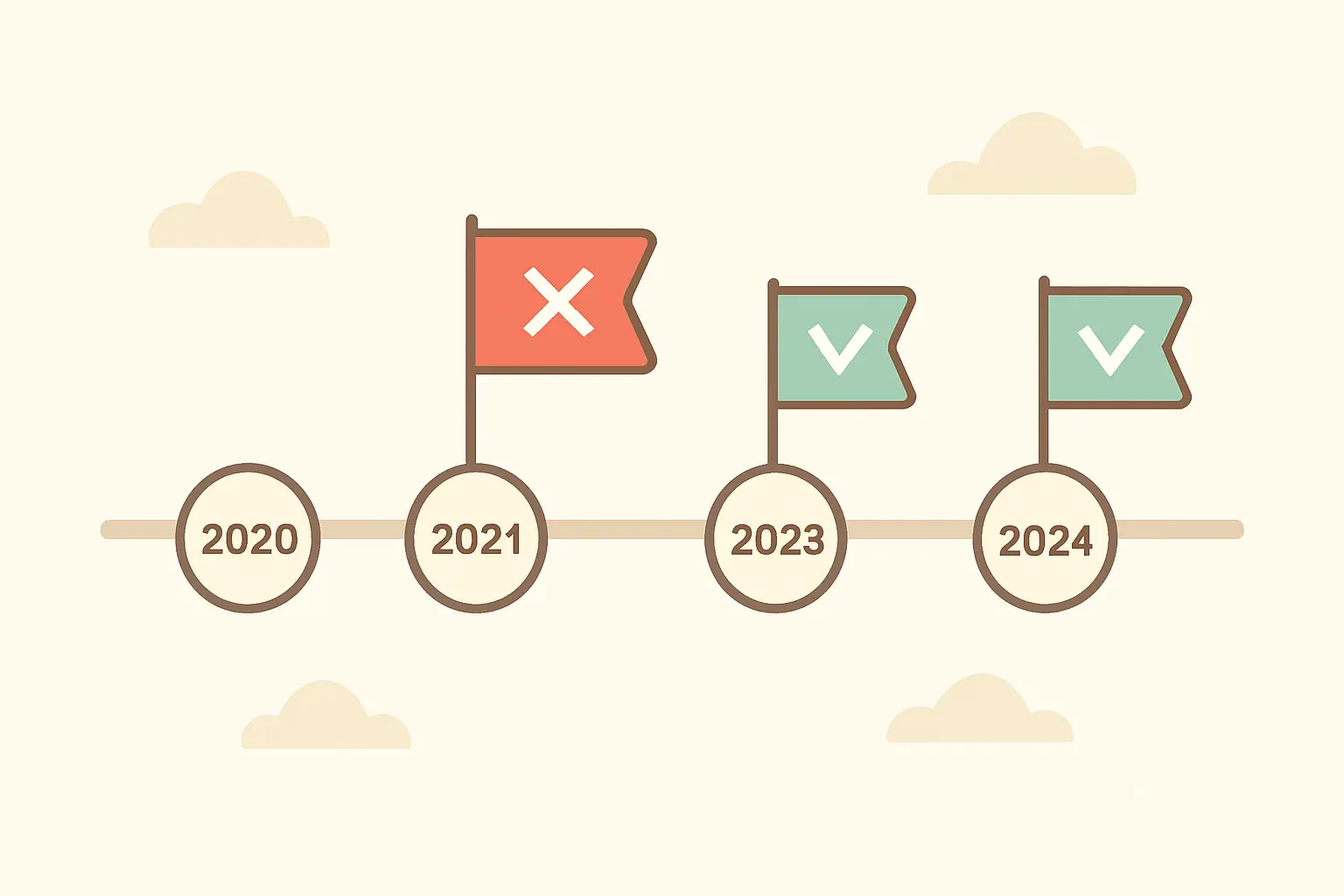
| Finance | Last enrolments September 2026 | If you are not starting in 2026, plan around Accounting or another route |
| Social Care | Coming September 2028 | Not available to anyone starting before then |
| Sport | Coming September 2028 | Not available to anyone starting before then |
The Social Care timing matters more than it looks. Health and Science already offers Health and Science subjects, so people aiming at social care specifically are choosing between an adjacent T Level, a different Level 3 route, or waiting — and waiting two years at that age is rarely the right answer.
What every T Level has in common
Whichever subject you choose, the structure is the same. A T Level is a two-year programme, described by government as a single large qualification equivalent to 3 A levels, and every one includes an industry placement of at least 315 hours — approximately 45 days.
T Levels are based on the same standards as apprenticeships, designed by employers, and approved by Skills England. Government positions them as the main technical route for students who already know the broad career area they want.
The placement is the practical constraint. Forty-five days with an employer is a real commitment for you and for them, and placement availability varies by area and by subject — which is a question for the provider before you apply, not after.
Where each route leads
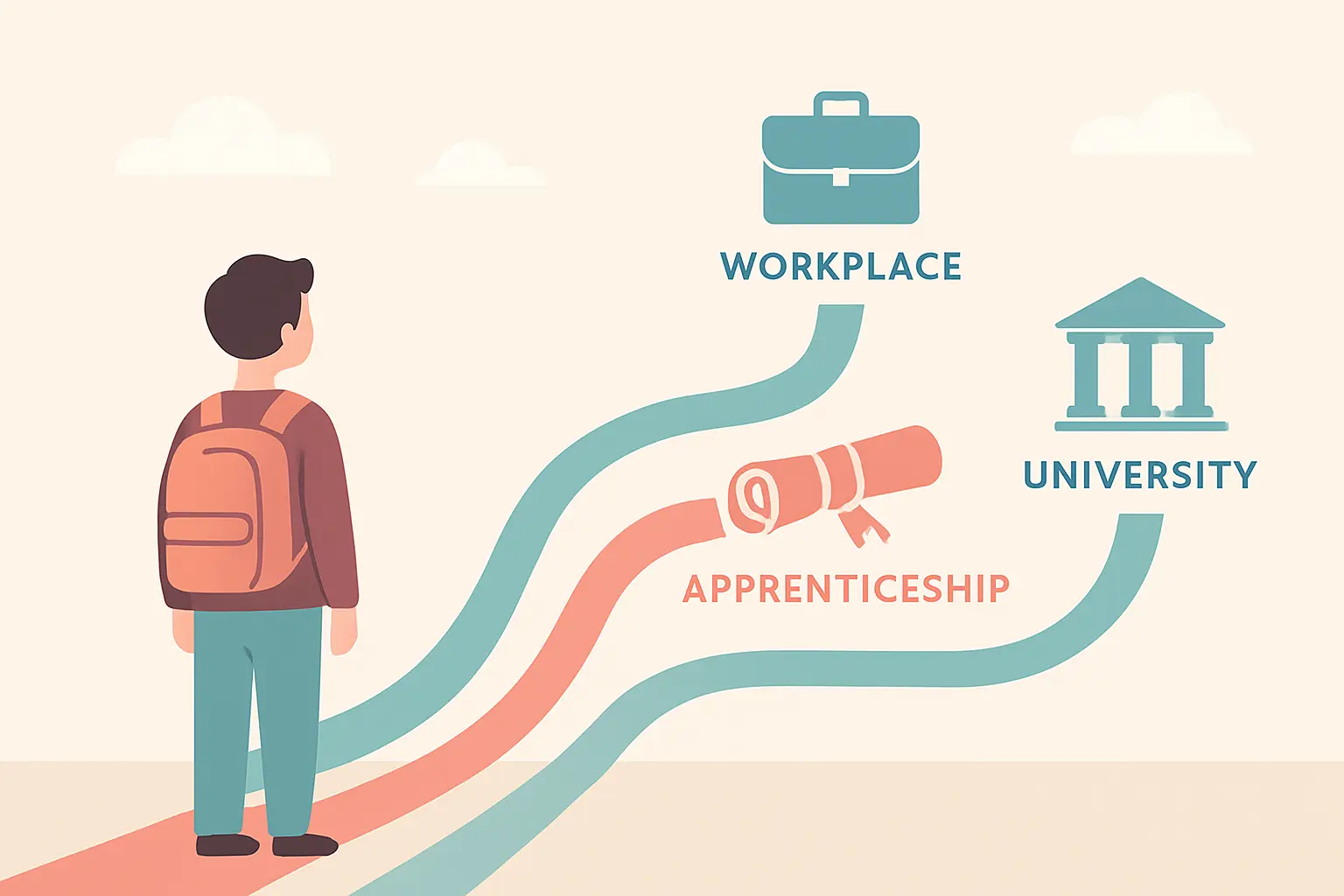
All three onward routes are open: skilled employment, a higher or degree apprenticeship, or higher education. University acceptance is the one to check carefully, because it varies by course rather than by institution, and some courses specify named A level subjects regardless of what else you hold.
Our comparison of T Levels, A levels, BTECs and the Access to HE Diploma covers how the four Level 3 routes differ on assessment and university acceptance, and our guide to RQF and FHEQ levels covers what comes next at Levels 4 and 5.
One scope note if you are researching the sector: T Level Technical Qualifications are excluded from Ofqual’s regulated qualification certificate counts, so the figures in our vocational qualification statistics do not measure T Level completions.
How to use this list
- Pick the route before the subject. The routes map to occupational areas; get that right and the subject choice narrows itself.
- Check availability locally. T Levels run at selected schools and colleges, so your realistic options are geographic as much as academic.
- Ask about placements for that specific subject at that specific provider, including what happens if a placement falls through.
- Check the status — do not build a plan around Finance if you are starting after September 2026, or around Social Care or Sport before 2028.
- Check onward acceptance with the specific universities or employers you are aiming at.
Frequently asked questions
How many T Level subjects are there?
GOV.UK states 21 T Levels are available; the T Levels site describes over 20 subjects across eleven routes. The difference depends on whether subjects arriving in 2028 or closing to new entrants are counted, so use the list rather than the total.
Which T Level is closing?
Finance, in the Legal, Finance and Accounting route, takes its last enrolments in September 2026. Accounting and Legal Services continue.
Which T Levels are coming next?
Social Care, within Health and Science, and Sport as its own route — both from September 2028.
Is a T Level equivalent to 3 A levels?
Yes. Government describes a T Level as a single large qualification equivalent to 3 A levels, taken over two years.
How long is the industry placement?
At least 315 hours, approximately 45 days, on every T Level regardless of subject.
Can I do a T Level anywhere in the UK?
T Levels are an England programme, delivered at selected schools, colleges and other providers. Scotland, Wales and Northern Ireland have their own qualification systems.
Can I go to university with a T Level?
Yes, though acceptance varies by course rather than by institution, and some courses require named A level subjects. Check the specific courses you are aiming at before choosing your route.
T Levels are assessed partly through an employer-set project, which is a longer piece of structured writing than most students have produced before. Tesify maps an outline to the assessment criteria and keeps references consistent — a starting draft to rewrite in your own words, based on the placement only you did.
Write your thesis with AI
Structure, draft, cite, and format your thesis faster with Tesify’s AI writing tools, automatic bibliography, and plagiarism checker. Free to start, no credit card required.






Leave a Reply