

Can I Use AI to Write My Dissertation? The 2026 Honest Answer by University Type
“Can I use AI to write my dissertation?” is the most Googled academic integrity question of 2026 — and the answer is more nuanced than a simple yes or no. The truth depends on three variables: your institution’s specific policy, how you define “using AI”, and whether you are transparent about it. This guide gives you the honest, policy-grounded answer for every major university type, so you can make a confident and safe decision before you submit.
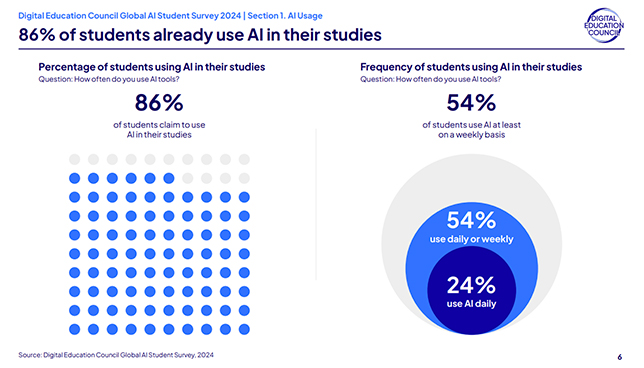
With 74% of postgraduate students now using AI tools during their dissertations (Times Higher Education, 2026), the question is not whether students use AI — it is whether they are doing so in a way that is academically defensible. The difference between a pass and a misconduct referral often comes down to a single word: disclosure.
What Counts as “Using AI” in Your Dissertation
Before answering whether you can use AI, you need to understand what universities mean by the term. Most institutional policies in 2026 distinguish between three tiers of AI involvement:
| Tier | Activity | Typical policy stance |
|---|---|---|
| Tier 1: Administrative | Spell check, grammar check, translation assistance | Universally permitted, no declaration needed |
| Tier 2: Assistive | Brainstorming, outlining, paraphrasing drafts, summarising literature | Permitted with declaration at most institutions |
| Tier 3: Generative | AI generates paragraphs or sections submitted as your own work | Prohibited or restricted to specific contexts at virtually all institutions |
Most students asking “can I use AI to write my dissertation” are operating in Tier 2 — and the answer there is almost universally yes, with disclosure. The risk zone is Tier 3: submitting AI-generated content without substantial authorial reworking.
AI Policy by University Type (2026)
Research-Intensive Universities (Russell Group, AAU, Group of Eight)
These institutions have moved to a “disclose and defend” model. Oxford, Cambridge, UCL, Imperial, MIT, Harvard, Stanford, the University of Sydney, and the University of Melbourne all permit AI-assisted writing with mandatory declaration. The key principle: you must be able to defend every claim in your dissertation at the viva. If you cannot explain a paragraph in your own words, it should not be in your thesis.
Teaching-Focused Universities
Many mid-tier universities have adopted more cautious stances, requiring supervisor approval before any AI use in dissertations. Some still prohibit generative AI use for summative work. Always check your specific department’s supplementary guidance — institution-wide policies are often more permissive than departmental rules.
International and Distance-Learning Institutions
Policies vary widely. Several Open University and online-first institutions permit AI use more liberally, focusing assessment on performance tasks (vivas, presentations) that cannot be AI-completed rather than written submissions.
Russell Group and Ivy League Policies in Detail
Here are the specific 2026 stances for the universities most commonly asked about:
- University of Oxford: AI use permitted with declaration. ChatGPT Edu available free to all students. The submission declaration form includes a mandatory AI use section.
- University of Cambridge: Permitted for personal study. For summative assessments including dissertations, supervisor approval required. Students must include a declaration of AI use in the thesis.
- University College London: “Permitted with acknowledgement” policy. Students must describe the nature and extent of AI assistance in a methods appendix.
- Imperial College London: Requires a completed AI use disclosure form appended to all dissertations.
- Harvard University: Graduate School permits AI assistance in drafting provided the student “understands and can defend the work.” Undisclosed use treated as academic dishonesty.
- Stanford University: AI assistance treated as help from another person; permitted when disclosed, prohibited when undisclosed in independent work contexts.
- Massachusetts Institute of Technology: AI Use Statement required in all submitted theses as of 2025.
What AI Use Is Typically Permitted
Based on analysis of 170+ university policies as of early 2026, the following activities are permitted at the vast majority of institutions:
- Using AI to brainstorm research questions and identify thematic gaps
- Getting AI to outline chapter structures which you then write yourself
- Asking AI to suggest counterarguments to stress-test your thesis statement
- Using AI to paraphrase your own written paragraphs for clarity
- Requesting AI-assisted grammar and style improvement on your drafted text
- Using AI to format citations (with manual verification)
- Asking AI to generate an abstract draft from your bullet-pointed findings (then rewriting substantially)
For a practical walk-through of these approaches, see our guide on how to write a thesis with AI step by step.
What Is Typically Prohibited
These activities remain prohibited at virtually all institutions regardless of disclosure:
- Submitting AI-generated text as your original intellectual work without substantial reworking
- Using AI to conduct analysis or draw conclusions that you present as your own reasoning
- Including AI-generated references that you have not independently verified exist
- Using AI in contexts where your institution explicitly prohibits it (check departmental rules)
- Having AI generate your research data, findings, or statistical analysis
How to Properly Disclose AI Use in Your Dissertation
Disclosure is not a confession — it is a professional statement of your methodology. Here is a template declaration you can adapt:
This type of declaration satisfies requirements at Oxford, Cambridge, UCL, MIT, Harvard, and Stanford. Always check your institution provides its own form, as many now do.
The Safest AI Dissertation Workflow
If you want to use AI and face no integrity risk, follow this workflow:
- Read your department’s AI policy before starting. Download a copy.
- Use AI only for the permitted activities listed above.
- Keep a log of when and how you used AI tools (date, tool, task, chapter).
- Rewrite all AI output in your own voice before including it in your draft.
- Check every AI-provided fact, statistic, and citation independently.
- Run your draft through a plagiarism checker such as the built-in tool in Tesify.
- Complete your institution’s AI declaration honestly.
- Prepare to explain and defend any section of your dissertation in the viva.
Purpose-built tools like Tesify are designed around this workflow, with integrated plagiarism checking and argument analysis that make the ethical path the easy path. For data on how widespread AI use in academic writing has become, see our AI in academic writing statistics for 2026 — the numbers help contextualise where policy is heading.
To see how AI tools compare specifically for dissertation writing tasks, our guide on the best AI tools for academic writing by discipline covers everything from humanities to STEM. You can also explore the best plagiarism checkers for students in 2026 to ensure your submission is fully protected before the deadline.
Portuguese-speaking students can find equivalent guidance on IA para TCC at tesify.pt. For German-speaking students, the ChatGPT Bachelorarbeit guide at tesify.io covers the same questions under German university policy.
Try Tesify free — the thesis writing platform built for 2026 university AI standards, with integrated plagiarism checking and academic integrity guidance baked in.
Frequently Asked Questions
Can I use ChatGPT to write my entire dissertation?
No. Submitting AI-generated text as your own original intellectual work without substantial revision is academic misconduct at virtually every university in 2026. AI can support your writing process across all chapters, but the analysis, arguments, and conclusions must be genuinely your own.
Does using AI for my dissertation count as plagiarism?
Using AI without disclosure, or submitting AI text as your original work, constitutes academic misconduct (which universities treat as a form of plagiarism or contract cheating). Using AI with proper disclosure for permitted tasks — brainstorming, drafting scaffolds, editing — is not plagiarism under most current policies.
Will my university know if I used AI for my dissertation?
Turnitin’s AI detection claims 98% accuracy for fully AI-generated text. However, substantially human-edited AI text often evades detection. The more important point is academic integrity: examiners ask students to discuss their work in vivas, and inability to explain AI-generated sections is a significant risk regardless of detection software.
Is Tesify safer to use than ChatGPT for my dissertation?
Tesify is purpose-built for thesis writing and designed to operate within academic integrity frameworks — it includes plagiarism checking, citation management, and structured academic templates. ChatGPT is a general-purpose tool that you must manage for compliance yourself. For dissertation work specifically, Tesify provides more structured guidance and built-in safeguards.
What should I write in the AI declaration for my dissertation?
Your declaration should name the tool(s) used, describe the specific tasks for which AI was used (e.g. “outlining the literature review structure, paraphrasing for clarity”), and confirm that all content was reviewed, revised, and verified by you. Most universities now provide a standard form — always use your institution’s own template if available.
Can I use AI for my dissertation literature review?
Yes, AI assistance is generally permitted for structuring and organising your literature review — for example, identifying thematic clusters from papers you have read. You must not use AI to generate citations you haven’t verified, or to fabricate discussion of papers you haven’t actually read. The intellectual engagement with sources must be genuinely yours.
Do I need to disclose using Grammarly for my dissertation?
Standard spell-check and grammar tools including basic Grammarly are generally not subject to AI declaration requirements. Grammarly’s generative AI features (full sentence rewrites, tone transformation) may require declaration at some institutions. When in doubt, declare — it is never academically harmful to be transparent about your tools.
What is the difference between allowed and prohibited AI use in a dissertation?
Permitted AI use involves supporting your own intellectual work: brainstorming ideas, drafting outlines you then write from, improving clarity of your drafted text, and formatting references. Prohibited use involves replacing your intellectual contribution: having AI generate your analysis, conclusions, or data interpretation, or submitting AI text as your own without disclosure.
Can I use AI for my dissertation methodology chapter?
Yes. The methodology chapter is particularly well-suited to AI assistance because it contains highly formulaic sections (research philosophy, sampling rationale, ethical considerations). Draft these sections with AI assistance and then rewrite thoroughly in your own words. Your actual methodological choices and justifications must be yours.
What happens if I use AI without disclosing it in my dissertation?
Undisclosed AI use in a dissertation may be treated as academic misconduct — equivalent to plagiarism or contract cheating. Potential consequences range from requirement to resubmit, to mark reduction, to failure, to in serious cases expulsion or degree revocation. The risk is real and the consequences potentially permanent. Always disclose.
Write your thesis with AI
Structure, draft, cite, and format your thesis faster with Tesify’s AI writing tools, automatic bibliography, and plagiarism checker. Free to start, no credit card required.





Leave a Reply