
Best AI Paraphrasing Tools for Academic Writing Compared (2026)
AI paraphrasing tools have become ubiquitous in student writing — but using the wrong one for academic work can create serious problems. A paraphrasing tool that simply swaps synonyms produces text that still constitutes plagiarism, risks detection by Turnitin, and fails to maintain the academic register your examiners expect. In 2026, with universities deploying increasingly sophisticated AI detection tools alongside plagiarism checkers, choosing the right paraphrasing approach matters more than ever.
This guide ranks the best AI paraphrasing tools for academic writing specifically — evaluating them on output quality, academic register, plagiarism risk, pricing, and what students actually need when writing a thesis or research paper.
What Is Academic Paraphrasing?
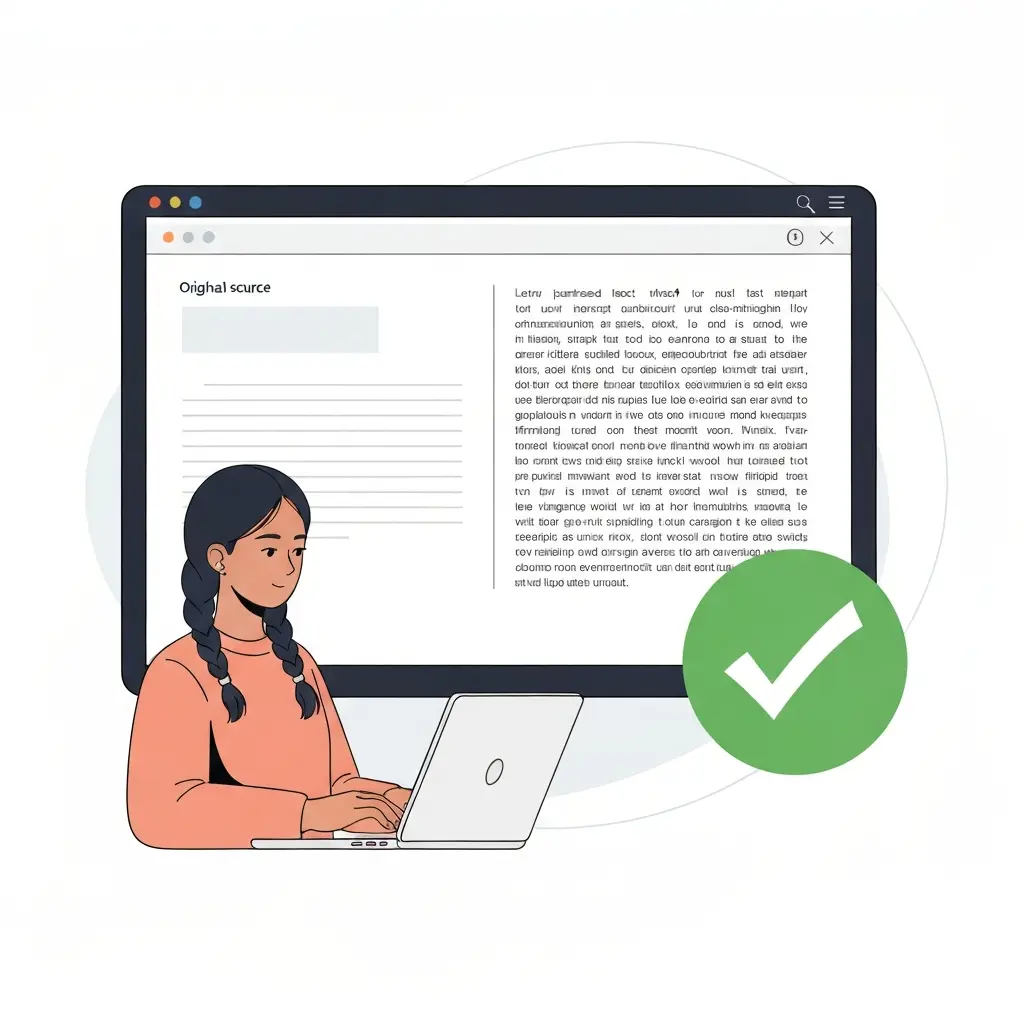
Academic paraphrasing is the practice of restating another scholar’s ideas in your own words, with a citation acknowledging the original source. It is distinct from:
- Quoting: Using the exact words of the original, with quotation marks and citation
- Summarising: Condensing a longer passage to its key points
- Plagiarism: Using another’s words or ideas without attribution
The critical rule: paraphrasing always requires a citation. If you restate an idea from a source in your own words, you must still cite the source. A paraphrase without a citation is plagiarism.
Paraphrasing Tool Comparison Table
| Tool | Academic Mode | Quality | Plagiarism Check | Price |
|---|---|---|---|---|
| QuillBot | Yes (Formal mode) | Excellent | Premium only | Free (limited) |
| Tesify | Academic-specific | Good | Included all plans | Free plan available |
| Grammarly | Via rewrite suggestions | Good | Premium only | Free (limited) |
| Wordtune | No dedicated academic mode | Good (general) | No | Free (limited) |
| Scribbr Paraphraser | Academic-oriented | Good | Integrated with Scribbr checker | Free (limited) |
QuillBot Academic Mode: Review
QuillBot remains the market leader in AI paraphrasing quality. Its “Formal” mode is specifically designed to maintain formal, academic register while changing the wording. In testing, QuillBot Formal mode:
- Maintains the accurate meaning of the original text in approximately 90%+ of cases
- Produces grammatically correct output in virtually all cases
- Generates text that is less obviously AI-paraphrased than synonym-swap tools
- Provides adjustable synonyms so users can control word choices
However, QuillBot has important limitations for academic use: the free plan restricts paraphrasing to 125 words per use; the plagiarism checker is only available on Premium; and the tool does not help you understand why paraphrasing is appropriate or provide citation suggestions alongside the rewritten text.
Tesify Academic Paraphrasing: Review
Tesify’s AI writing assistant approaches paraphrasing within the context of a full academic writing workflow. Rather than a standalone paraphrasing tool, Tesify helps students restate ideas appropriately as part of building coherent academic arguments, and immediately flags when a citation is needed. The integrated plagiarism checker allows students to verify that their paraphrased passages are sufficiently original before submission.
This contextualised approach to paraphrasing — where the tool understands that you are writing an academic thesis chapter rather than producing generic content — makes Tesify particularly valuable for students who want to use paraphrasing responsibly and in compliance with academic integrity requirements. For guidance on paraphrasing norms in specific languages, see the French mémoire guide or the Spanish TFG guide.
Grammarly Paraphrasing: Review
Grammarly’s paraphrasing capabilities are delivered through its “Rewrite” and “Make it better” suggestion features, available primarily in GrammarlyGO. These are not dedicated paraphrasing tools but can help rework sentences for clarity and style. For academic paraphrasing specifically, Grammarly is better used as a quality check after paraphrasing than as the primary paraphrasing tool.
Other Tools Worth Considering
Scribbr Paraphraser: Built specifically for academic writing, with modes calibrated for scholarly contexts. Developed by the academic services company Scribbr, which also provides editing and plagiarism checking services. Worth considering for students who already use other Scribbr tools.
Wordtune: Strong for improving the clarity and flow of already-written text. Lacks academic-specific features but performs well for general rewriting tasks.
Tools to Avoid for Academic Use
A significant number of tools marketed as “AI humanisers” or “plagiarism bypasses” explicitly claim to help students avoid detection. We strongly recommend against these for academic work:
- Tools advertising “undetectable AI text” create text that constitutes academic fraud if submitted without disclosure
- “Humanise AI” tools that claim to rewrite AI-generated text to bypass detectors produce academic integrity violations rather than solving them
- Essay mills and writing services are prohibited at virtually all universities and can result in degree revocation
Legitimate AI tools support your writing process; they do not replace your thinking or conceal AI use. Platforms like AI content platforms distinguish clearly between legitimate AI assistance and problematic replacement of human thought.
Rules for Safe Academic Paraphrasing
- Always cite the source — even when paraphrasing, attribution is required
- Read and understand before paraphrasing — set the source aside and write the idea in your own words
- Change both words and structure — synonym substitution alone is still plagiarism
- Use AI tools as scaffolding — to refine your already-written paraphrase, not to generate it
- Run a plagiarism check — Tesify’s plagiarism checker verifies your work before submission
- Disclose AI use per your institution’s policy — if you use a paraphrasing tool, check what disclosure is required
Frequently Asked Questions
Is using QuillBot considered cheating at university?
Using QuillBot is not automatically cheating, but it can be if used to avoid genuine engagement with sources. Most universities permit AI paraphrasing tools for editing and improving your own writing. Using QuillBot to paraphrase source material without understanding it, or without citing the source, constitutes plagiarism. Using it to improve the clarity of paraphrasing you have already done is generally acceptable. Check your institution’s specific AI use policy.
Can Turnitin detect AI paraphrasing?
Turnitin’s AI detection feature (introduced in 2023) can identify text that shows characteristics of AI generation, including AI-assisted paraphrasing. Turnitin also checks text similarity, so even AI-paraphrased text that closely resembles the original may generate a similarity match. The detection is not perfect, but institutions increasingly use AI detection scores as grounds to investigate. The safest approach is to paraphrase genuinely and cite every source.
What is the best free paraphrasing tool for academic writing?
QuillBot’s free plan (125 words per paraphrase, Formal mode) is the strongest free paraphrasing option for academic writing. Tesify’s free plan provides academic paraphrasing within a full thesis writing context and includes a plagiarism checker. For students who only occasionally need to paraphrase short passages, the free tiers of both tools are usually sufficient. For heavy paraphrasing use, a QuillBot Premium subscription provides the best quality.
Do I need to cite a source if I paraphrase it?
Yes, absolutely. A paraphrase restates someone else’s idea — it does not become your idea simply because you changed the words. You must cite the source for every paraphrase, just as you would for a direct quotation. The only difference is that paraphrases do not use quotation marks. Failing to cite a paraphrased source is plagiarism, regardless of how thoroughly you changed the wording.
What is the QuillBot Formal mode?
QuillBot Formal mode is a paraphrasing setting specifically designed to produce formally written, professional output appropriate for academic, business, and professional contexts. It avoids casual language, maintains complex sentence structures, and uses vocabulary appropriate for scholarly writing. This makes it the most suitable QuillBot mode for academic work. It is available on both free and premium plans, though the free plan restricts the number of words per session.
Paraphrase with Confidence — Check with Tesify
Tesify helps you paraphrase within your academic writing workflow and instantly verifies your work is plagiarism-free before you submit. Write with integrity and confidence — Tesify has you covered.
Write your thesis with AI
Structure, draft, cite, and format your thesis faster with Tesify’s AI writing tools, automatic bibliography, and plagiarism checker. Free to start, no credit card required.





Leave a Reply