
Tesify vs ChatGPT Thesis Writing: Which Actually Works?
You’ve got six weeks until submission. Your chapter outline stares back at you like an accusation. You paste your research notes into ChatGPT, hit enter, and get… something. It sounds academic. It sounds confident. And then your supervisor tears it apart for missing citations, vague claims, and three sentences that look suspiciously like they came from a 2019 paper you never read.
Sound familiar? You’re not alone — and you’re not doing it wrong. The problem isn’t you. It’s using a general-purpose tool for a highly specialised task.
This article runs a direct, no-fluff comparison between Tesify and ChatGPT for thesis writing — covering plagiarism risk, citation management, writer’s block, academic tone, and the actual workflow that gets dissertations submitted on time.
The Real Problem With Using ChatGPT for Your Thesis
Here’s the counterintuitive truth: ChatGPT isn’t bad at writing. It’s genuinely impressive at producing text. The problem is that producing text and writing a credible academic dissertation are two completely different things.
A thesis isn’t just words on a page. It’s an argument built on verifiable evidence, formatted to institutional standards, checked for originality, and submitted to people who have read thousands of student papers. The margin for error is almost zero — and ChatGPT’s margin for error is actually quite large.
Consider what a dissertation requires that general AI tools simply can’t deliver:
- Verified academic sources — not invented DOIs or confidently wrong publication dates
- Plagiarism-clean original text — detectable by Turnitin, iThenticate, and institutional checkers
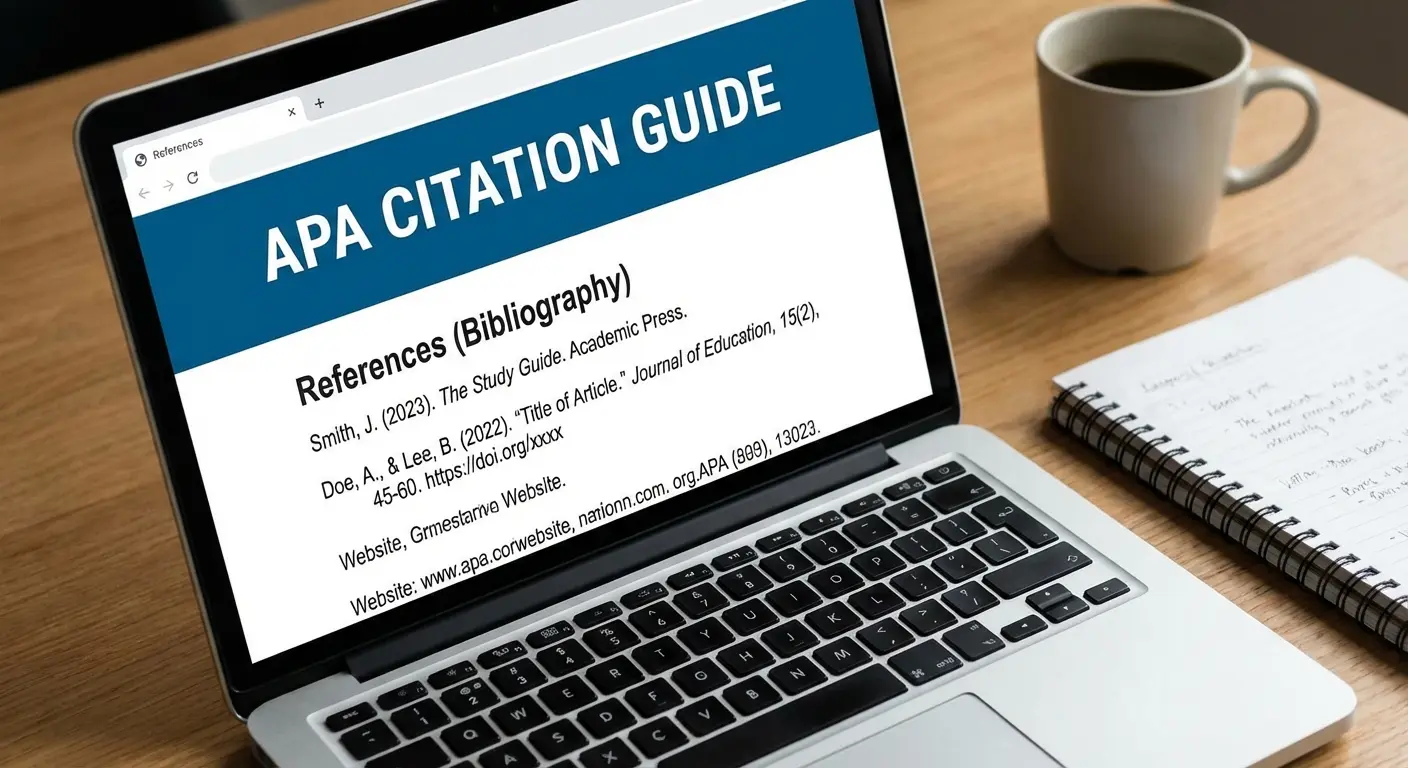
- Accurate citation formatting — APA 7th, MLA 9th, Chicago 17th, Vancouver — not approximate
- Coherent long-form structure — maintaining argument continuity across 8,000–80,000 words
- Academic register — the precise, hedged, evidence-grounded tone markers expect
What most people miss is that ChatGPT’s training cutoff means it can’t access recent papers — the very papers your literature review needs. It hallucinates references. A 2023 study published in the International Journal for Educational Integrity found significant reliability issues with AI-generated academic text detection, but the underlying citation fabrication problem remains acute.
This isn’t a criticism of OpenAI. ChatGPT was designed to be a versatile conversational assistant — not a thesis submission engine. The frustration students feel isn’t a sign they’re using it wrong. It’s a sign they need a different tool entirely.
Tesify vs ChatGPT: Head-to-Head Feature Comparison
Before diving deep, here’s the direct comparison most students need to see before making a decision about which AI thesis writing tool to use.
| Feature | Tesify | ChatGPT (GPT-4) | Why It Matters |
|---|---|---|---|
| Thesis-specific AI editor | ✅ Yes | ❌ No | Maintains academic register automatically |
| Plagiarism detection | ✅ Real-time, multi-database | ❌ None | Critical before submission |
| Auto bibliography (APA, MLA, Chicago, Vancouver) | ✅ One-click generation | ❌ Approximate only | Wrong citations = academic misconduct risk |
| Access to verified academic sources | ✅ JSTOR, ProQuest, Google Scholar, PubMed | ❌ Training data only (may be outdated) | Literature reviews need current sources |
| Export to Word, PDF, LaTeX | ✅ Full export suite | ❌ Copy-paste only | Saves hours of formatting |
| Professional thesis templates | ✅ Yes, institution-ready | ❌ No | Structure matters as much as content |
| Real-time coherence feedback | ✅ Yes | ⚠️ Only when prompted | Passive improvement vs. active iteration |
| Long-form argument continuity | ✅ Thesis-level memory | ⚠️ Context window limited | Context loss = incoherent chapters |
| Free to start | ✅ No credit card needed | ⚠️ Free tier limited | Accessibility matters for students |
The pattern is clear: ChatGPT wins at flexibility; Tesify wins at the specific, high-stakes requirements of academic dissertation writing. For a broader review of what’s available in the market, check this guide to the best AI writing tools for dissertations in 2025 — it benchmarks multiple platforms side by side.
Plagiarism Risk — Why This Is the Biggest Differentiator
Plagiarism anxiety is real. And in 2024–2025, it got more complicated — because now students aren’t just worried about accidentally copying a source. They’re worried about whether their AI-assisted text will trigger a detection flag and what their institution will do about it.
Here’s what most articles don’t say clearly enough: using AI isn’t inherently plagiarism. The actual risk comes from submitting text that matches existing published work — whether you wrote it yourself, copied it, or an AI generated it. The originality question is the same regardless of source.
A piece in Inside Higher Ed highlighted that institutions are still figuring out policy — but one thing is consistent: submitting work that’s unoriginal, regardless of how it was produced, carries consequences.
ChatGPT has absolutely no plagiarism checking built in. None. It generates text — and you have no way of knowing, from within the tool, whether that text overlaps with published sources. You’d have to copy the output, paste it into a separate checker, interpret the results, and revise. Repeat for every section. For a 15,000-word dissertation, that’s not a workflow. That’s a nightmare.
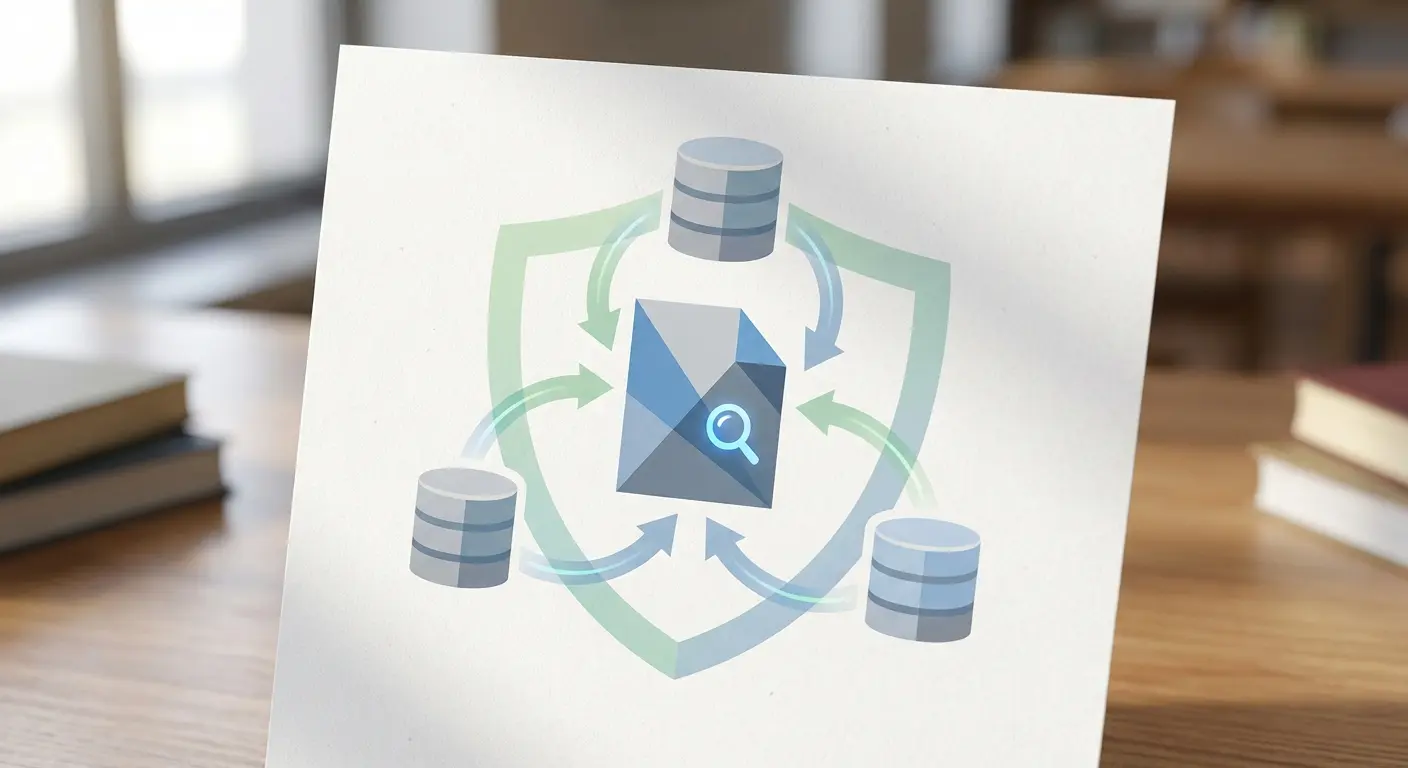
Tesify’s plagiarism checker does something categorically different. It runs real-time text analysis against millions of scholarly sources — JSTOR, ProQuest, EThOS, ERIC, Google Scholar, and international academic databases. That’s actual source comparison, not AI-pattern detection. The result is a certified originality report that demonstrates your work is genuinely your own, not just “doesn’t look like AI wrote it.”
For students at UK, Australian, Irish, Canadian, and US institutions where Turnitin is standard, having an independent pre-submission check is the difference between confidence and anxiety on submission day.
For a deeper look at how to produce AI-assisted writing that’s genuinely plagiarism-free, the guide on writing plagiarism-free academic texts with AI covers the ethical framework and practical workflow in detail.
Citations and Bibliography: Where ChatGPT Falls Apart
Ask ChatGPT to generate a bibliography for a thesis chapter and you’ll get something that looks right. The formatting will appear to match APA or MLA. The author names look real. The journal titles sound plausible. And then you try to find the actual paper — and it doesn’t exist.
This is called citation hallucination, and it’s not a bug that will get patched in the next update. It’s a fundamental feature of how large language models work: they predict text that fits the pattern of academic citations, not text that corresponds to real documents. The model has no mechanism to distinguish “I generated a plausible-sounding author name” from “I retrieved an actual paper.”
The consequences are severe. Your supervisor spots a fake citation. You’ve either plagiarised (intentionally or not) or submitted fabricated research. Neither outcome is acceptable. Neither is easy to fix after the fact.
Tesify’s automatic bibliography system is built on a completely different foundation. It generates citations by pulling actual records from Google Scholar, PubMed, JSTOR, and ProQuest — databases containing tens of millions of verified academic documents. You get APA 7th edition, MLA, Chicago, Vancouver, and other formats generated with one click, built from real metadata.
What does that mean practically? You search for a source within the Tesify interface. It finds the real paper. It generates the correctly-formatted citation. It adds it to your reference list. No manual formatting. No cross-referencing. No wondering if the paper actually exists.
For students navigating specific institutional citation requirements — particularly in European academic contexts — the resource on automatic citation tools for academic work covers formatting accuracy standards in depth.
Fair warning: no tool eliminates all citation work. You still need to read the sources, understand them, and integrate them meaningfully into your argument. But the mechanical burden — the formatting, the sorting, the database cross-checking — that can and should be automated. That’s not laziness. That’s efficiency.
Solving Thesis Writer’s Block With AI
Writer’s block isn’t about being stuck. It’s usually about one of three things: you don’t know what to say next, you don’t know how to say what you want to say, or you’re so anxious about saying it wrong that you say nothing at all.
Both ChatGPT and Tesify can help with the first two. Where they diverge sharply is on the third — because anxiety about quality, coherence, and academic standards doesn’t go away when you’re using a general chatbot. It often gets worse, because you’ve added a new worry: “Is this output usable? Does it sound academic enough? Is any of this real?”
The most effective use of AI for thesis writer’s block isn’t having it write your chapters for you. It’s using it to get unstuck at the paragraph level — to reword a clumsy sentence, expand a concept you’ve sketched, or test how a transition reads. That’s a micro-level writing assistant function, and it’s exactly what Tesify’s AI Editor is designed for.
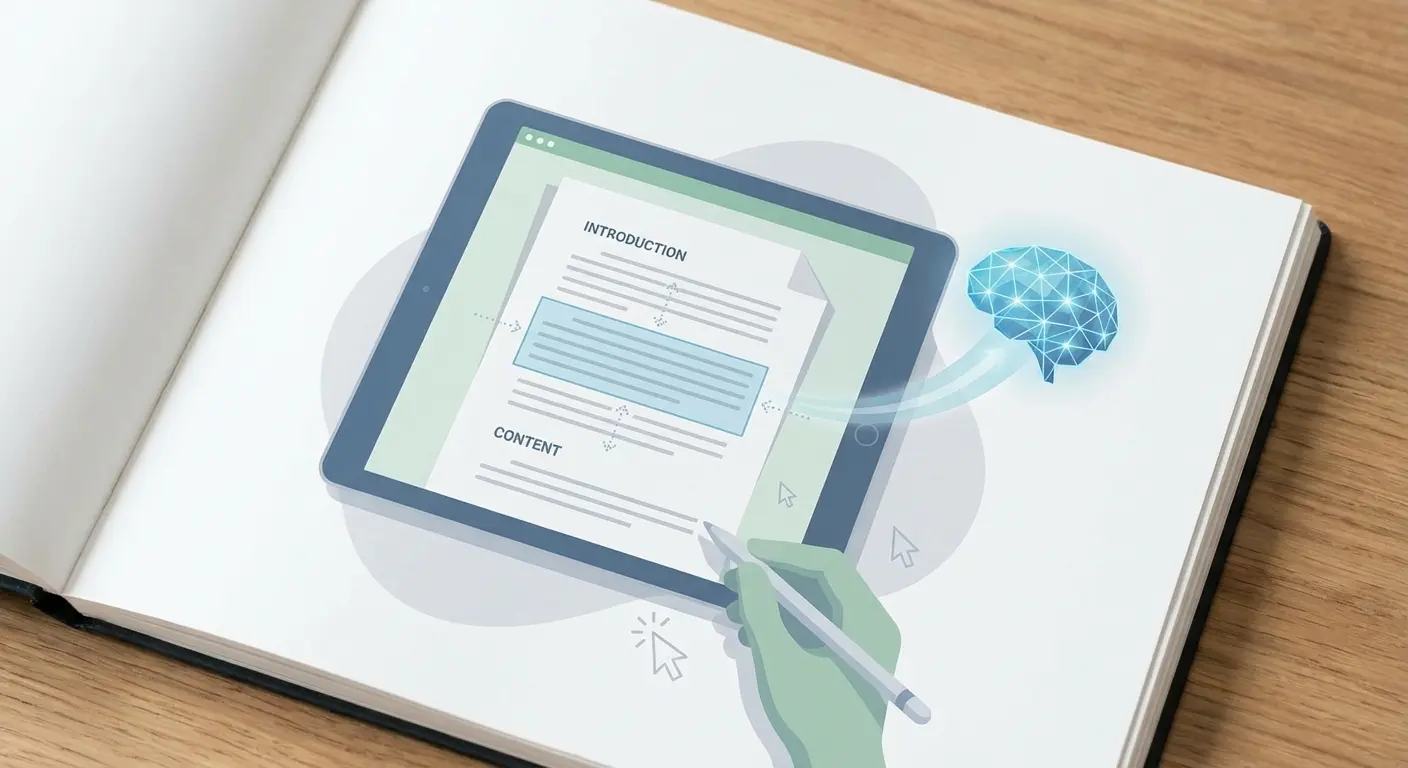
The Tesify AI Editor rewrites paragraphs in proper academic register, expands conceptual outlines, corrects language errors, and provides real-time feedback on coherence — all within the same document you’re writing. You don’t toggle between tabs, copy-paste, re-format, and hope nothing breaks. The feedback loop is immediate and contained.
ChatGPT can do some of this. The problem is context. In a long ChatGPT conversation, it loses track of what you’ve already written, what your argument is, what your methodology was. By chapter three, it’s writing without knowing what chapters one and two established. Tesify maintains thesis-level memory across your entire document — which means suggestions are always contextually appropriate, not generically plausible.
For students tackling the literature review specifically, this step-by-step AI workflow for literature reviews breaks down a practical process that works whether you’re using Tesify, ChatGPT, or a hybrid approach.
What Tesify Actually Does (And Why 9,000+ Students Use It)
Tesify isn’t a chatbot with a thesis skin over it. It’s a purpose-built academic writing platform designed around the specific structure, requirements, and anxieties of writing a bachelor’s dissertation, master’s thesis, or PhD dissertation.
Here’s what the platform gives you in one place:
Integrated AI Writing Assistance
The AI editor works directly in your document. Highlight a paragraph, ask it to expand, tighten, or improve academic tone — and the change happens in context. No copy-paste. No format loss. No hoping it understood what you meant.
Real-Time Plagiarism Detection
Every section you write can be checked instantly against JSTOR, ProQuest, EThOS, ERIC, Google Scholar, and millions of additional scholarly sources. You get an originality score, highlighted matches, and enough information to fix issues before submission — not after.
Run your plagiarism check with Tesify before you submit. It takes minutes. The alternative is submitting blind and hoping your institution’s checker agrees with your assumptions.
Automatic Bibliography in Multiple Formats
APA 7th edition. MLA 9th. Chicago 17th. Vancouver. Generated from real source records, not predicted text. One click per citation, fully formatted reference list on demand.
Professional Templates and Export
Tesify provides institution-ready thesis templates that handle structure from the outset. Export to PDF, Word, or LaTeX — with formatting preserved. For students using LaTeX-based submission systems (common at technical universities), this integration matters. For comparison, Overleaf’s thesis template gallery shows the range of formatting requirements across institutions — Tesify’s export is designed to work with these.
The Numbers That Matter
Over 9,000 students have used Tesify to complete their thesis work. The platform reports an average 2x speed improvement in dissertation completion time compared to traditional methods. Free signup, no credit card required.
Stop wasting hours on bibliography formatting and plagiarism anxiety
Join 9,000+ students who finish their thesis twice as fast. Tesify is free to start — no credit card, no commitment.
A Practical AI Thesis Writing Workflow That Works

The best results come from treating AI as a writing partner, not a writing replacement. Here’s the workflow that consistently produces high-quality, submission-ready thesis chapters.
Step 1: Build Your Source Foundation First
Before you write a single word, identify your key sources. Use Elicit or Google Scholar to find recent papers. Import them into Tesify. Your bibliography is growing in real time while you research — not at midnight the night before submission.
Step 2: Create Your Argument Skeleton
Write your chapter outlines as bullet points — your main claim, 3–5 sub-arguments, and the evidence for each. Don’t write prose yet. This is the structural scaffold that keeps AI-assisted writing coherent. Tesify’s thesis templates give you a validated structure to start from.
Step 3: Draft Section by Section, Not Page by Page
Work in 300–500 word blocks. For each block, write a rough draft yourself (even one messy sentence helps), then use the Tesify AI Editor to expand, refine, and improve academic tone. This produces work that’s genuinely yours — not generated text with your name on it.
Step 4: Run Plagiarism Checks Incrementally
Don’t wait until the full draft is done to check originality. Run the Tesify plagiarism check at the end of each chapter. Fix issues while context is fresh. By submission day, your originality report is already clean.
Step 5: Finalize Citations and Export
Use Tesify’s auto bibliography to generate your reference list in the required format. Review each entry — not because you don’t trust the tool, but because understanding your sources makes your viva/defense infinitely easier. Export to Word, PDF, or LaTeX. Submit.
For visual learners, this full screen share of academic writing with AI from blank page to 5,000 words demonstrates a similar approach in real time — useful for understanding the rhythm of AI-assisted writing before you commit to a method.
When to Use Tesify, When to Use ChatGPT
This isn’t a zero-sum competition. The honest answer is that both tools have legitimate uses — but the stakes determine which one you should rely on for what.
Use Tesify For:
- Any writing that will be submitted for academic assessment
- Literature review drafting and expansion
- Methodology and analysis chapters
- Pre-submission plagiarism verification
- Generating and formatting your reference list
- Improving academic tone and argument coherence
- Exporting a properly formatted, submission-ready document
Use ChatGPT For:
- Brainstorming research questions at the very early stage
- Getting a quick summary of a concept to help you understand it
- Generating rough outlines you then substantially rewrite yourself
- Personal statement drafts (non-academic, not submitted)
- Testing whether an argument makes intuitive sense before you develop it
The guiding principle: if it’s going to appear in your submitted document, it needs to go through a tool that can verify originality and citations. That’s Tesify’s core value — not that it writes better prose, but that it writes verifiable, compliant, submission-safe academic prose.
What most people miss in this comparison is that the question isn’t really “which AI is smarter?” It’s “which AI is responsible for getting me through submission without a misconduct investigation?” Those are different questions with a very different answer.
Frequently Asked Questions
Is using AI for thesis writing considered cheating?
It depends on your institution’s policy, which varies significantly. Most universities permit AI as a writing aid but prohibit submitting AI-generated text as your own original work without disclosure. Using Tesify’s AI Editor to improve your own drafts is generally considered acceptable under academic integrity frameworks — the same way using Grammarly is acceptable. Always check your institution’s specific AI use policy and declare AI assistance where required.
Can ChatGPT generate accurate thesis citations?
No — ChatGPT frequently fabricates citations that appear plausible but don’t correspond to real published work. This is called citation hallucination and is a structural limitation of how large language models work. Never submit ChatGPT-generated references without independently verifying each one. Tesify’s automatic bibliography system generates citations from real academic database records, which eliminates this risk entirely.
Does Tesify’s plagiarism checker work against Turnitin?
Tesify’s plagiarism checker compares your text against the same underlying academic databases that tools like Turnitin use — including JSTOR, ProQuest, EThOS, ERIC, and Google Scholar. While no pre-submission check guarantees a specific Turnitin score, running your work through Tesify’s plagiarism checker before submission gives you the best available indication of originality and flags any matches that need addressing.
How is Tesify different from other AI writing tools like Grammarly or Quillbot?
Grammarly and Quillbot are grammar and paraphrasing tools — useful but not purpose-built for academic research. Tesify is an end-to-end thesis platform that combines AI writing assistance, real academic source access, automatic bibliography generation, plagiarism detection, and thesis-specific templates in one environment. The difference is that Tesify is designed specifically for dissertation-level academic work, not general writing improvement.
What citation formats does Tesify support?
Tesify supports APA 7th edition, MLA 9th edition, Chicago 17th edition, Vancouver, and other academic citation formats. Citations are generated automatically from real source records pulled from Google Scholar, PubMed, JSTOR, and ProQuest — not predicted text. The reference list is formatted and updated in real time as you add sources to your thesis.
Is Tesify free to use?
Yes — Tesify offers a free signup with no credit card required. You can start writing your thesis immediately with access to core features including the AI editor and bibliography tools. Premium features including unlimited plagiarism checking and advanced export options are available on paid plans.
Final Verdict: The Right AI Thesis Writing Tool for Serious Students
Here’s the honest summary: ChatGPT is impressive, flexible, and genuinely useful for some parts of the research and writing process. It’s a remarkable tool that has changed how millions of people work. But it was built to be everything to everyone — and that ambition means it’s not optimised for the specific, high-stakes, citation-critical, plagiarism-checked, institutionally-regulated work of writing a university dissertation.
Tesify was built to solve exactly that problem. Not just to help you write faster — but to help you write right: with real citations, verified originality, proper academic structure, and a document you can submit without anxiety. That’s the core difference between a general AI chatbot and a purpose-built AI thesis writing tool.
Nine thousand students have already made that choice. The ones who submitted on time. The ones whose supervisors didn’t flag fabricated references. The ones who spent their final weeks refining their argument, not scrambling to fix their bibliography at midnight.
You don’t have to keep doing this the hard way.
Your thesis deserves better than copy-paste and crossed fingers
Tesify gives you the AI editor, plagiarism checker, and auto bibliography that actually work for academic submission. 9,000+ students. Free to start. No credit card required.
Write Your Thesis with Tesify — Free →
Free signup · No credit card · Export to PDF, Word, LaTeX





Leave a Reply