

How to Do a Literature Review for Your Thesis: Step-by-Step Guide 2026
Understanding how to do a literature review for your thesis is one of the most important skills you can develop as a research student — and one of the most frequently misunderstood. The literature review is not a summary of what researchers have said about your topic. It is a critical, analytical demonstration that you understand the intellectual field, can evaluate evidence and argument, and have positioned your study within it in a way that is justified and intellectually rigorous.
This guide takes you through the entire process in 2026: from defining your search scope to writing with genuine critical analysis. Every step includes practical advice drawn from academic writing conventions at universities across the UK, US, and Australia — plus guidance on the tools that can make the process faster without sacrificing quality.
What Is a Literature Review and What Should It Achieve?
A literature review is a systematic, critically analytical survey of the published research relevant to your thesis topic. Crucially, its purpose is evaluative — not descriptive. You are not compiling a reading list with annotations. You are arguing about the state of knowledge: what researchers have established, where they disagree, what methodological limitations compromise existing findings, and — most importantly — what question remains unanswered that your thesis will address.
A strong literature review achieves four specific goals:
- Establishes the theoretical and empirical context for your research, showing that your study is grounded in the existing field
- Demonstrates your critical engagement with the literature — evaluating quality, not just describing content
- Identifies the research gap your study addresses, making your thesis intellectually justified
- Provides the conceptual framework you will use to analyse and interpret your own findings
Step 1: Define Your Research Question and Search Scope
The most common mistake students make when beginning a literature review is searching before they have defined their scope. An unfocused search produces hundreds of loosely relevant papers, and you spend months drowning in material that does not directly serve your research questions.
Define Your Search Terms
Start with your research questions and extract 5–10 key concepts and terms. For each concept, identify synonyms and related terms. A thesis on AI tools in postgraduate writing might use: “artificial intelligence AND academic writing,” “generative AI AND dissertation,” “AI writing tools AND plagiarism,” “large language models AND higher education.”
Define Your Inclusion Criteria
Decide in advance what you will include: Which date range? (Typically 10–15 years, with important seminal older works.) Which study types — empirical, theoretical, systematic reviews? Which geographical contexts? Documenting these criteria in your methodology chapter demonstrates rigour and makes your review defensible.
Define Your Exclusion Criteria
Equally important: what will you exclude? Non-peer-reviewed sources? Studies below a minimum sample size? Research in languages you cannot read? Setting these boundaries before searching prevents scope creep and ensures your review remains focused.
Step 2: Search Academic Databases
The quality of your literature review depends entirely on where you search. Here are the most important databases for thesis research in 2026:
| Database | Best For | Access |
|---|---|---|
| Web of Science | STEM and social sciences | Via institution |
| Scopus | Multidisciplinary | Via institution |
| JSTOR | Humanities and social sciences | Via institution |
| PubMed | Health and life sciences | Free |
| Google Scholar | All disciplines — broad initial scoping | Free |
| IEEE Xplore | Computing and engineering | Via institution / partial free |
| EThOS (UK) | UK doctoral theses | Free (British Library) |
Beyond initial keyword searches, use two advanced search techniques: backward citation chasing (follow the reference lists of relevant papers to find older foundational works) and forward citation chasing (use Google Scholar or Scopus to find all papers that have cited a relevant work since publication).
Step 3: Evaluate and Select Sources
Finding a source is not the same as having a source worth citing. Before including any paper in your literature review, evaluate it on five criteria:
- Authority: Is it peer-reviewed? Who are the authors and what are their credentials?
- Currency: Is it recent enough to be relevant to the current state of the field?
- Methodology: Are the research methods sound? Is the sample size appropriate? Are the findings generalisable?
- Relevance: Does this source directly address your research questions, or only tangentially?
- Bias: Does the source have an evident institutional or ideological position that might skew its findings?
A literature review citing low-quality sources undermines the entire thesis. Fifty carefully selected, critically evaluated peer-reviewed papers are worth more than 150 loosely relevant ones.
Step 4: Read Analytically and Take Thematic Notes
When reading sources for your literature review, read with purpose — not to understand what each paper says in isolation, but to evaluate its relationship to your research questions and to every other source you have read.
For each source, record in your notes:
- The key argument or finding, in your own words
- The methodology and its limitations
- How this source connects to or conflicts with other sources in your review
- Direct quotations (with page numbers) you may want to cite
- Themes and keywords that link this source to others
Critically, organise your notes by theme rather than by source from the start. This thematic organisation will make Step 6 — structuring your review — substantially easier.
Step 5: Identify Themes, Debates, and Gaps
After reading all your sources, step back and look for patterns across the literature. Examiners evaluate literature reviews partly on whether you can identify these overarching patterns — this is what distinguishes a scholar from a student who can only summarise individual papers.
Ask yourself:
- What are the two or three dominant themes that run through this body of research?
- Where do researchers agree — and what evidence underlies that consensus?
- Where do researchers disagree — and why? Is it methodological, theoretical, or empirical?
- What questions do the most important papers in this field identify as unresolved?
- What is missing from this literature that your study will address?
These themes will become your section headings. The gaps will form the bridge between your literature review and your methodology chapter.
Step 6: Organise Your Review Thematically
The most common structural mistake in literature reviews is organising by author or date: “Smith (2020) found X. Jones (2021) found Y. Brown (2022) found Z.” This is an annotated bibliography. A literature review groups sources by conceptual theme and analyses their relationships.
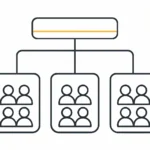
A thematic structure for a literature review on AI in academic writing might look like:
- AI capabilities in text generation: what the tools can currently do (and cannot do)
- Impact on student writing quality: empirical findings and their methodological limitations
- Academic integrity: conceptual frameworks and institutional policy responses
- Student attitudes and usage patterns: survey and interview evidence
- Research gaps and unresolved questions: what your thesis addresses
Within each thematic section, you analyse the sources in relation to each other — noting agreements, contradictions, methodological differences, and limitations. Each section ends by pointing toward what is still unknown, building toward your research gap.
Step 7: Write with Critical Analysis
The difference between a descriptive literature review and an analytical one is the difference between a pass and a distinction at most institutions. Critical analysis means evaluating the quality, limitations, and implications of the research you cite — not just reporting what each study found.
Descriptive vs Analytical: Side-by-Side Comparison
“Smith (2023) found that students who used AI writing tools produced higher-quality introductions. Jones (2022) also found improvements in writing quality.”
“Smith (2023) and Jones (2022) both report quality improvements with AI tool use; however, both relied on self-assessed quality scores, which may reflect students’ comfort with AI rather than objective writing improvement. Examiner-blind assessments — used in only two studies to date — would provide substantially stronger evidence.”
Tools like Tesify can help you check the analytical tone of your literature review draft and identify where you have slipped into description. The Auto Bibliography feature keeps your references formatted correctly in APA, Harvard, or any other style throughout.
If you are writing a thesis in another language, our guides cover the same process in depth: see the French guide to writing a thesis conclusion (which covers how the literature review connects to the conclusion) and the Portuguese guide to completing a final course work.
Literature Review Structure and Word Counts
| Section | Purpose | Master’s Length |
|---|---|---|
| Introduction | Introduce the scope, structure, and purpose of the review | 200–400 words |
| Theme 1 | First major conceptual cluster; synthesise 10–20 sources | 1,200–2,000 words |
| Theme 2 | Second major cluster; identify debates and agreements | 1,200–2,000 words |
| Theme 3 | Third cluster; identify methodological limitations | 1,200–2,000 words |
| Conclusion | Synthesise themes, state the gap, bridge to methodology | 400–600 words |
Common Mistakes to Avoid
- Organising by author, not theme. A source-by-source structure reads like a bibliography. Group by theme and let the sources serve the argument.
- Describing instead of analysing. State what studies found — then evaluate the quality, limitations, and implications of those findings.
- Ignoring methodological limitations. Every study has limitations. Acknowledging them shows scholarly maturity and strengthens your own research gap argument.
- Reviewing too broadly. Stay focused on your specific research questions. A literature review is not a survey of everything ever written on a general topic.
- Missing seminal works. Examiners know the foundational papers in their field. Missing a key study suggests you have not searched comprehensively.
- Failing to connect to your research gap. Every section of your literature review should lead, logically, to the gap your study addresses. If a section does not contribute to this, cut it.
Frequently Asked Questions
How do you do a literature review for a thesis?
Do a thesis literature review in seven steps: (1) define your research question and search scope, (2) search academic databases using targeted keywords, (3) evaluate and select sources critically, (4) read analytically and take thematic notes, (5) identify themes, debates, and gaps, (6) organise your review thematically rather than chronologically, and (7) write with critical analysis throughout — evaluating sources, not just describing them.
How long should a thesis literature review be?
A master’s thesis literature review is typically 4,000–8,000 words (20–30% of total thesis length). A PhD thesis literature review is typically 10,000–20,000 words. Humanities disciplines tend toward longer reviews; STEM disciplines typically shorter ones. Always confirm requirements with your supervisor and institution guidelines.
How many sources should a thesis literature review include?
A master’s thesis literature review typically includes 40–80 sources. A PhD thesis literature review typically includes 80–200 or more. Quality matters far more than quantity: 60 carefully selected, critically evaluated peer-reviewed papers are worth more than 150 loosely relevant ones. Consult your supervisor about discipline-specific expectations in your field.
Should a literature review be organised chronologically or thematically?
Thematically, in almost all cases. A chronological organisation is only appropriate when the historical development of a field is itself your research subject. Thematic organisation — grouping sources by conceptual category, research question, or intellectual debate — demonstrates that you have synthesised the literature rather than merely listed it in order of publication.
What is the difference between a literature review and an annotated bibliography?
An annotated bibliography lists sources with individual summaries of each. A literature review synthesises those sources thematically — grouping them by conceptual category, identifying what they collectively establish, where they disagree, and what gaps they leave. The literature review takes a position and argues; the annotated bibliography describes. Examiners evaluate literature reviews on the quality of synthesis and critical analysis, not on the number of sources listed.
What databases should I use for a literature review?
The most important databases for academic thesis research are: Web of Science and Scopus (multidisciplinary peer-reviewed journals), JSTOR (humanities and social sciences), PubMed (health and life sciences), Google Scholar (broad coverage, useful for initial scoping), and IEEE Xplore (computing and engineering). For UK students, EThOS (the British Library’s doctoral thesis database) is also valuable. Use your institution’s librarian for discipline-specific recommendations.
How do I write critical analysis in a literature review?
Critical analysis means evaluating the quality, limitations, and implications of research — not just describing what each study found. After stating a finding, ask: How was this measured? Is the sample representative? Do other studies confirm or contradict this? What does this leave unanswered? When you answer these questions in your writing, you are analysing rather than describing. Every paragraph should contain both a claim from the literature and your evaluative response to it.
Can AI help me write a literature review?
AI tools can legitimately help you with: identifying thematic patterns across your notes, improving the clarity and academic tone of your writing, formatting citations correctly, and structuring your review. The critical intellectual work — evaluating individual sources, identifying debates, arguing for the research gap — must be your own. Never have AI summarise papers you have not personally read. Declare any AI tool use in your thesis as required by your institution.
Write Your Literature Review with Expert Guidance
Tesify’s literature review chapter template guides you through thematic organisation, critical analysis structure, and citation formatting — with Auto Bibliography support for APA, Harvard, Vancouver, and all other major referencing styles.
Write your thesis with AI
Structure, draft, cite, and format your thesis faster with Tesify’s AI writing tools, automatic bibliography, and plagiarism checker. Free to start, no credit card required.



Leave a Reply