
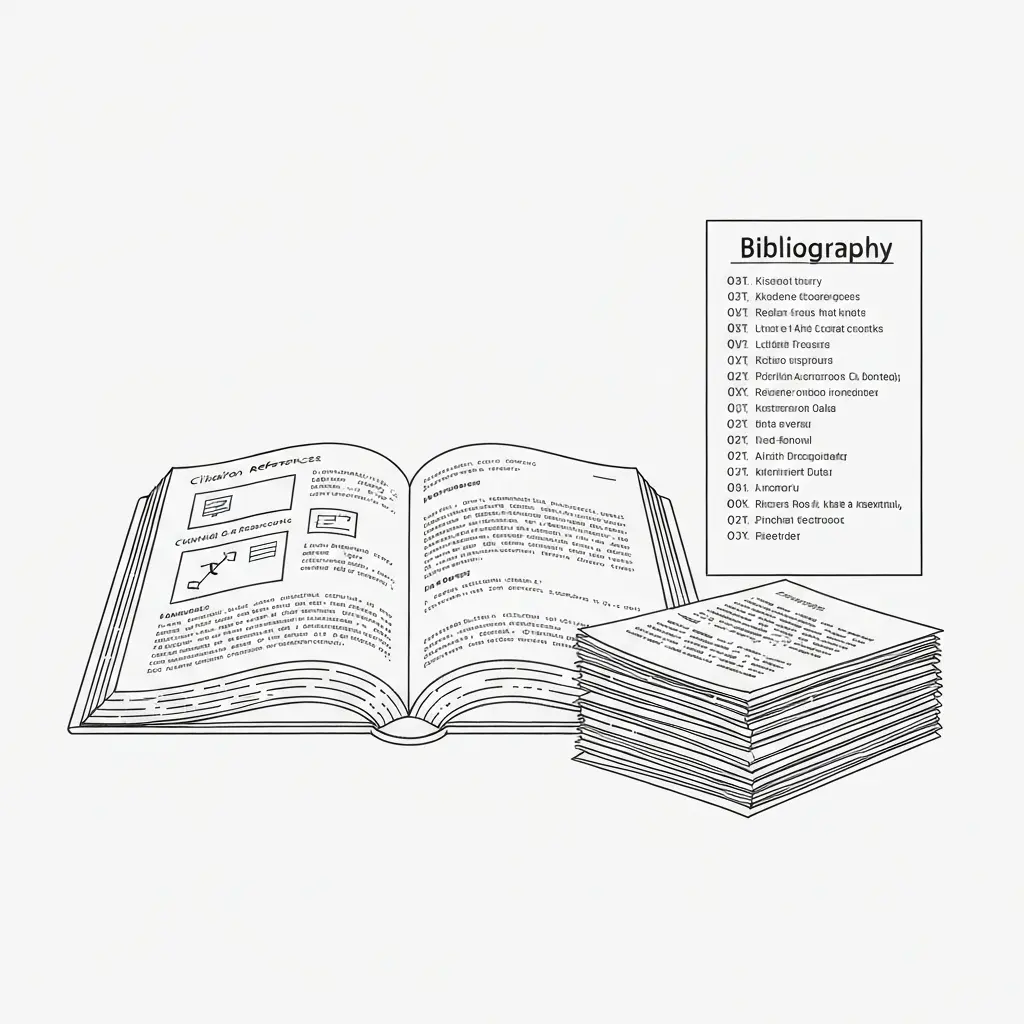
Harvard Referencing Guide 2026: Rules, Examples, and Templates
Harvard referencing is the most widely used citation system in UK universities — and one of the most frequently misapplied. Whether you are citing a journal article, a government report, or a social media post, the Harvard referencing guide follows a consistent author-date logic that, once understood, makes attribution fast and precise. This guide covers every rule, every source type, and every common error, so you can cite with complete confidence in 2026.
Unlike APA or Chicago, Harvard is not controlled by a single organisation. Each institution maintains its own variant, which is why you will find subtle differences between the University of Leeds version and the Cite Them Right system. This guide follows the most widely adopted conventions — those in Cite Them Right (11th edition) — while flagging the points where institutions diverge.
What Is Harvard Referencing?
Harvard referencing is an author-date citation system that places a brief parenthetical reference in the body of your text and a full citation in a reference list at the end. It originated at Harvard University in the 1880s and has since become the default citation style at most UK, Australian, and South African universities.
The system has two inseparable components:
- In-text citation: A short pointer — typically (Surname, Year) — embedded in your writing at the point where you use a source.
- Reference list: A complete bibliographic record of every source cited, placed at the end of the document and sorted alphabetically by author surname.
Harvard is favoured in the social sciences, business, and humanities because it is compact (citations do not interrupt reading), scalable (adding a source is a single line), and self-explanatory (readers can identify the source instantly from author and year).
In-Text Citations: Rules and Examples
Every time you paraphrase, summarise, or quote a source in your text, you must include an in-text citation. The format depends on how many authors the source has and whether you are quoting directly.
Single Author
Use the author’s surname and the year of publication in brackets:
Research suggests that retrieval practice outperforms re-reading as a revision strategy (Roediger, 2011).
Direct Quotation
For a word-for-word quote, add the page number(s):
“The testing effect is one of the most robust findings in cognitive psychology” (Roediger, 2011, p. 47).
Two Authors
Name both authors connected by “and”:
(Johnson and Williams, 2023)
Three or More Authors
Use the first author’s surname followed by et al.:
(Brown et al., 2022)
No Author
Use the title (italicised if a standalone work, in quotation marks if a chapter or article) and the year:
(Student Finance England Annual Report, 2024)
Multiple Sources in One Citation
Separate sources with a semicolon, listing them in chronological order:
(Smith, 2019; Patel, 2021; Chen, 2024)
Building Your Reference List
The reference list is placed at the end of your document (before any appendices). Key rules:
- Title it “References” (not “Bibliography” — a bibliography includes sources you consulted but did not cite).
- List entries alphabetically by the author’s surname.
- If an author has multiple works, list them chronologically (oldest first).
- If an author has two works in the same year, differentiate with a, b, c: (Smith, 2023a) and (Smith, 2023b).
- Hanging indent: the first line of each entry is flush left; subsequent lines are indented.
- Italicise the title of standalone works (books, reports, journals); use roman text for article and chapter titles.
Source Types: Books, Journals, Websites, and More
Below are the most common source types with the correct Harvard format for each.
Book (Single Author)
Format: Surname, Initial(s). (Year) Title: Subtitle. Edition (if not first). Place of Publication: Publisher.
Example: Cottrell, S. (2023) The Study Skills Handbook. 6th edn. London: Bloomsbury Academic.
Book Chapter in an Edited Collection
Format: Author Surname, Initial(s). (Year) ‘Chapter title’, in Editor Surname, Initial(s). (ed./eds.) Book Title. Place: Publisher, pp. X–X.
Example: Ahmed, R. (2022) ‘Discourse analysis in educational research’, in Brown, K. and Lee, S. (eds.) Qualitative Research Methods in Education. Oxford: Oxford University Press, pp. 112–138.
Journal Article
Format: Surname, Initial(s). (Year) ‘Article title’, Journal Name, Volume(Issue), pp. X–X. DOI or Available at: URL (Accessed: Day Month Year).
Example: Nguyen, T.T. and Park, J. (2024) ‘AI-assisted academic writing: a systematic review’, Journal of Educational Technology, 41(3), pp. 201–219. doi:10.1080/10494820.2024.1234567.
Website / Webpage
Format: Author/Organisation (Year) Title of Page. Available at: URL (Accessed: Day Month Year).
Example: Office for Students (2025) Access and Participation: 2025 Overview. Available at: https://www.officeforstudents.org.uk/publications/ (Accessed: 12 March 2026).
Government Report
Example: Department for Education (2024) Graduate Outcomes: 2021–22. London: HMSO. Available at: https://explore-education-statistics.service.gov.uk/ (Accessed: 10 January 2026).
Newspaper Article (Online)
Example: Weale, S. (2025) ‘Universities face largest real-terms funding cut in a decade’, The Guardian, 15 November. Available at: https://www.theguardian.com/education/ (Accessed: 2 February 2026).
Thesis or Dissertation
Example: Rahman, M. (2024) Machine Learning Applications in Biomedical Signal Processing. PhD thesis. University of Manchester.
Social Media Post
Example: UKRI [@UKRI_News] (2026) ‘New funding round for AI in education opens today’, Twitter, 3 March. Available at: https://twitter.com/UKRI_News/status/123456789 (Accessed: 5 March 2026).
7 Common Harvard Referencing Mistakes
Even experienced writers make these errors. Check every reference against this list before submission.
- Missing access dates for websites. All online sources require “Accessed: Day Month Year”. Without this, the reader cannot know whether the content has since changed.
- Confusing the reference list with a bibliography. Only sources you actually cited belong in the reference list. If you read a source for background but never cited it, it does not appear.
- Using “ibid” or “op. cit.” These are Latin abbreviations used in footnote systems (Chicago). They have no place in Harvard.
- Incorrect author order. Multiple works by the same author are ordered chronologically (oldest first), not alphabetically by title.
- Italicising article titles. In Harvard, italics apply to the journal name, not the article title. The article title uses roman text, no italics.
- Omitting edition information. If you cite anything other than a first edition, state “2nd edn.”, “3rd edn.”, etc. First editions need no edition statement.
- Citing secondary sources as primary. If you read Smith’s reference to Jones but did not read Jones directly, cite as: (Jones, 1998, cited in Smith, 2024, p. 45). Avoid this whenever possible by tracing the original source.
Harvard vs APA: Key Differences
| Feature | Harvard | APA 7th Edition |
|---|---|---|
| Governing body | None (institutional variants) | American Psychological Association |
| Two authors in-text | Smith and Jones (2024) | Smith & Jones (2024) |
| Three or more authors | Smith et al. (2024) | Smith et al. (2024) |
| Book title format | Sentence case, italicised | Sentence case, italicised |
| Place of publication | Required | Omitted |
| DOI format | doi:10.xxxx/xxx | https://doi.org/10.xxxx/xxx |
| Running header | Not required | Required in manuscripts |
For APA-specific rules, see our APA Citation Format guide and our APA Format 7th Edition templates.
Reference Management Tools
Manually formatting references is error-prone and time-consuming. Reference managers automate the process:
- Zotero (free, open-source): Captures sources from databases and generates Harvard-format references automatically. Best for students managing 50+ sources.
- Mendeley (free, Elsevier): Similar to Zotero with a stronger PDF annotation interface. Integrates with Word and Google Docs.
- EndNote (paid): The standard in research institutions. Supports thousands of citation styles including all Harvard variants.
- Tesify Auto Bibliography: Designed specifically for students, it formats references in Harvard, APA, MLA, and Chicago from a DOI, URL, or manual entry — and checks your in-text citations match your reference list.
When using any automated tool, always verify the output against your institution’s specific Harvard guide. Automated tools occasionally make errors, particularly with unusual source types like legislation, musical scores, or archival materials.
For deeper guidance on academic writing standards, visit The Chicago Manual of Style Online and APA Style for comparison. If you study or work in a German-speaking institution, comprehensive guides are also available at Tesify.io (auf Deutsch verfügbar). French-language academic writing resources can be found at Tesify.fr.
Frequently Asked Questions
What is the difference between a reference list and a bibliography in Harvard?
A reference list includes only the sources you cited in the text. A bibliography includes all sources you consulted, whether cited or not. Most university assignments require a reference list. Check your module guide to confirm which your institution expects.
How do I cite a source with no author in Harvard?
Use the title of the work in place of the author’s name. For a standalone work (book, report), italicise the title. For an article or web page, put the title in single quotation marks. Example: (NHS Long Term Plan, 2019) or (‘New AI Regulations’, 2024).
Do I need a page number for every Harvard in-text citation?
Page numbers are required for direct quotations and recommended for paraphrases of a specific passage in a long work. For general ideas drawn from an entire source, the page number may be omitted. When in doubt, include it — specificity is always better than vagueness.
Is Harvard referencing the same everywhere?
No. Harvard is not a single standardised system. Institutions use their own variants. The most widely adopted in the UK is Cite Them Right (Pears and Shields). Always check your university’s referencing guide first, as small differences (comma vs. no comma, colon vs. full stop) can affect your grade.
How do I reference a YouTube video in Harvard?
Creator/Channel Name (Year) Title of Video [Online video]. Available at: URL (Accessed: Day Month Year). Example: Khan Academy (2023) Introduction to Statistics [Online video]. Available at: https://www.youtube.com/watch?v=xxxxx (Accessed: 14 March 2026).
Can I use footnotes in Harvard referencing?
Harvard uses in-text (parenthetical) citations, not footnotes for references. You may use footnotes for supplementary commentary or clarifications, but all citations must appear as in-text (Author, Year) references linked to the reference list — not as numbered footnotes.





Leave a Reply