
Dissertation & Thesis Writing: Which Format Actually Works Better?
You’ve been accepted into your programme. Celebrations over. Now comes the question that trips up almost every postgraduate student at some point: wait — is this called a dissertation or a thesis? And does the distinction even matter for how you write it?
It matters more than you’d expect. The terminology shapes your expectations, your examiner’s expectations, and — critically — your entire approach to dissertation & thesis writing from day one. Getting this wrong means months of effort pointed in the wrong direction.
Here’s the core tension: the same 80,000-word document might be called a “thesis” at Oxford and a “dissertation” at Harvard. Both institutions are right. The definitions genuinely differ by country and institution — but the underlying demands of excellent academic writing share far more in common than most students realise.
Dissertation vs Thesis: The Definitions That Actually Matter
Most students discover the difference between these two terms the hard way — halfway through a panicked Google search at 11pm before a supervision meeting. Let’s fix that right now with clean, usable definitions.
Definition: Thesis
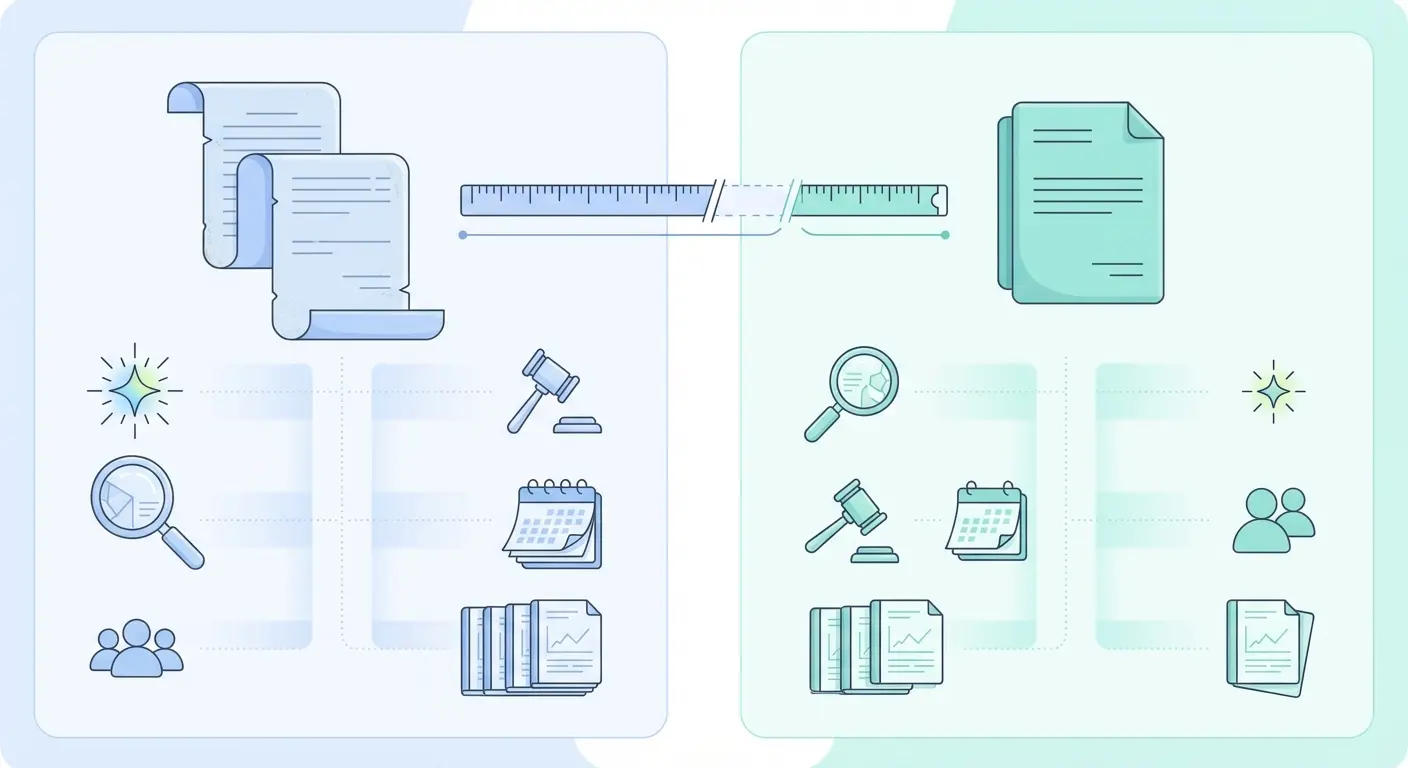
A thesis is an extended piece of original academic research submitted as part of a higher degree. In Commonwealth countries (UK, Australia, New Zealand, Ireland, Canada), a thesis typically refers to the document submitted for a PhD or doctoral degree. In the US, a thesis more commonly refers to master’s-level research work. The word derives from the Greek thesis — meaning “something put forward.”
Definition: Dissertation
A dissertation is a substantial written research project presented for an academic degree. In the US and Canada, it almost always refers to doctoral-level work. In the UK and Australia, it tends to describe master’s or undergraduate final-year projects. Etymologically, it comes from the Latin dissertatio — a discussion or debate.
What’s counterintuitive here is that neither word is more academically prestigious than the other. The difference is almost entirely conventional — a product of how different academic traditions evolved on either side of the Atlantic. Oxford will call your PhD submission a “thesis.” Harvard will call the equivalent a “dissertation.” Both expect the same fundamental things: original contribution, rigorous methodology, scholarly argument.
According to the NSF Survey of Earned Doctorates (2022), over 55,000 research doctorates were awarded in the US alone in 2022 — every single one culminating in that doctoral dissertation. That’s a lot of students who had to figure out exactly what they were writing and why.
How Country Changes Everything: UK, US, Australia & Beyond
The geography of your degree isn’t just a detail — it’s the single biggest factor in determining what you’ll be asked to produce and what it’ll be called.
United Kingdom and Ireland
At institutions like Oxford, Cambridge, UCL, and Imperial, the terminology is fairly consistent. Doctoral students submit a thesis (typically 80,000–100,000 words). Master’s students — both taught and research — submit a dissertation (usually 15,000–25,000 words). Undergraduate final-year projects are often also called dissertations, though some departments use “extended essay” or “research project.”
The PhD thesis at a UK institution goes through a viva voce — an oral examination where you defend your work before internal and external examiners. This is a high-stakes, intellectually intense process that’s genuinely different from the US model.
United States and Canada
Flip the terms. At Harvard, MIT, and Stanford, master’s students write a thesis. PhD candidates produce a dissertation — typically 150–300 pages, though there’s significant variation by discipline. The US system also tends to require doctoral students to pass qualifying exams and have a dissertation committee (usually 3–5 faculty members) rather than a single supervisor.
One nuance worth knowing: not all US master’s degrees require a thesis. Many offer a non-thesis track with additional coursework instead. If research is important to your career trajectory, the thesis option is almost always the stronger preparation.
Australia and New Zealand
Australian and New Zealand universities largely follow the UK model — doctoral students write a thesis, master’s students write a dissertation. However, Australian PhDs have historically been less structured than UK ones, with students going straight into research rather than completing coursework first (though this is changing at many institutions).
Side-by-Side Comparison: Dissertation & Thesis Writing at a Glance
Sometimes you just need the information in one place. Here’s what you’re actually comparing when you look at dissertation & thesis writing across different systems.
| Feature | UK/Australia Thesis (PhD) | UK/Australia Dissertation (Master’s) | US Dissertation (PhD) | US Thesis (Master’s) |
|---|---|---|---|---|
| Typical Length | 70,000–100,000 words | 15,000–25,000 words | 150–300 pages (~50,000–100,000 words) | 40–80 pages (~15,000–25,000 words) |
| Original Contribution Required? | Yes — must advance knowledge | Partial — analytical depth expected | Yes — must make original contribution | Partial — synthesis + some new analysis |
| Examination Method | Viva voce (oral exam) | Written submission + supervisor review | Defence before dissertation committee | Oral defence or written review (varies) |
| Duration | 3–4 years (full-time) | Typically 1–3 months of project work | 4–6 years (including coursework) | 1–2 years (including coursework) |
| Supervisor Model | Primary + secondary supervisor | Single dissertation supervisor | Dissertation committee (3–5 members) | Single advisor or small committee |
| Publication Expectation | Often expected (journal articles) | Rare | Expected (chapters as papers) | Uncommon |
5 Key Differences in Dissertation & Thesis Writing That Shape Your Approach
Understanding the terminology is just the start. What actually changes how you write — and how hard it is — comes down to five structural differences that most students only discover mid-project.
1. The Originality Threshold
A doctoral dissertation or thesis must make an original contribution to knowledge. That phrase gets thrown around a lot, but it’s worth being precise: it means your work should advance, challenge, or refine existing understanding in some demonstrable way. A master’s dissertation typically asks for rigorous analysis and synthesis — impressive, but not necessarily ground-breaking.
What most people miss is that “original contribution” doesn’t have to mean discovering something completely new. Applying an existing framework to a novel context, replicating a study in a different population, or filling a clearly documented gap in the literature all count. For strategies on proving this originality effectively, see our guide to proving originality in doctoral dissertations.
2. Research Design Complexity
Doctoral work nearly always involves more methodological rigour and complexity than master’s-level research. You’re expected to justify your philosophical assumptions (ontology, epistemology), defend your research design, and anticipate methodological critiques. The Oxford Centre for Evidence-Based Medicine’s ten-step guide to mixed-methods dissertations is a useful benchmark for how rigorous this thinking needs to be, even at master’s level.
3. Structural Flexibility
Master’s dissertations tend to follow a fairly predictable structure: introduction, literature review, methodology, findings, discussion, conclusion. PhD theses — particularly in the sciences and social sciences — increasingly take a paper-based or publication-style format, where individual chapters are essentially standalone journal articles linked by a unifying introduction and conclusion.
4. Time and Scope
This sounds obvious, but the difference in scope between a 20,000-word master’s dissertation and an 80,000-word doctoral thesis isn’t just quantitative — it’s qualitative. A thesis at doctoral level requires sustained engagement with a topic over years, not months. The planning, project management, and psychological endurance involved are genuinely different challenges. Learning to plan and structure your dissertation with intelligent tools can make an enormous difference in managing that scope.
5. Formatting and Submission Requirements
Every institution has its own house style, and the stakes for getting this wrong are higher than many students expect. Submission requirements — binding, word counts, abstract length, referencing style — vary significantly. Even across European institutions, as outlined in detailed guides like this overview of dissertation formatting according to Berlin university guidelines, the procedural requirements can differ in ways that matter right at the finish line.
Which One Works Better for You: A Decision Framework
Here’s the honest answer: neither format is universally “better.” The question is which is right for your situation, your goals, and your stage in your academic journey. Work through this framework.
- Identify your degree level first. Are you completing an undergraduate, master’s, or doctoral programme? Your institution’s regulations — not general convention — dictate which document you’re writing and what it’s called.
- Check your institution’s specific terminology. Look at your department’s handbook or postgraduate research office website. Don’t assume the generic definition applies. At some US universities, even master’s students submit “dissertations.”
- Clarify the originality expectation. Ask your supervisor directly: is this work expected to contribute new knowledge, or demonstrate mastery of existing knowledge? The answer shapes everything from your research question to your discussion chapter.
- Assess your timeline. If you have 12 weeks, you’re writing a master’s dissertation and need a tight, defensible scope. If you have 3 years, you’re building a thesis and need a research question with enough depth to sustain that commitment.
- Consider your career goals. Planning to go into academia? A publication-ready PhD dissertation or a strong master’s thesis with empirical findings will serve you better. Going into industry? A well-argued, practically-grounded dissertation may matter more than theoretical novelty.
Practical Writing Tips That Apply to Both Dissertations and Theses
Whatever you’re writing — and whatever it’s called — certain principles hold across every format, every institution, every discipline. These aren’t vague suggestions; they’re the things that actually separate well-examined work from work that gets sent back for major revisions.
Start with a Research Gap, Not a Topic
Students who struggle most often start with something like “I want to write about climate policy.” That’s a topic. A research gap sounds like: “Existing literature on climate policy implementation focuses heavily on national-level governance, but there’s limited empirical work on how mid-sized cities adapt national frameworks to local contexts.” That’s a fundable, examinable research question.
Write the Literature Review to Argue, Not to Summarise
The most common feedback on both dissertations and theses? “Your literature review reads as a series of summaries rather than a sustained argument.” Your literature review isn’t a catalogue — it’s the scaffolding for your own contribution. Every source you cite should be doing work in your argument.
Treat Your Methodology Chapter as a Defence
Write your methodology as if a sceptical examiner is reading it. Explain not just what you did but why — and acknowledge the limitations of those choices. This is where doctoral and master’s work diverges most visibly in quality. The Harvard Library’s Writing and Revision Toolkit (GSAS) has excellent resources specifically on making methodology chapters persuasive.
Build Your Conclusion as a Standalone Argument
Your conclusion isn’t a summary — it’s your final, confident statement of what your research established and why it matters. For a visual walkthrough of how to structure this effectively, Scribbr’s guide to writing a dissertation conclusion is a clear, practical resource. Their dissertation structure walkthrough also gives a useful overview of how all the pieces fit together.
Whether your document is called a dissertation or a thesis, mastering these fundamentals of dissertation & thesis writing is what separates submissions that sail through examination from those that come back with requests for major revisions.
Frequently Asked Questions
Is a dissertation harder than a thesis?
In the US system, a doctoral dissertation is generally more demanding than a master’s thesis because it requires an original contribution to knowledge and involves years of independent research. In the UK system, the PhD thesis is the harder document. The difficulty depends entirely on degree level, not the label attached to the document.
Can a master’s student write a thesis instead of a dissertation?
Yes, in the US and Canada, master’s students almost always write a “thesis” — the term “dissertation” is reserved for doctoral candidates. In the UK and Australia, master’s students typically write a “dissertation.” The format and expectations are similar regardless of the label; the terminology simply follows institutional convention.
How long should a dissertation or thesis be?
Length varies significantly by institution, country, and discipline. A UK master’s dissertation typically runs 15,000–25,000 words. A UK or Australian PhD thesis is usually 70,000–100,000 words. A US doctoral dissertation averages 150–300 pages (roughly 50,000–100,000 words). Always check your institution’s specific regulations, as these are binding.
What is the difference between a thesis statement and a thesis document?
A thesis statement is a single sentence or short passage that encapsulates the central argument of any essay or research paper — not just a doctoral document. A thesis document (or simply “thesis”) refers to the full extended research submission for a higher degree. The two uses of the word come from the same etymological root but describe entirely different things.
Do I need to publish my dissertation or thesis?
For doctoral dissertations and theses, publication — whether in journals or institutional repositories — is increasingly expected, though requirements vary. Many universities require doctoral submissions to be deposited in an open-access repository. Master’s dissertations are rarely published formally, though exceptional ones sometimes lead to journal articles. Publication requirements should be confirmed with your institution.
What happens if I use the wrong term — dissertation or thesis?
Using the wrong term informally won’t affect your grade — examiners understand the confusion. However, in formal documentation (title pages, binding, submission forms), always use the exact terminology your institution specifies. Getting this wrong on official submission paperwork can cause administrative delays, so it’s worth double-checking your department’s handbook before you finalise anything.
Ready to Make Your Dissertation or Thesis Writing Actually Work?
Whether you’re starting from scratch or stuck mid-chapter, the right tools and structure make all the difference. Explore practical guides on planning, writing, and submitting your research — built specifically for students at every stage.





Leave a Reply