
Research Methodology: Best Way to Standardize Citations Across Every Style
Every researcher knows the feeling: you’ve spent months collecting data, analyzing sources, and constructing an airtight argument — then the submission gets bounced back because your citations are inconsistent. One footnote uses Chicago format, three parenthetical references look like APA, and your bibliography mixes comma placements from two different style guides. It’s a small problem that carries enormous professional consequences.
Standardizing citations within your research methodology isn’t bureaucratic busywork. It’s the backbone of scholarly reproducibility. According to a 2023 Springer Nature study on research assessment practices, citation consistency directly affects how reviewers evaluate research credibility and how databases index your work for discovery.
This guide covers every major citation framework, explains how to choose the right one for your discipline, and gives you a repeatable system to stay consistent — whether you’re writing a dissertation, a journal article, or a funded research report.

What Is Research Methodology and Why Do Citations Matter?
Citations are not an afterthought in research methodology. They perform three distinct scholarly functions simultaneously. First, they establish the evidentiary chain that connects your claims to verified sources, allowing readers to trace, evaluate, and replicate your intellectual reasoning. Second, they situate your work within an existing body of literature — signaling to peer reviewers that you understand the field’s conversation. Third, they satisfy institutional and legal requirements around intellectual property and academic integrity.
What most people miss is that citation inconsistency is one of the most common reasons manuscripts get desk-rejected before peer review even begins. A 2022 analysis published in the Journal of Information Science found that over 30% of early-career researchers’ manuscripts contained formatting errors significant enough to warrant revision requests, with citation inconsistency ranking as the second most common issue after unclear abstracts (Heneberg, 2022).
The relationship between research methodology and citation standards runs deeper than formatting. Your choice of citation style often signals your disciplinary community. APA signals empirical social science. MLA signals interpretive humanities. Chicago signals archival, historical, or legal scholarship. The style itself communicates methodological assumptions about what counts as valid evidence and how knowledge is produced.
Here’s where it gets interesting: citation practices are evolving rapidly. The emergence of AI-generated content, data repositories, and preprint servers has forced every major style organization to issue new guidance within the last three years. APA 7th edition (2020) introduced DOI formatting revisions and new guidelines for social media citations. MLA 9th edition (2021) emphasized flexibility through a “works cited” template rather than rigid source-type categories. If you’re working from a style guide older than 2020, you’re already behind.
Citation Styles Compared: APA, MLA, Chicago, and Harvard
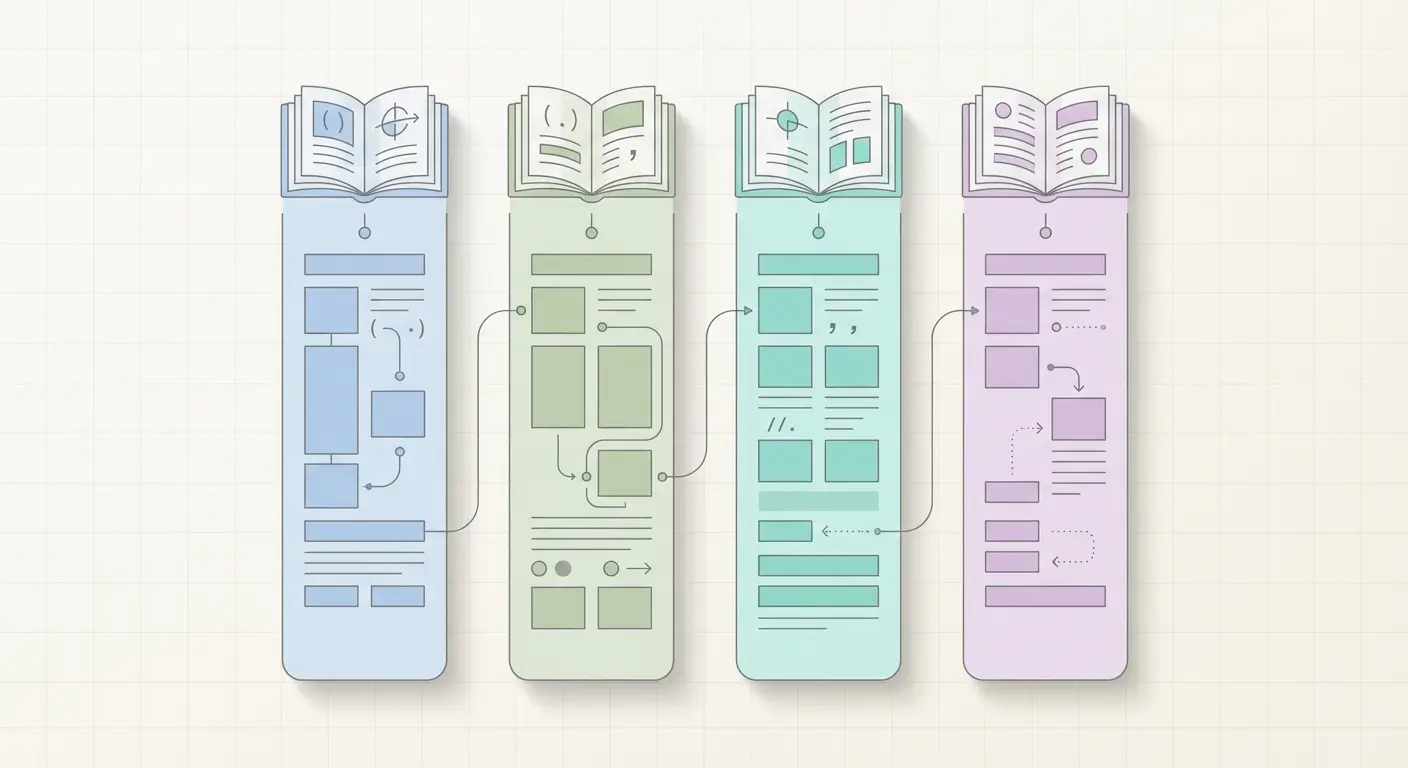
Choosing between citation styles isn’t arbitrary — each one carries specific conventions that reflect disciplinary epistemology. Here’s a structured comparison of the four most widely used academic citation frameworks.
| Style | Current Edition | Primary Discipline | In-Text Format | Reference List Title | Key Feature |
|---|---|---|---|---|---|
| APA | 7th (2020) | Psychology, Social Sciences, Education, Nursing | (Author, Year, p. X) | References | Author-date; DOI required for journal articles |
| MLA | 9th (2021) | Humanities, Literature, Language Studies | (Author Page) | Works Cited | Container system; flexible source-type template |
| Chicago | 17th (2017) | History, Law, Fine Arts, Theology | Footnotes/Endnotes or Author-Date | Bibliography or References | Two systems: Notes-Bibliography and Author-Date |
| Harvard | Varies by institution | Sciences, Business, Economics (UK/AU) | (Author Year, p. X) | Reference List | No single official manual; institutional variations common |
| Vancouver | Current (ICMJE) | Medicine, Biomedical Sciences | Numbered superscripts [1] | References | Sequential numbering; widely used in clinical journals |
One point that surprises many PhD candidates: Harvard referencing is not a single standardized system. Unlike APA, which is governed by the American Psychological Association and publishes an official manual, “Harvard style” exists in dozens of institutional variants. The University of Leeds version differs from the Cite Them Right version, which differs again from the version used at Macquarie University in Australia. This makes Harvard simultaneously widespread and notoriously inconsistent — a genuine problem when submitting to international journals.
The Purdue Online Writing Lab (OWL) remains the most-cited free resource for APA and MLA guidance in Anglophone academia, with detailed examples for hundreds of source types. It’s updated regularly and is worth bookmarking regardless of which style you’re working in.
Choosing the Right Citation Style for Your Research Methodology
The decision isn’t always yours to make — but understanding the logic behind it will save you hours of reformatting.
Most journals and universities specify the required citation style in their author guidelines or dissertation handbook. Your first step is always to check those documents before writing a single reference. What happens when the institution or journal doesn’t specify? Then you’re making a methodological choice, and here’s the framework that makes it logical:
Discipline-Based Selection Criteria
- Identify your primary disciplinary community. Where will your research be read, cited, and evaluated? Social science journals overwhelmingly use APA. Literary journals use MLA. Historical archives expect Chicago Notes-Bibliography. Medical journals use Vancouver or AMA.
- Check your target journal’s author instructions. Top databases like Web of Science and Scopus require journals to publish their citation requirements. Non-compliance is grounds for immediate rejection.
- Assess source diversity. If you’re citing primarily archival materials, manuscripts, or legal documents, Chicago’s footnote system gives you more flexibility for commentary and clarification than author-date systems allow.
- Consider your reader’s expectations. A mixed methods study published in a public health journal will have readers expecting Vancouver or APA — even if you personally prefer Chicago.
- Evaluate institutional requirements. Check your institution’s dissertation or thesis submission guidelines. Many universities specify the format by faculty or department, not across the board.
Fair warning: switching citation styles mid-project is one of the most time-consuming errors researchers make. Starting your literature review in APA and then discovering your target journal requires Chicago means manually reformatting potentially hundreds of entries. Reference management software reduces this pain considerably — but it doesn’t eliminate it entirely, as we’ll discuss in the tools section.
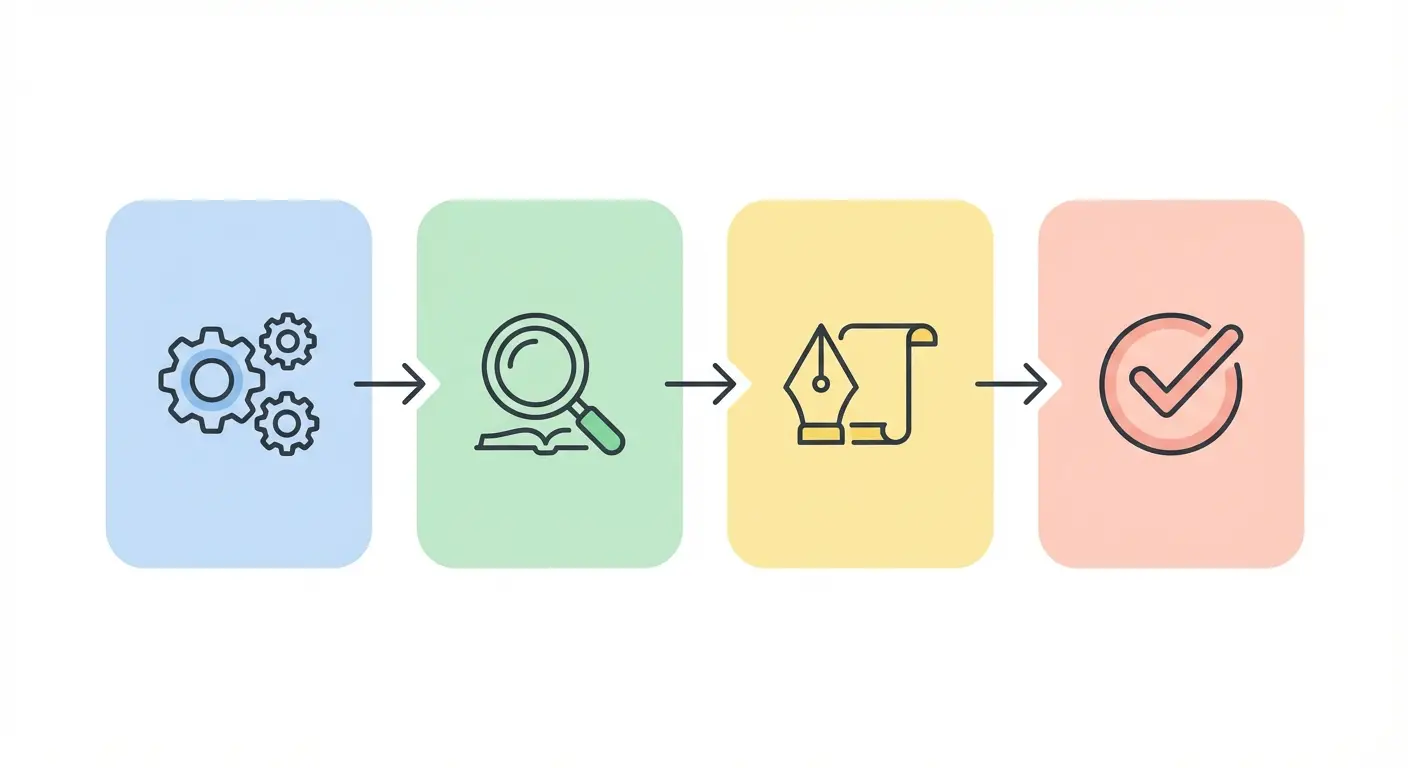
Standardizing Citations Step-by-Step: A Practical Framework
Consistency doesn’t happen by accident. It requires a deliberate system, established before you write your first sentence and maintained throughout the research process.
Phase 1: Setup (Before You Begin Writing)
- Select and document your citation style. Write it at the top of your project notes document. Include the edition year. This sounds trivial — it isn’t.
- Download the official style manual PDF or purchase the print edition. Online summaries are helpful for quick reference, but only the official manual gives you complete guidance for edge cases.
- Configure your reference manager to match. In Zotero or Mendeley, set your citation style to the exact edition you’re using before importing any sources.
- Create a “Style Decisions Log.” For any situation not covered by the manual (citing a WhatsApp message, a podcast transcript, a dataset, an AI tool), document the decision you made and why. You’ll face the same situation again, and consistency requires a record.
Phase 2: Collection (During Research)
- Import source metadata immediately. Don’t rely on memory or manual entry. Use browser plugins (Zotero Connector, Mendeley Web Importer) to capture metadata at the moment of discovery.
- Verify DOIs and URLs immediately upon import. DOIs are stable; URLs are not. If a web source lacks a DOI, archive it via Wayback Machine and record the archived URL.
- Tag sources by type. Journal articles, book chapters, conference papers, datasets, and grey literature each have different citation formats. Tagging helps you audit later.
- Record page numbers as you read. The single most common citation error in academic writing is missing or incorrect page numbers for direct quotations. Note them in real time.
Phase 3: Writing and Integration
- Use your reference manager’s word processor plugin. Zotero integrates with Microsoft Word, LibreOffice, and Google Docs. Cite as you write — never at the end.
- Distinguish between paraphrase and direct quotation consistently. Paraphrases require author-date citations. Direct quotes require page numbers (in APA, Chicago Author-Date, and Harvard). Mix these up and you’re creating both a style error and a potential integrity issue.
- Cross-check secondary citations. Citing a source you haven’t read directly (Author A, cited in Author B) carries specific formatting rules in every style. APA 7th, for instance, requires you to name both authors and specify “as cited in.”
Phase 4: Pre-Submission Audit
- Export a complete reference list and check every entry against the style manual. Particularly scrutinize: italicization of titles, author name inversion, DOI formatting, volume/issue number placement, and year placement.
- Check in-text citations match reference list entries exactly. Author spellings, publication years, and title abbreviations must be identical in both locations.
- Run through a plagiarism detection tool to catch any passages that may need attribution added. Tools like Turnitin’s Similarity Report can flag quoted material that lacks proper citation markers.
Reference Management Tools That Researchers Actually Trust
The difference between a researcher who finishes their reference list in two hours and one who spends two days on it usually comes down to one thing: their choice of reference management software.
Three tools dominate academic use in 2025:
Zotero (Free, Open Source)
Zotero is widely regarded as the gold standard for independent researchers and PhD candidates. It’s free, stores citations locally (with optional cloud sync), supports over 10,000 citation styles, and integrates directly with web browsers, word processors, and LaTeX. Its community-maintained style repository is updated rapidly when new editions of major style guides are released.
What most people miss about Zotero: its “retract” feature can flag citations to sources later marked as retracted in PubMed or CrossRef — a critical safeguard for scientific integrity that no other free tool currently offers.
Mendeley (Free, Elsevier-Owned)
Mendeley has strong PDF annotation features and a social network component that allows researchers to follow colleagues’ public libraries. Its weakness is that since Elsevier’s acquisition, data privacy policies have become more complex, and some institutions (particularly in the EU) have discouraged its use for sensitive research data.
EndNote (Subscription, Clarivate-Owned)
EndNote integrates directly with Web of Science and is the preferred tool at many large research universities — particularly in the sciences. Its institutional licensing makes it free for students at many UK, US, Australian, and Canadian universities. The learning curve is steeper than Zotero’s, but the advanced deduplication and group library features are genuinely superior for large multi-author projects.
LaTeX and BibTeX for Technical Research
For mathematical, engineering, and computer science research, LaTeX citation templates via Overleaf remain the professional standard. BibTeX and its successor BibLaTeX handle citation formatting automatically once source metadata is entered, producing output that matches journal-specific requirements with near-perfect precision.
This connects directly to the question of automated vs. manual citation work — a trade-off examined in depth in our analysis of automated citation tools for academic work and their accuracy limits, which is worth reading before you commit to any single tool for high-stakes submissions.
Citation Errors, Plagiarism Risks, and Academic Integrity
Here’s a counterintuitive truth: most academic plagiarism isn’t intentional theft. It’s the product of poor citation practice — specifically, the failure to distinguish between ideas that need attribution and those that don’t.
UK Parliament’s Science and Technology Committee on Reproducibility and Research Integrity identified citation and attribution errors as a systemic issue in British research, noting that “inadequate citation practice contributes to irreproducibility as significantly as data fabrication in many fields.” That’s a striking claim — and it has practical implications for how seriously all researchers should treat citation standardization.
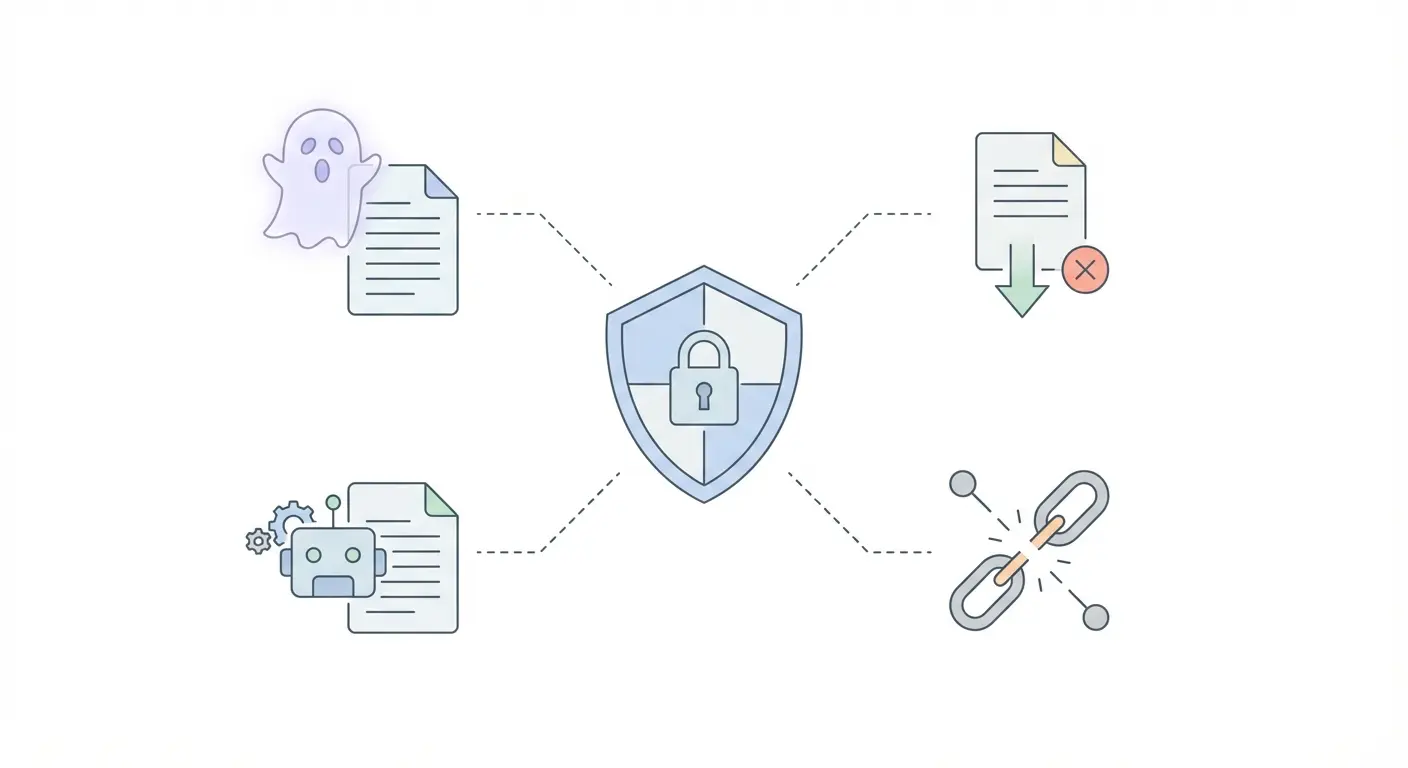
The most common citation errors that create integrity risks include:
- Ghost authorship citations: Listing authors in a reference who didn’t actually contribute to the cited work
- Uncredited paraphrase: Rewording a source’s argument without citation — particularly dangerous when using AI writing assistants
- Self-plagiarism without disclosure: Reusing your own previously published text without citing your prior work
- Secondary source misrepresentation: Citing a primary source you accessed only through a secondary summary
- Citation of retracted papers: Citing research that has been formally retracted from its journal without acknowledging the retraction
The growing role of AI in academic writing introduces a new category of attribution complexity. When does AI-generated text require citation? APA 7th (2023 update) requires that AI-generated text be cited as you would a personal communication or algorithm output, with the tool name, version, and generation date included. MLA and Chicago have issued similar interim guidance. For a detailed treatment of how to write plagiarism-free academic content when using AI assistance, our resource on producing plagiarism-free academic texts with AI support covers attribution practices specifically for AI-assisted research.
Citation Standards in Qualitative vs. Quantitative Research
Research methodology shapes not just what you cite, but how citation density and source type distribution should look across your paper.
Quantitative researchers — working with statistical analysis, experimental design, and numerical data — typically cite primary empirical studies, datasets, and statistical software. Their reference lists tend to be shorter but more precise, with heavy emphasis on journal articles indexed in Web of Science or Scopus. Every method, instrument, and statistical test requires a citation to its original source or validated protocol.
Qualitative researchers — working with interviews, ethnography, discourse analysis, or case studies — produce reference lists that are often longer and more theoretically diverse. They cite foundational theoretical texts (Foucault, Bourdieu, Geertz) alongside empirical studies and methodological texts. The citation of methodology itself is more elaborate: a qualitative paper must justify its epistemological stance through cited literature in ways that quantitative papers rarely require.
Mixed methods research carries the citation demands of both. Dr. John W. Creswell, whose work on telling a complete story with mixed methods research has become foundational in the field, argues that mixed methods papers require particularly careful citation architecture because they must satisfy readers trained in both paradigms simultaneously.
The practical implication: your citation workload isn’t uniform. A 7,000-word qualitative dissertation chapter may require 80-120 citations. A comparable quantitative results section may require only 20-30. Plan your reference management setup accordingly — and don’t assume that fewer citations means less careful citation practice.
For researchers navigating qualitative data analysis specifically, this tutorial on qualitative data analysis methods provides grounded examples of how analytical frameworks connect to citation practices in coding and thematic analysis. And if you’re still deciding between research designs, this comparison of qualitative, quantitative, and mixed methods approaches will help clarify which methodology — and therefore which citation conventions — apply to your study.
Institutional and Disciplinary Requirements You Can’t Ignore
University-level formatting requirements and journal-specific citation rules aren’t interchangeable. This distinction causes enormous confusion among researchers who assume that getting their style “basically right” is sufficient.
At the institutional level, PhD and master’s candidates face dissertation-specific formatting rules that go beyond citation style. These include margin specifications, title page format, abstract word limits, appendix labeling conventions, and — critically — how the reference list interacts with the body of the thesis. These requirements vary not just by institution, but often by faculty and department within the same university.
The practical implications of institutional formatting requirements are explored in our resource on formatting dissertations according to Berlin university guidelines, which illustrates how specific and non-negotiable these requirements can be — even within a single institutional system.
Journal-level requirements add another layer. Most peer-reviewed journals require their submitted manuscripts to follow specific citation instructions that may deviate from the parent style guide. Nature has its own reference format. The Lancet has its own. PLOS ONE uses a hybrid. The American Psychological Association’s own journal American Psychologist requires APA style — but includes journal-specific instructions that supersede the general manual in several areas.
A Practical Cross-Institutional Compatibility Checklist
- ☐ Verified citation style specified in journal Author Instructions or institutional dissertation handbook
- ☐ Confirmed current edition of the specified style guide (not an outdated version)
- ☐ Checked whether institutional requirements add constraints beyond the style guide
- ☐ Reviewed journal-specific reference format requirements (if submitting to a journal)
- ☐ Confirmed whether DOIs are required, optional, or excluded for journal articles
- ☐ Checked formatting requirements for the specific source types in your reference list (datasets, preprints, theses, government reports)
The Pre-Submission Citation Checklist for Every Research Methodology
This checklist applies across all citation styles and research designs. Print it. Use it before you submit anything.
In-Text Citations
- ☐ Every claim that isn’t original thought or common knowledge has a citation
- ☐ All direct quotations include page numbers (where required by the style)
- ☐ Secondary citations are formatted correctly (“as cited in,” “cited in,” etc.)
- ☐ Multiple citations within a single parenthetical are ordered correctly (alphabetically in APA; chronologically in some other styles)
- ☐ Author names in in-text citations match the reference list exactly (no nicknames, no initials-only variants)
Reference List / Bibliography
- ☐ List is alphabetized correctly (or numbered sequentially, depending on style)
- ☐ All in-text citations have a corresponding reference list entry (and vice versa)
- ☐ DOIs are formatted as hyperlinks (https://doi.org/…) where required
- ☐ Italicization is applied correctly (journal titles vs. article titles vary by style)
- ☐ Volume, issue, and page number formatting matches style requirements exactly
- ☐ Publication dates are formatted correctly (year only vs. year, month, day — varies by source type)
- ☐ Access dates included for web sources where the style requires them
- ☐ Retracted sources identified and flagged where relevant
- ☐ No sources cited from preprint servers without noting preprint status
Integrity Checks
- ☐ Every cited source has been read by the author (no citation of sources seen only in another’s bibliography)
- ☐ AI-generated content cited according to current style guide guidance
- ☐ Similarity report reviewed and all flagged passages checked for proper attribution
- ☐ Self-citations properly disclosed where institutional guidelines require it
Frequently Asked Questions About Research Methodology and Citations
What is research methodology and why does citation style matter?
Research methodology is the structured framework governing how a study is designed, executed, and reported — including how sources are documented. Citation style matters because it signals disciplinary membership, ensures reproducibility, satisfies academic integrity requirements, and affects how your work is indexed in databases like Web of Science and Scopus. Inconsistent citations are among the most common reasons manuscripts receive revision requests before peer review.
Which citation style should I use for my research paper?
The citation style you should use depends on your discipline and target publication. Use APA 7th for social sciences, education, and psychology; MLA 9th for humanities and literary studies; Chicago 17th for history, law, and theology; Harvard for sciences and business in UK, Australian, and Canadian contexts; and Vancouver for medical and biomedical research. Always verify against your specific institution’s or journal’s author guidelines, as these supersede general disciplinary norms.
What is the best free tool for managing citations in academic research?
Zotero is widely considered the best free citation management tool for academic researchers. It’s open-source, supports over 10,000 citation styles, integrates with major word processors and browsers, syncs across devices, and includes a unique feature that flags citations to retracted papers. It’s particularly well-suited for PhD candidates and independent researchers who need full control over their reference libraries without subscription costs.
How do I cite AI-generated content in my research?
Citing AI-generated content requires specifying the tool name, version, and date of generation. APA 7th (2023 update) treats AI text similarly to an algorithm output or personal communication — author it to the tool, include the version, and note the generation date. MLA and Chicago have issued parallel interim guidance. Always check your institution’s specific policy, as many universities have introduced additional disclosure requirements beyond style guide minimums.
What’s the difference between a reference list and a bibliography in research methodology?
A reference list (used in APA, Harvard, and Vancouver) contains only sources directly cited within the text. A bibliography (used in Chicago Notes-Bibliography and some MLA contexts) may include sources consulted but not directly cited — such as background reading or foundational texts that informed your thinking without being quoted or paraphrased. Using the wrong one for your citation style is a common formatting error that signals unfamiliarity with the style manual.
Can I mix citation styles within a single research paper?
No. Mixing citation styles within a single paper is a formatting error that violates academic publication standards. Every citation must follow a single, consistently applied style guide from beginning to end. The only exception is if you’re writing an interdisciplinary work specifically commissioned by a journal that permits discipline-specific sections to follow their own conventions — an extremely rare scenario that would be explicitly specified in the journal’s author instructions.
Building a Citation-Consistent Research Methodology Practice
Standardizing citations across your research methodology isn’t a one-time task — it’s a practice that gets more efficient the more systematically you approach it. The researchers who handle this best treat citation management as infrastructure: something you set up correctly once and maintain, rather than something you scramble to fix at the end.
The core principles are consistent regardless of style: choose early, configure your tools before you start writing, record your decisions, verify against the official manual, and audit before submission. Every hour spent establishing this system at the beginning of a project saves three to five hours at the submission stage.
Citation standards are also not static. Style guides update. Journals revise their author instructions. New source types — AI outputs, datasets, preprints — create new citation challenges every year. The researchers who maintain authority in their field stay current with these developments and update their practice accordingly.
If this article has been useful, share it with your research group or department. The quality of citation practice in academia improves when knowledge like this circulates in scholarly networks rather than staying siloed. You can also explore the related resources linked throughout this guide for deeper treatment of specific aspects — from automated citation tools to institutional formatting requirements to AI-assisted academic writing.
Last reviewed and updated: 2025. Sources verified against APA 7th edition (2020), MLA Handbook 9th edition (2021), The Chicago Manual of Style 17th edition (2017), and current Purdue OWL guidance.





Leave a Reply