
Chicago Citation Style vs Harvard: Which Actually Works for Literature Reviews?
Picture this: you’ve spent six months building a systematic literature review, your reference list runs to 200+ sources, and your supervisor returns the draft with a single note — “wrong citation style.” It’s a gut-punch that happens more often than any academic would care to admit. The Chicago citation style vs Harvard debate sits at the heart of this frustration, yet most methodology guides treat it as a footnote rather than the substantive scholarly decision it actually is.
Here’s what the manuals don’t tell you: the choice between Chicago and Harvard isn’t just cosmetic. It shapes how readers trace your evidence trail, how databases index your citations, and — critically — how well your systematic literature review methodology holds up under peer scrutiny. The wrong choice can quietly undermine a piece of work that’s otherwise impeccable.
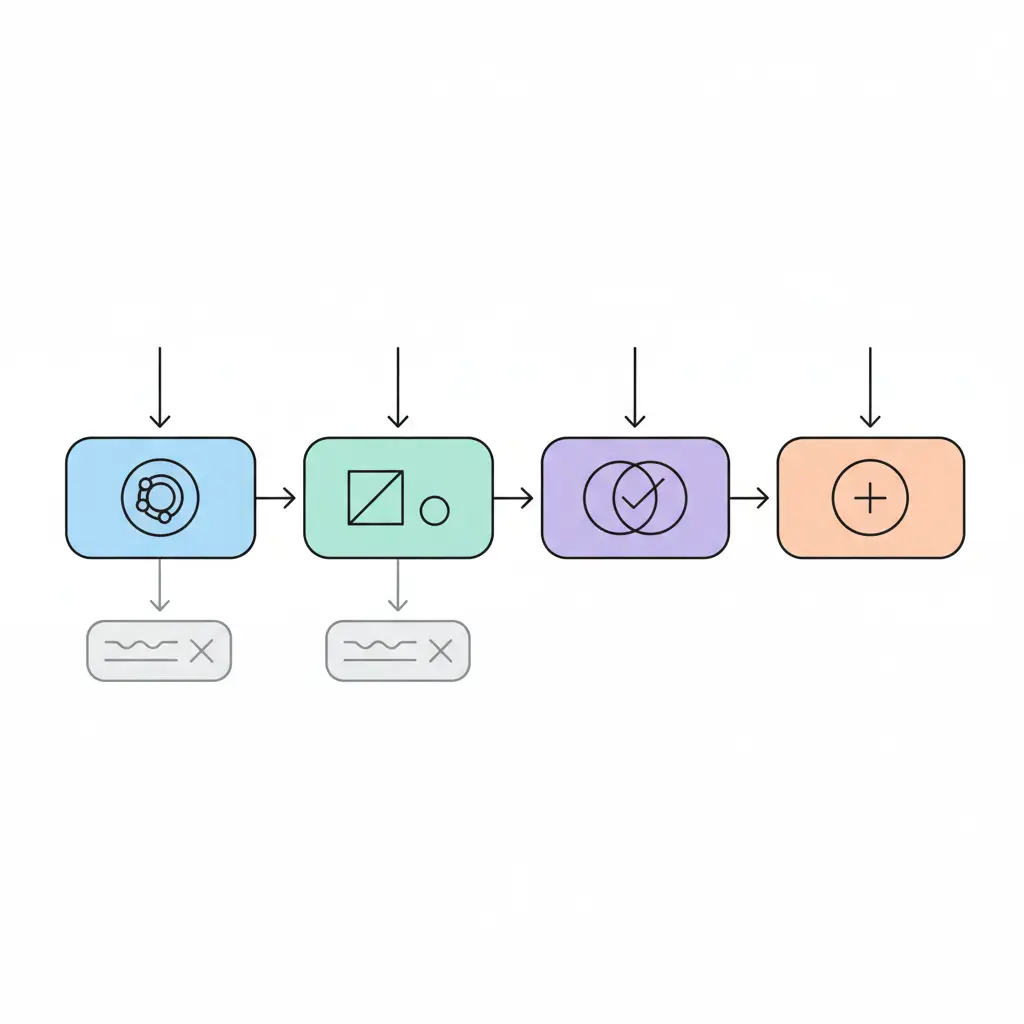
Defining the Two Systems: Chicago and Harvard in Systematic Research
Most early-career researchers treat “citation style” as a formatting inconvenience. That’s a mistake. Each major style encodes a philosophy about how scholarly knowledge should be presented, traced, and verified — and understanding that philosophy is the first step toward making an informed choice.
What Is Chicago Citation Style?
The Notes-Bibliography system places superscript numbers in the text that correspond to footnotes or endnotes, with a full bibliography at the document’s end. The Author-Date system, by contrast, inserts parenthetical citations — (Smith 2019, 45) — and looks, structurally, quite similar to Harvard. This dual nature is what trips up most researchers: Chicago isn’t one style, it’s two.
The 17th edition introduced meaningful updates to digital source handling, DOI formatting, and the treatment of electronic books — changes that matter enormously when you’re building a literature review from databases like JSTOR, Web of Science, or PubMed.
What Is Harvard Referencing?
Here’s where it gets interesting: Harvard has no central authority. Unlike APA 7th edition (published by the American Psychological Association) or Chicago 17th (owned by the University of Chicago Press), “Harvard style” is essentially a convention maintained by individual institutions. Anglia Ruskin University, the University of Melbourne, and Imperial College London each publish their own Harvard guide — and they differ in small but consequential ways.
What does that mean practically? When a journal says “use Harvard referencing,” you should immediately ask which institution’s variant. Failing to do so is one of the most common citation errors in submitted manuscripts, and it’s entirely preventable.
Systematic Literature Review Methodology and Citation Demands
A systematic literature review isn’t a literature review with more sources. It’s a methodologically distinct research design with its own reproducibility standards — and those standards place specific demands on how you cite.
The PRISMA 2020 statement (Page et al., 2021), published in The BMJ, defines systematic reviews as “a review that uses explicit, systematic methods to collate and synthesise findings.” That word “explicit” carries real weight. Reviewers must be able to retrace every step — including the citation trail.

What most people miss is that citation style consistency directly affects reproducibility. When different sections of a review use inconsistent formatting — a Notes-Bibliography Chicago entry in one chapter and an Author-Date entry in another — automated tools like Zotero, Mendeley, or even Turnitin’s reference checker can fail to deduplicate sources correctly. The result is citation pollution: the same study counted multiple times in your evidence base.
Why Citation Precision Matters at Scale
The scale of modern systematic reviews makes this problem acute. A 2010 study in PLOS Medicine estimated that approximately 75 new trials and 11 new systematic reviews were published every single day — a volume that has only increased since. When you’re screening hundreds or thousands of abstracts, any inconsistency in citation formatting compounds across the dataset.
For a systematic literature review methodology to hold, citations need to be machine-readable, consistently formatted, and traceable back to primary sources. That’s not a preference — it’s a scientific requirement.
Our Research Methodology Guide 2026 explores this in fuller context, examining how citation discipline integrates with study design, PICO frameworks, and meta-analytic workflows. It’s worth reading alongside this comparison if you’re in the planning stages of a review.
Chicago vs Harvard: Side-by-Side Structural Comparison
The clearest way to see the practical difference between these systems is to look at them doing the same job. The table below compares key structural elements across Chicago NB, Chicago Author-Date, and Harvard.
| Feature | Chicago Notes-Bibliography | Chicago Author-Date | Harvard (Anglia Ruskin variant) |
|---|---|---|---|
| In-text format | Superscript number: Smith¹ | (Smith 2019, 45) | (Smith, 2019, p. 45) |
| Reference list name | Bibliography | References | Reference List |
| Author name format | Firstname Lastname (notes); Lastname, Firstname (bibliography) | Lastname, Firstname | Lastname, F. |
| Page numbers in-text | In footnote/endnote | After year: (Smith 2019, 45) | After year: (Smith, 2019, p. 45) |
| Multiple authors | Up to 3 listed; “et al.” after 3 | Up to 3 listed; “et al.” after 3 | Up to 3 listed; “et al.” after 3 |
| Date position | Near end of bibliography entry | After author name | After author name |
| Governing manual | CMOS 17th ed. (2017) | CMOS 17th ed. (2017) | Institutional variants (no central authority) |
| Typical disciplines | History, literature, arts | Natural and social sciences | Sciences, social sciences, business |
| Footnote/endnote use | Central to the system | Supplementary only | Rarely used; discouraged |
| Best for long reviews? | Yes, if humanities-focused | Yes, with consistent software support | Yes — cleaner in-text for dense citation |
One counterintuitive finding: Chicago Author-Date and Harvard are structurally almost identical in-text. The real divergence is in the reference list — specifically author name formatting, date placement, and the treatment of editors and translators. Researchers who assume “Author-Date = Harvard” often produce hybrid references that satisfy neither style correctly.
Which Disciplines Use Which Style? Evidence from Academic Publishing
Discipline conventions in citation style aren’t arbitrary — they evolved to serve the specific source types and reading practices of each field. Knowing where Chicago and Harvard dominate helps you calibrate your choice against community expectations.
Chicago’s Stronghold: Humanities and Historical Research
Chicago Notes-Bibliography is the default citation style for history journals across the US, UK, and Australia. The American Historical Review, Past & Present, and the Journal of Modern History all use it. The footnote structure suits historical scholarship because sources are often archival, non-digitised, or require contextual annotation that doesn’t fit tidily into a parenthetical.
Chicago also dominates in theology, musicology, and certain branches of philosophy — disciplines where the conversation between text and footnote is itself intellectually significant. A footnote in a Chicago NB document isn’t just a citation; it’s a scholarly aside that can carry substantial argumentative weight.
Harvard’s Reach: Sciences, Social Sciences, and UK/Australian Universities
Harvard referencing is the single most common citation style in British and Australian universities — not because of any formal mandate, but because of institutional inertia and genuine functional fit. Author-date systems allow readers to assess source recency at a glance, which matters in fields where a 2015 paper may already be outdated by new evidence.
In public health, nursing, education studies, business management, and most social science disciplines, Harvard variants dominate. The system’s visual simplicity — no footnote clutter, clean reference list — suits journals that want dense, efficient citation without typographic complexity.
The Grey Zone: Interdisciplinary Research
Interdisciplinary work creates genuine citation style conflict. A systematic review crossing clinical medicine and health economics might encounter journals that require Vancouver (numbered) citations in one section and Harvard in another. This is where Chicago Author-Date occasionally makes a pragmatic compromise — it’s recognisable enough to be accepted in both humanities and science contexts while being fully documented in a single authoritative manual.
For researchers working across disciplines, the standardise citations 2025 guide offers practical formatting rules and worked examples for each style, which can save considerable time when you’re switching between submission requirements.
Integrating Citation Style into Your Literature Review Workflow
The choice of citation style shouldn’t happen after you’ve finished writing. It should be embedded into your systematic literature review methodology from day one — specifically into your data extraction and reference management protocols.
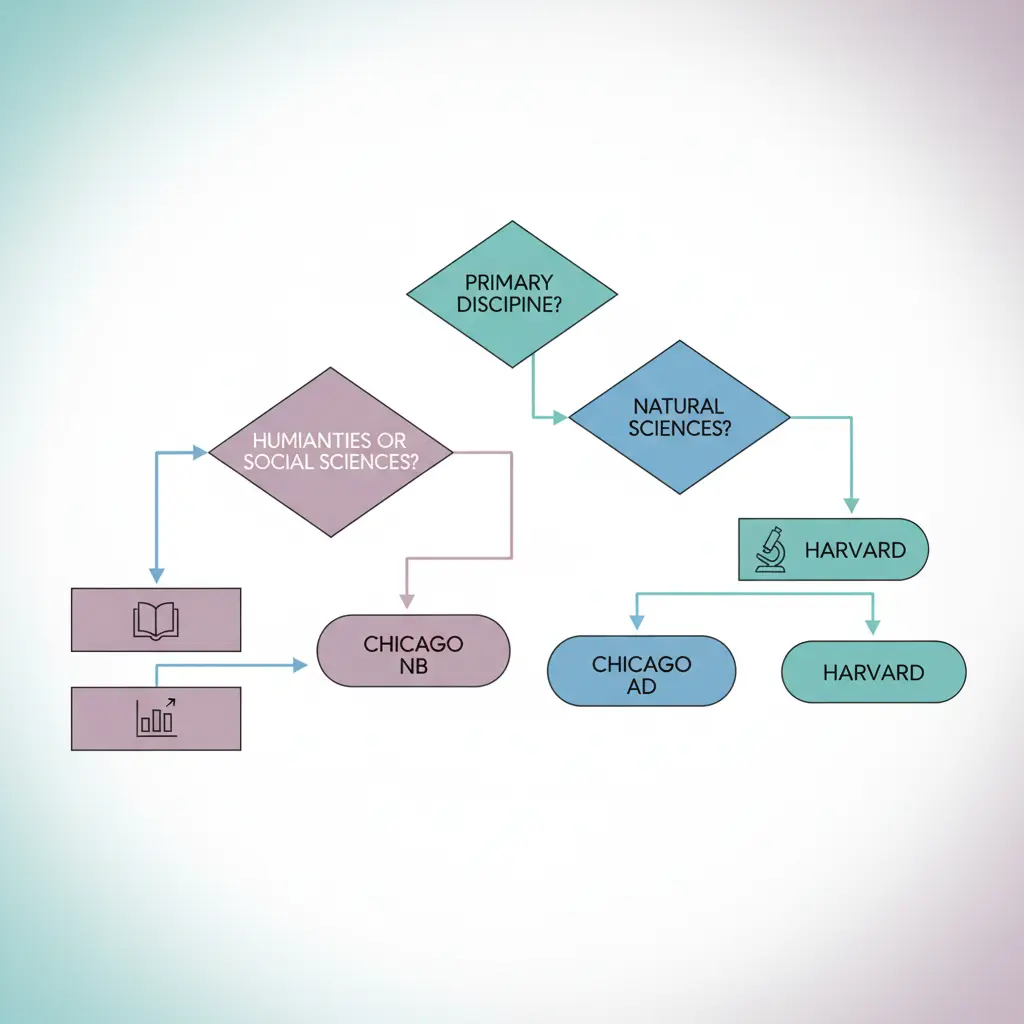
Step-by-Step: Citation Style in a Systematic Review Protocol
- Define your target journal or institutional requirement before starting. Check the journal’s author guidelines on day one. If you’re writing a thesis, obtain your department’s specific style guide — not just “Chicago” or “Harvard” but the exact edition or institutional variant.
- Configure your reference manager to match that style exactly. Zotero, Mendeley, and EndNote all support custom citation style files (CSL files). Download the correct CSL for your specific variant — Chicago 17th AD, Harvard Anglia Ruskin, etc. Don’t rely on generic “Chicago” or “Harvard” defaults, which are often outdated or institution-agnostic.
- Create a master reference database before screening begins. Every source that passes title/abstract screening should be imported into your reference manager immediately, with full metadata. Missing a DOI or publication year at this stage creates downstream errors that multiply as the review grows.
- Run a citation audit at draft stage, not final revision. Check 10% of your reference list manually against the style guide at first draft. Errors cluster — if one entry is wrong, nearby entries in the same source category (e.g., edited book chapters) are often wrong in the same way.
- Apply consistent abbreviation conventions. Chicago uses “p.” for page references in some contexts and omits it in others. Harvard typically uses “p.” consistently. Mixing these within a document is a common error flagged by copy editors and journal peer reviewers alike.
- Verify DOI formatting before final submission. Both Chicago 17th and current Harvard guides recommend the full DOI hyperlink format (https://doi.org/…) rather than just the DOI number. PRISMA-compliant reviews benefit from live DOIs for verification purposes.
What most researchers don’t realise is that citation errors are a significant cause of revision requests — not just at journal submission stage, but in thesis viva examinations. Examiners who spot inconsistent citation formatting often take it as a proxy for methodological sloppiness. Fair or not, that perception is real.
PRISMA 2020, Cochrane Standards, and Citation Consistency
The gold standard for systematic review reporting is the PRISMA 2020 statement, which provides a 27-item checklist covering everything from abstract structure to bias assessment. What PRISMA doesn’t prescribe is citation style — but it does demand complete, traceable references for every included study.
The Cochrane Handbook for Systematic Reviews of Interventions takes a similarly agnostic stance on citation format while being highly prescriptive about reference completeness. Every Cochrane review requires full author lists (no “et al.” truncation), complete journal volume and issue data, and verified DOIs — requirements that go beyond what either Chicago or Harvard mandates by default.
AHRQ Standards and Systematic Evidence Reviews
The AHRQ Methods Guide for Effectiveness and Comparative Effectiveness Reviews is the standard framework for health technology assessment in the United States. AHRQ reviews typically follow AMA (American Medical Association) citation style internally, but the methodological principles — transparency, reproducibility, complete sourcing — apply regardless of which style you use.
The practical takeaway: for health sciences systematic reviews targeting Cochrane, AHRQ, or NICE evidence reviews, Harvard’s author-date system tends to be better tolerated than Chicago NB. The numbered footnote approach of Chicago NB can create confusion in documents that already use numbered lists for PRISMA flow stages.
The PRISMA 2020 checklist and flow diagram is available as an open-access download — a practical resource worth bookmarking regardless of which citation style you use, because the flow diagram’s source-counting requirements demand meticulous reference management from the very first database search.
Citation Management Tools: Handling Chicago and Harvard at Scale
No researcher manually formats 200 references in 2025. Reference management software has become as fundamental to systematic literature review methodology as database searching — but these tools have real limitations with both Chicago and Harvard that you need to understand before trusting them blindly.
Zotero and Chicago 17th Edition
Zotero’s Chicago 17th Author-Date and Notes-Bibliography styles are generally reliable for standard source types. Where they break down is with archival sources, legal documents, musical scores, and manuscript collections — exactly the source types that make Chicago NB attractive for humanities researchers. Manual verification is non-negotiable for these edge cases.
Mendeley and Harvard Variants
Mendeley handles Harvard reasonably well for its generic implementation, but institutional variants (Anglia Ruskin, University of Melbourne, Cardiff) require custom CSL files. The built-in “Harvard” style in Mendeley is essentially a composite that satisfies no single institution’s guidelines exactly. This matters more than most researchers appreciate — journal submission systems and thesis examination boards check against specific institutional or publisher guidelines, not generic approximations.
Our analysis of automatic citation tools for academic work examines this accuracy problem in depth, including error rates across different source types and practical quality-check workflows. The findings apply equally to English-language citation management — the tools are powerful but not infallible, particularly for Chicago’s more complex source categories.
EndNote and Institutional Style Files
EndNote X remains the industry standard in many UK and Australian university libraries, and it has the largest library of institutional Harvard style files. If your institution has an official EndNote output style file, that’s the most reliable way to ensure compliance with their specific Harvard variant. Check your library’s resources page before downloading generic styles from the web.
Decision Framework: A Step-by-Step Guide to Choosing Between Chicago and Harvard
After this much analysis, the question becomes: how do you actually decide? Here’s a decision framework built specifically for researchers navigating systematic literature review contexts.
The 5-Question Citation Style Selection Protocol
-
What does your institution or target journal require?
This is non-negotiable. If your university mandates Harvard (Anglia Ruskin), that’s your answer. If your target journal uses Chicago Author-Date, that’s your answer. Don’t optimise for preference when compliance is the actual requirement. -
What discipline does your research primarily belong to?
Humanities, history, theology → Chicago NB. Sciences, social sciences, health → Harvard or Chicago AD. Interdisciplinary → consult your primary disciplinary anchor. -
What types of sources dominate your reference list?
Mostly journal articles and books → either system works well. Significant archival, legal, or multimedia sources → Chicago NB handles these more elegantly. Datasets, preprints, software → both systems have emerging conventions; check your style guide’s latest edition. -
Will you be submitting to multiple venues?
If you’re planning to publish chapters as standalone papers across different journals, Harvard is typically easier to reformat for APA (the two are structurally similar) than Chicago NB is. Chicago NB to any author-date system requires substantial structural transformation. -
What reference management infrastructure do you have?
If your institution’s library provides official EndNote or Zotero style files for a specific variant, use that variant. The accuracy gains from an officially maintained style file outweigh any personal preference for the other system.
The Tiebreaker: Readability Under Dense Citation Load
For systematic literature reviews with 50+ in-text citations per section — common in results and discussion chapters — Harvard and Chicago AD both outperform Chicago NB on readability. Footnote-heavy pages in Chicago NB can reach a point where the footnotes occupy more vertical space than the main text, which disrupts the argumentative flow that a literature review depends on.
A practical rule of thumb worth applying: if any single page of your review is likely to carry more than eight citation markers, use an author-date system. Your readers and reviewers will thank you.
Frequently Asked Questions
Is Chicago citation style or Harvard better for a systematic literature review?
Harvard (author-date) is generally better suited to systematic literature reviews in sciences and social sciences because its in-text format integrates cleanly with PRISMA-style reference lists and is more readily processed by reference management software. Chicago Author-Date performs comparably but requires stricter software configuration. Chicago Notes-Bibliography is rarely appropriate for systematic reviews due to its footnote-based structure, which can conflict with review-specific numbering conventions.
What is the main structural difference between Chicago and Harvard referencing?
Chicago offers two distinct systems: Notes-Bibliography (using superscript numbers linked to footnotes) and Author-Date (parenthetical citations similar to Harvard). Harvard exclusively uses an author-date format — (Smith, 2019, p. 45) — with an alphabetised reference list. The key structural difference is that Chicago NB places full citation data in footnotes rather than a reference list, while both Harvard and Chicago AD use end-of-document reference lists.
Does Harvard referencing have an official style manual?
No — unlike Chicago (CMOS 17th ed.) or APA (7th ed.), Harvard referencing has no single governing manual. It exists in dozens of institutional variants, each published by individual universities such as Anglia Ruskin, the University of Melbourne, or Imperial College London. Before applying “Harvard style,” always confirm which institution’s variant your department, journal, or examiner requires.
Can I use Chicago citation style for a Cochrane systematic review?
Cochrane reviews use the Vancouver (numbered) citation system internally, not Chicago or Harvard. However, if you’re using Chicago or Harvard in a systematic review that follows Cochrane methodological standards for a non-Cochrane journal, Chicago Author-Date is more compatible with Cochrane’s completeness requirements than Chicago NB. Always verify the target publication’s house style before formatting your reference list.
How do reference management tools like Zotero handle Chicago vs Harvard?
Zotero supports both Chicago 17th (NB and AD) and multiple Harvard variants through CSL (Citation Style Language) files. The built-in styles are reliable for standard source types (journal articles, books, book chapters) but require manual verification for archival sources, legal documents, and multimedia content. Always download institution-specific CSL files rather than relying on generic “Harvard” defaults, which often don’t match any single institution’s precise requirements.
What is literature review methodology in the context of citation style choice?
Literature review methodology refers to the systematic, transparent process by which a researcher identifies, evaluates, and synthesises existing research. Citation style is an integral part of this methodology because consistent, accurate referencing enables reproducibility — other researchers must be able to verify and retrace every source. Inconsistent citation formatting can cause software-based deduplication errors and undermine the methodological transparency that systematic reviews require.
The Verdict: Chicago vs Harvard for Research Methodology
Strip away the preferences and the institutional politics, and the Chicago vs Harvard decision reduces to three factors: your discipline, your source types, and your target venue. For systematic literature review methodology in health, social, or natural sciences, Harvard’s author-date simplicity and near-universal acceptance make it the pragmatic default. For humanities scholarship, historical research, or any work with significant archival source loads, Chicago NB’s expressive footnote system is genuinely superior — not just convention-compliant, but functionally better suited to the material.
Chicago Author-Date occupies a useful middle ground for interdisciplinary researchers who need a fully documented, authoritative style that bridges science and humanities conventions. It’s underused, arguably, precisely because researchers don’t realise it exists as a distinct option within the Chicago framework.
What none of this changes is the foundational principle: citation style consistency, applied from protocol stage through final submission, is a methodological requirement — not an editorial afterthought. The research that gets cited, replicated, and built upon is the research whose evidence trail can be followed without friction.
Deepen Your Research Methodology
Found this analysis useful? These resources extend the discussion into practical application:
- Standardise Citations 2025: Practical formatting rules for Chicago, Harvard, APA, and MLA
- Research Methodology Guide 2026: Complete overview of systematic review design and citation integration
- Automatic citation tool accuracy: What the data shows about software-generated references
Share this article with your research group or seminar cohort — the Chicago vs Harvard decision affects everyone building a literature review, and having a shared framework for that choice saves substantial revision time downstream.
References
- Page, M. J., McKenzie, J. E., Bossuyt, P. M., et al. (2021). The PRISMA 2020 statement: an updated guideline for reporting systematic reviews. BMJ, 372, n71. https://doi.org/10.1136/bmj.n71
- Bastian, H., Glasziou, P., & Chalmers, I. (2010). Seventy-five trials and eleven systematic reviews a day: how will we ever keep up? PLOS Medicine, 7(9), e1000326. https://doi.org/10.1371/journal.pmed.1000326
- Higgins, J. P. T., Thomas, J., Chandler, J., et al. (Eds.). (2023). Cochrane Handbook for Systematic Reviews of Interventions (version 6.4). Cochrane. https://training.cochrane.org/handbook
- Agency for Healthcare Research and Quality (AHRQ). (2014). Methods Guide for Effectiveness and Comparative Effectiveness Reviews. AHRQ Publication No. 10(14)-EHC063-EF. https://effectivehealthcare.ahrq.gov
- University of Chicago Press. (2017). The Chicago Manual of Style (17th ed.). University of Chicago Press.
- Page, M. J., et al. (2024). PRISMA 2020 checklist and flow diagram [Data set]. Zenodo. https://doi.org/10.5281/zenodo.14054789




Leave a Reply