

How to Avoid Plagiarism in Academic Writing: 8 Practical Steps
Understanding how to avoid plagiarism in academic writing has never been more important — or more complex — than in 2026. The rise of AI writing tools has added a new dimension to an already challenging area: not only must students avoid copying from published sources, they must also navigate the grey areas of AI-assisted writing that many institutions now classify under the same academic integrity umbrella as traditional plagiarism. The consequences of getting this wrong range from grade reductions to permanent academic record notations.
This guide provides eight practical, immediately applicable steps to avoid plagiarism in your academic writing — covering proper citation, paraphrasing techniques, AI writing policies, and the use of plagiarism checkers before submission.
What Counts as Plagiarism in 2026?
Academic plagiarism in 2026 encompasses a wider range of behaviours than in previous years. The major categories that universities — including Oxford, Cambridge, Harvard, MIT, and Stanford — now include in their academic integrity policies are:
- Direct copying: Copying another person’s words verbatim without quotation marks and citation
- Close paraphrasing: Changing a few words in a source but retaining the same sentence structure and sequence of ideas
- Mosaic plagiarism: Stitching together phrases and sentences from multiple sources into a coherent-seeming passage without attribution
- Self-plagiarism: Re-submitting your own previously submitted work without disclosure
- AI-generated text: Submitting text generated by AI tools as your own original intellectual work without declaration
- Citation fabrication: Including references that do not exist or citing sources as saying things they do not say
- Ghost-writing: Having another person (or AI system) produce your assessed academic work
Step 1: Cite Every Source You Use
The most fundamental rule of academic writing is simple: every idea, finding, argument, or piece of information that comes from another source must be cited. If you did not generate the idea yourself through your own original thinking or research, you cite the source it came from.
Common areas where students forget to cite:
- Background context and statistics in the introduction
- Definitions of key terms and concepts
- Theoretical frameworks attributed to specific scholars
- Methodological approaches described in the methodology chapter
- Findings from other studies discussed in your literature review and discussion
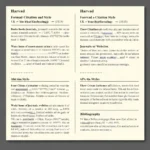
Use a consistent citation format throughout your document. For most English-language universities, this means APA 7th edition, MLA 9th, Chicago 17th, or Harvard referencing. Tools like Tesify Auto Bibliography generate correctly formatted citations in all major styles, eliminating formatting errors.
Step 2: Paraphrase Properly
Paraphrasing means expressing someone else’s idea in your own words. It is not simply swapping synonyms or rearranging sentence order — this is called close paraphrasing and still constitutes plagiarism in most institutional policies.
Original Text (Smith, 2023)
“AI writing tools have fundamentally altered the relationship between students and their academic institutions, creating unprecedented challenges for integrity assessment.”
Close Paraphrase (AVOID — still plagiarism)
“AI writing technology has substantially changed the relationship between students and universities, producing new challenges for assessing academic integrity.” (Smith, 2023)
Genuine Paraphrase (CORRECT)
Smith (2023) argues that AI-generated writing has disrupted established academic integrity frameworks, forcing institutions to develop new approaches to assessing authentic student work.
The genuine paraphrase expresses the same idea but using your own conceptual framing, vocabulary choices, and sentence construction — not just word substitution.
Step 3: Use Quotation Marks for Direct Quotes
When you use an author’s exact words — even a short phrase of three or four words — enclose them in quotation marks and cite the source with a page number. In APA format: (Smith, 2023, p. 47). In MLA format: (Smith 47). This rule applies regardless of how short the quoted passage is.
Use direct quotations sparingly in academic writing. Your thesis should primarily demonstrate your own analytical thinking, not a collection of others’ words. Use quotations only when the original phrasing is so precise, specific, or eloquent that paraphrasing would lose important meaning.
Step 4: Keep Detailed Source Notes
Many cases of unintentional plagiarism occur because students lose track of which ideas came from which sources during the research process. Prevent this by maintaining meticulous research notes:
- Note the full reference (author, year, title, journal, volume, page numbers, DOI) at the point you first encounter a source
- When noting a direct quote, mark it clearly as a direct quote and record the page number
- Distinguish clearly between your own ideas and notes from sources
- Use reference management software (Zotero, EndNote, or Tesify) to maintain a searchable source library
Step 5: Understand Your Institution’s AI Writing Policy
In 2026, every student writing a thesis should have read their institution’s AI policy carefully. Oxford, Cambridge, Harvard, MIT, and Stanford all have explicit AI use policies that define what is permitted, what is prohibited, and what must be declared. The policies change regularly — check your institution’s current guidance, not last year’s version.
Key questions to answer from your institution’s policy:
- Which AI tools are permitted for which purposes?
- What must be declared, and in what format?
- Are there restrictions on AI use in specific assessment types?
- What are the penalties for policy violations?
Step 6: Verify All Citations Before Submission
Never include a citation in your thesis that you have not personally verified. This is especially important if you have used any AI tool for research assistance, as general AI tools (including ChatGPT) frequently generate hallucinated citations — plausible-sounding references to papers that do not exist or that say something different from what is claimed.
For each source in your bibliography, verify: the author(s) are correctly named, the title is accurate, the journal and year are correct, the page numbers are right, and the DOI resolves to the actual paper. This process is tedious but essential. Using verified source input tools like Tesify Auto Bibliography significantly reduces this verification burden.
Step 7: Run a Pre-Submission Plagiarism Check
Before submitting your thesis, run a plagiarism check against academic databases. The Tesify Plagiarism Checker scans your document against published academic sources and provides a similarity report with highlighted passages that need attention. Most institutions set a maximum similarity threshold of 10–20%; pre-submission checking lets you address any issues proactively.
If your institution provides Turnitin self-submission access for draft checking, use it. The Turnitin system is what your examiners will use — checking in advance tells you exactly how your document will score on the tool they trust.
Step 8: Declare AI Tool Use
If you have used any AI writing tool during the preparation of your thesis — for editing, citation formatting, structural planning, or any other purpose — declare it. Most universities now require an AI use declaration as part of the submission process. Proactive, honest declaration protects you from integrity challenges after submission.
A model declaration: “In preparing this thesis, I used [Tool Names] for the following purposes: [list specific uses, e.g., grammar checking, citation formatting, chapter outlining]. All intellectual content — research questions, theoretical framework, data analysis, arguments, and conclusions — is my own original work.”
Students writing theses across Europe can access Tesify’s localised tools: in French, in German, in Spanish, and in Portuguese. For students who want to focus and avoid procrastination during thesis writing, iQuitNow offers tools to help break habits that derail productivity.
Frequently Asked Questions
How do you avoid plagiarism in academic writing?
Avoid plagiarism in academic writing by: citing every source you use, paraphrasing properly (not just substituting words), using quotation marks for direct quotes, keeping detailed source notes, understanding your institution’s AI writing policy, verifying all citations before submission, running a pre-submission plagiarism check, and declaring any AI tool use as required.
What is the difference between paraphrasing and plagiarism?
Genuine paraphrasing expresses another person’s idea in your own conceptual framing, vocabulary, and sentence structure — still requiring a citation. Plagiarism includes close paraphrasing (simply substituting synonyms while keeping the same sentence structure) or copying without attribution. The test is whether you have truly understood and re-expressed the idea, not merely disguised someone else’s wording.
Can you accidentally plagiarise in a thesis?
Yes. Accidental plagiarism is common and occurs when: you forget to cite a source you paraphrased, you include an un-attributed quote from your research notes, you paraphrase too closely, or you lose track of which ideas came from which sources. It is still treated as misconduct at most universities regardless of intent. Systematic source tracking and pre-submission plagiarism checking prevent most accidental plagiarism.
Does using AI writing tools count as plagiarism?
Submitting AI-generated text as your own original work without declaration is treated as academic misconduct — and may constitute plagiarism — at virtually every university. Using AI tools for editing, citation formatting, structural planning, and grammar correction — with proper declaration — is generally permitted. The intellectual content of your thesis must always be your own.
What is self-plagiarism in a thesis?
Self-plagiarism means submitting your own previously submitted work without disclosure. This includes: reusing sections from a previous essay or dissertation, submitting the same work to two courses simultaneously, or incorporating published work without citation. Most universities prohibit re-submission of prior work without permission and explicit disclosure. Check your institution’s policy on re-use of your own work.
What plagiarism percentage is acceptable for a thesis?
Most universities accept similarity scores of 10–20% for thesis submissions, including properly attributed quotations and standard academic phrases. However, institutions instruct examiners to assess the nature of matches rather than applying a simple threshold. A thesis with 25% similarity consisting of properly cited quotations may be acceptable; a thesis with 8% similarity from uncited paraphrasing may constitute misconduct.
How do I properly paraphrase to avoid plagiarism?
To paraphrase properly: read the source until you understand the idea thoroughly, close the source text, write the idea in your own words from memory, then compare with the original to ensure you have not reproduced its phrasing. Always include a citation even for genuine paraphrases. If you cannot paraphrase the idea without echoing the original’s sentence structure, use a direct quotation instead.
What happens if you plagiarise in a thesis?
Penalties for thesis plagiarism range from required resubmission with a grade penalty at the lower end, to outright thesis failure and suspension from academic study at the higher end. Severe cases — particularly at doctoral level — can result in degree revocation even after graduation, with significant professional consequences in academic and research careers. Always take plagiarism prevention seriously, regardless of degree level.
How does Turnitin detect plagiarism in a thesis?
Turnitin compares your submitted text against its database of published academic papers, student paper submissions, and web content. It highlights passages where similarity is found and generates a similarity percentage report. Since 2023, Turnitin also includes an AI Writing Indicator that detects AI-generated content. Examiners review the detailed report to assess whether similarities represent genuine plagiarism or properly attributed source use.
Should I run my thesis through a plagiarism checker before submitting?
Yes — always. Pre-submission plagiarism checking lets you identify and fix unintentional similarity before your institution’s systems flag it. Tesify’s integrated plagiarism checker and AI detection provides a comprehensive pre-submission scan within your writing workflow. If your institution provides Turnitin self-submission access, use that for a final check with the exact tool your examiners will use.
Check Your Thesis for Plagiarism Before You Submit
Tesify’s integrated Plagiarism Checker scans your thesis against academic databases and detects AI-generated content — so you can submit with complete confidence. No nasty surprises after the deadline.



Leave a Reply