
APA Citation Format: The Complete 2026 Guide for Researchers
Academic citation standards trip up even experienced researchers. You’ve spent months on a study, the data is solid, the argument is tight — and then a reviewer sends it back because your reference list has inconsistent DOI formatting or a journal volume number is missing. It sounds trivial. It isn’t. Citation errors erode credibility, delay publication, and in some databases, break the metadata chains that make your work discoverable.
APA format — governed by the Publication Manual of the American Psychological Association, now in its 7th edition (2020) — is the dominant citation system in the social sciences, education, nursing, and increasingly in interdisciplinary research. If you’re working in any of those fields, fluency with APA citation format isn’t optional. It’s professional infrastructure.
This guide covers every major component of APA 7th edition citation standards: in-text citations, reference list construction, DOI handling, electronic source formatting, and how APA fits within broader research methodology workflows. It’s written for researchers who already know citations matter and want the exact rules without having to cross-reference five different sources.
APA citation format is a standardised referencing system published by the American Psychological Association. It uses author–date in-text citations paired with a full reference list. The current edition, APA 7th (2020), introduced streamlined DOI formatting, expanded guidance on digital sources, and removed the publisher location requirement for most references.
What APA Citation Format Actually Requires
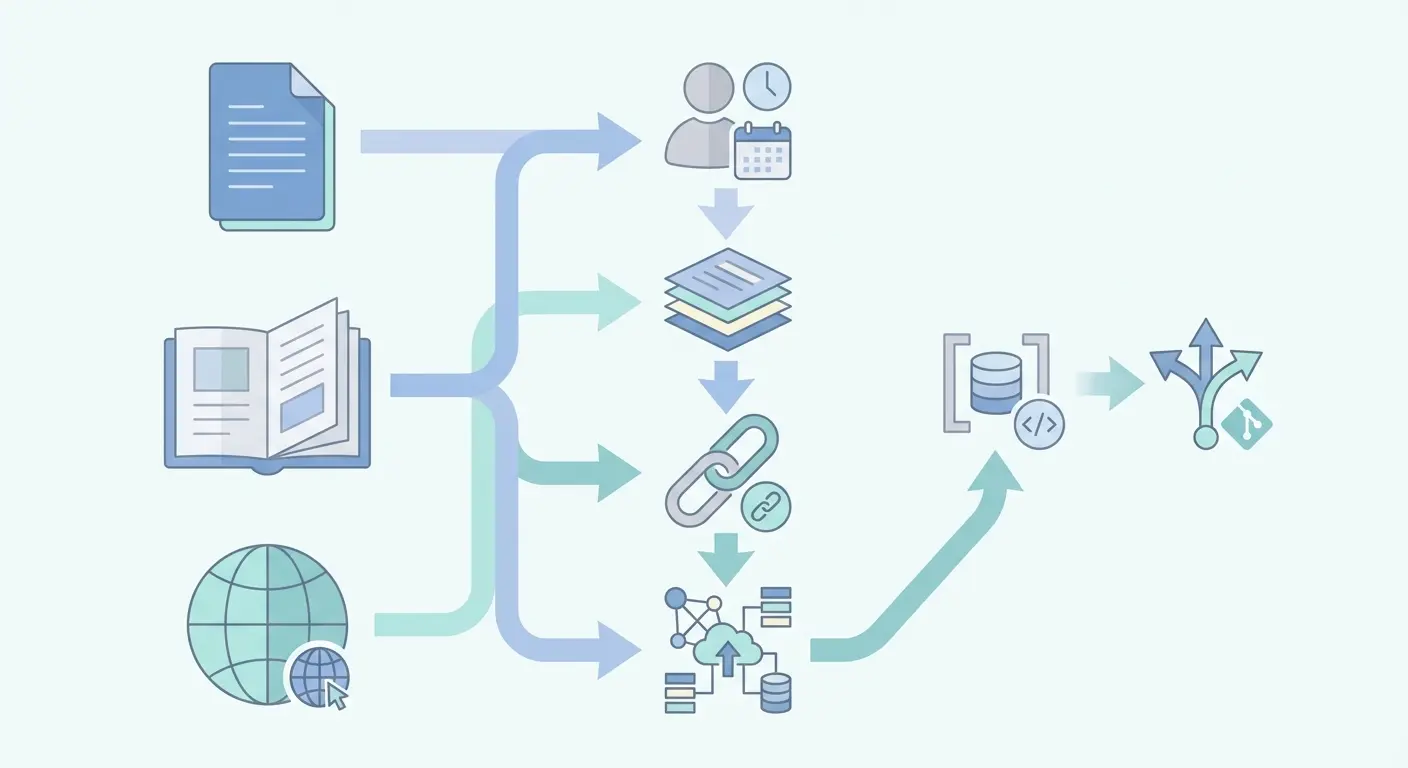
Most citation guides list rules. This one explains the logic, because understanding why APA structures references a certain way makes the rules stick.
APA’s author–date system is built around two premises: first, that the currency of a source matters in fields where knowledge evolves quickly; second, that readers should be able to locate any cited source without ambiguity. Every rule traces back to one of those two goals.
The 7th edition made two structural changes that affect nearly every reference list entry:
- Publisher location removed. You no longer list the city and state/country for book publishers.
- DOIs formatted as hyperlinks. DOIs now appear as
https://doi.org/xxxxxrather than the olderdoi:xxxxxnotation.
These aren’t cosmetic differences. If you’re using a template or tool built for APA 6th edition, your output will be technically wrong — a fact that matters enormously when submitting to journals that run reference checks through tools like CrossRef’s metadata verification system.
The APA manual also distinguishes between professional papers (journal articles, dissertations) and student papers. Professional papers require a running head; student papers do not. Both require a title page, abstract (in most cases), and reference list — but the formatting details differ slightly. Know which format your institution or target journal requires before you begin.
In-Text Citations: Rules, Edge Cases, and Common Errors
In-text citations are where most APA errors accumulate, partly because the rules have more exceptions than any style guide will openly advertise.
The basic format is straightforward: (Author, Year) for a parenthetical citation, or Author (Year) for a narrative citation. But “basic” covers perhaps 60% of real-world use cases. Here’s where it gets genuinely complex:
Multiple Authors
- 1–2 authors: Always cite both names. (Garcia & Lee, 2023)
- 3+ authors: Use first author’s surname followed by “et al.” from the very first citation. (Watkins et al., 2022) — Note: APA 7th changed this from the 6th edition rule, which only used et al. after the first full citation.
Same Author, Same Year
When you cite two works by the same author published in the same year, APA requires a letter suffix: (Smith, 2023a) and (Smith, 2023b). The letters are assigned alphabetically by title in the reference list. This is one of those rules that’s easy to overlook when building a large reference list under deadline pressure.
Secondary Sources
Citing a source you haven’t read directly — only seen quoted in another work — requires the “as cited in” construction: (Bandura, 1977, as cited in Hargreaves, 2019). Only the work you actually read (Hargreaves, 2019) appears in the reference list. APA explicitly discourages over-reliance on secondary sources: if a primary source is important enough to cite, it’s important enough to locate.
Page Numbers and Quotations
Direct quotations always require a page number or, for electronic sources without pagination, a paragraph number or section heading: (Morrison, 2021, p. 47) or (Morrison, 2021, para. 3). Many researchers omit this for paraphrases — which is correct — but incorrectly omit it for direct quotes.
What most people miss is the distinction between a long quotation (40+ words) and a standard inline quote. Long quotations use a block format: indented 0.5 inches from the left margin, no quotation marks, citation after the closing punctuation. This is one of the most commonly misformatted elements in student theses.
Building a Complete APA Reference List
The reference list is not a bibliography. That distinction matters. A bibliography can include sources you consulted but didn’t cite. An APA reference list contains only the sources you cited in the text — every citation must have a reference entry, and every reference entry must have a corresponding in-text citation.
General Formatting Rules
- Title: “References” (centred, bold, not in quotation marks)
- Entries: Alphabetical by first author’s surname
- Spacing: Double-spaced throughout, no extra lines between entries
- Indentation: Hanging indent (first line flush left, subsequent lines indented 0.5 inches)
- Author names: Last name, then initials only — not full first names
Core Reference Templates
| Source Type | Basic Template | Key Notes |
|---|---|---|
| Journal article (with DOI) | Author, A. A., & Author, B. B. (Year). Title of article. Journal Name, Volume(Issue), page–page. https://doi.org/xxxxx | DOI always as hyperlink. No “Retrieved from.” |
| Book (single author) | Author, A. A. (Year). Title of book: Subtitle. Publisher. | No publisher location. Publisher name only. |
| Edited book chapter | Author, A. A. (Year). Title of chapter. In E. E. Editor (Ed.), Title of book (pp. xx–xx). Publisher. | Editor’s initials precede surname here. |
| Webpage / website | Author, A. A. (Year, Month Day). Title of page. Site Name. URL | Include retrieval date only if content changes frequently. |
| Thesis / dissertation | Author, A. A. (Year). Title [Doctoral dissertation, University Name]. Database Name. URL | Specify degree type in brackets. |
One frequently overlooked rule: when a reference has no individual author, use the organisation or government body as the author — not “Anonymous.” “Anonymous” is only correct when the work itself is explicitly credited to “Anonymous” (e.g., a deliberately anonymous historical text).
Citing Digital Sources, DOIs, and URLs in 2026
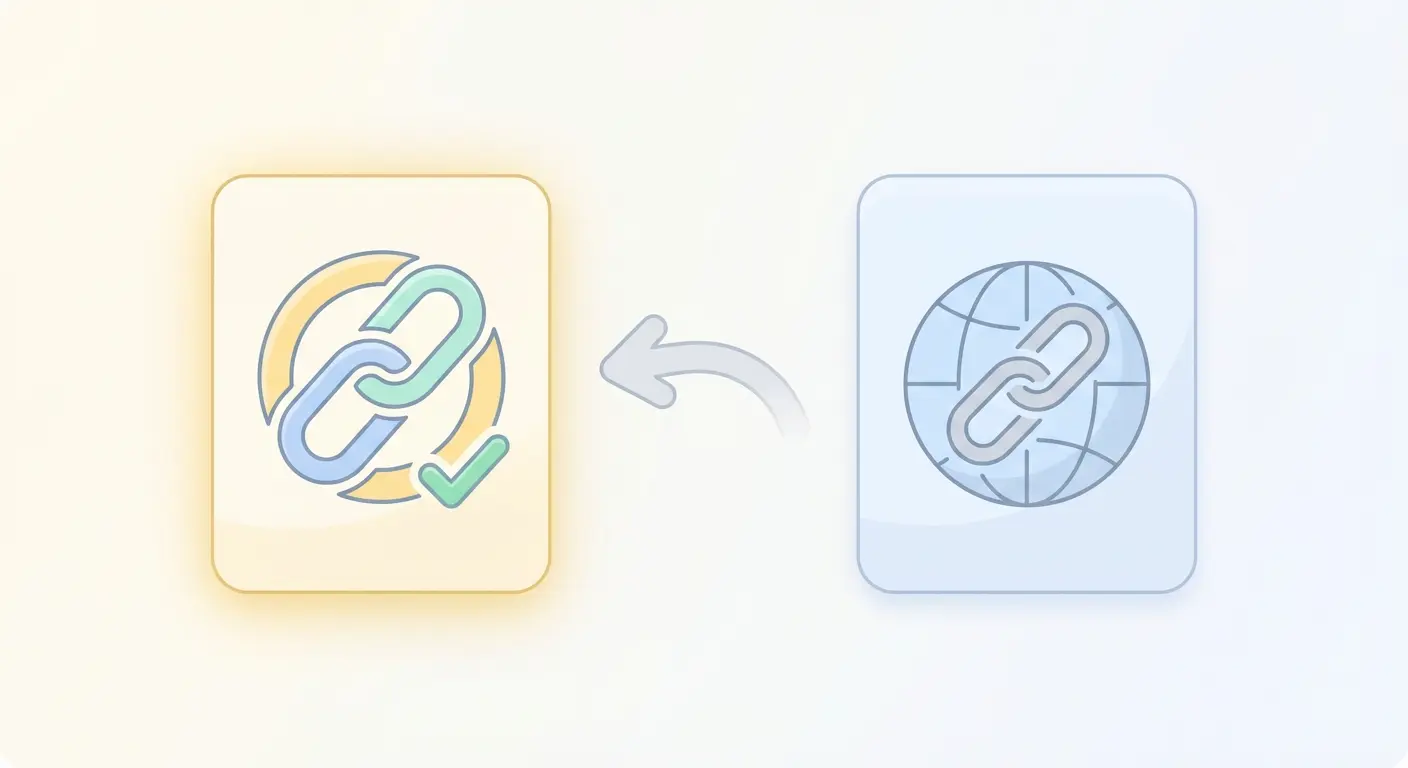
Digital source citation is where APA 7th edition made its most significant practical improvements — and where many researchers are still applying outdated 6th edition conventions.
The core principle for digital sources is the DOI-first rule: if a source has a DOI, use it. Always. A DOI (Digital Object Identifier) is a permanent link — unlike a URL, it doesn’t break when a journal restructures its website. Since CrossRef began registering DOIs in 2000, the system has become the backbone of academic metadata infrastructure, with over 145 million DOIs registered as of 2024 (CrossRef, 2024).
DOI Formatting Rules (APA 7th)
- Format as a hyperlink:
https://doi.org/10.1037/abc0000001 - No period after a DOI at the end of a reference entry — a period can make the link non-functional
- No “Retrieved from” before a DOI — this was an APA 6th convention, now removed
When There Is No DOI
For online articles without a DOI, include the direct URL of the article. For sources that might change over time (government reports, institutional pages), you may include a retrieval date. For stable published content (most journal articles and ebook editions), no retrieval date is needed.
Here’s where it gets interesting: what do you do with a preprint? APA 7th provides explicit guidance. Cite the preprint server (e.g., PsyArXiv, bioRxiv, SSRN) as the publisher equivalent and include the DOI or URL of the preprint record. If the preprint has since been published in a peer-reviewed journal, cite the final published version — not the preprint.
For researchers working with social media, datasets, or software — all now covered explicitly in APA 7th — the Purdue OWL’s APA Formatting and Style Guide remains one of the most reliable free reference tools available.
APA vs. MLA, Chicago, and Harvard: A Practical Comparison
Every citation system exists to serve a disciplinary community’s specific needs. Choosing the wrong one for your context signals unfamiliarity with your field’s conventions — which is exactly the kind of signal peer reviewers notice.
| Feature | APA 7th | MLA 9th | Chicago 17th (Notes) | Harvard |
|---|---|---|---|---|
| In-text format | Author, Year | Author, Page | Footnote/endnote number | Author, Year |
| Date prominence | High (after author) | Low (end of entry) | Low (end of note) | High (after author) |
| Primary use fields | Social sciences, education, psychology, nursing | Humanities, literature, languages | History, arts, theology | Sciences, business (UK/AU) |
| Reference list name | References | Works Cited | Bibliography | Reference list |
| DOI/URL guidance | Explicit, as hyperlink | Explicit, in angle brackets | Variable, URL acceptable | Variable by institution |
The APA–Harvard confusion is worth addressing directly. “Harvard referencing” is not a single standardised system — it’s a family of author–date styles used across British and Australian universities, each with institutional variations. APA is a codified, versioned standard with a single authoritative manual. If your institution says “Harvard style,” check whether they mean a specific institutional variant or whether APA is acceptable as an equivalent author–date system.
For researchers producing work that spans disciplines or multiple journals, the approach to standardising citations across research methodology frameworks — treating citation style selection as part of your project’s methodological design — saves significant time in revision cycles.
Citation Tools, Automation, and Verification Workflows
Reference managers have become standard infrastructure for serious researchers. But there’s a real risk in treating them as infallible — one that many researchers discover only at the worst possible moment.
The three dominant tools are Zotero (open-source, browser-integrated), Mendeley (Elsevier-owned, PDF annotation features), and EndNote (proprietary, common in institutional settings). Each pulls citation metadata automatically from databases like Google Scholar, JSTOR, and Web of Science. The Zotero Quick Start Guide is a reliable starting point for new users setting up their reference workflow.
The Automation Accuracy Problem
Automatic citation import is accurate roughly 80–90% of the time — which sounds reassuring until you realise that a 2,500-word paper might have 40 references, meaning 4–8 entries could contain errors. Common automated import failures include:
- Incorrect capitalisation (APA requires sentence case for article titles, not title case)
- Missing issue numbers
- Outdated DOI formats (still using the old
doi:prefix) - Author name inversions for non-Western name formats
- Publisher data pulled from bookseller pages rather than the publication itself
This is a genuine limitation worth naming honestly. Research on automatic citation tools — including those reviewed in the context of automatic citation tool accuracy in academic work — consistently shows that software-generated references require manual verification before submission. Tools assist; they don’t replace expertise.
For LaTeX users, the Overleaf platform offers maintained APA 7th edition LaTeX templates that integrate with BibTeX and BibLaTeX, giving researchers a high degree of formatting control without manual entry of style rules.
A Practical Verification Workflow
- Export from your reference manager — generate the reference list in your target format
- Cross-check DOIs — paste each DOI into
https://doi.org/to confirm it resolves correctly - Verify author name formats — especially for authors with non-Latin names or hyphenated surnames
- Check title capitalisation — APA sentence case: only first word, first word after colon, and proper nouns are capitalised
- Confirm every in-text citation has a reference entry — a simple find-and-replace search for author names catches most orphan citations
Citation Practices and Research Reproducibility
This is the section most citation guides skip entirely. It shouldn’t be skipped.
In 2016, Nature published a survey of 1,576 researchers in which more than 70% reported failing to reproduce another scientist’s results, and over 50% failed to reproduce their own results (Baker, 2016). The reproducibility crisis — most acute in psychology, medicine, and environmental science — has several causes, but inadequate citation of methods and data sources ranks consistently among them.
Proper citation practice is not just about credit attribution. It’s about methodological transparency. When you cite a specific dataset, you need to cite the specific version of that dataset. When you cite a statistical method, you need to cite the original paper describing that method, not a textbook that summarises it.
Retracted papers present a particularly thorny citation problem. The Committee on Publication Ethics (COPE) provides guidance on how researchers should handle citations to retracted work (COPE, 2009): if you discover a source you cited has been retracted, you have a professional obligation to disclose this in any work that cites it. Google Scholar and Retraction Watch both flag retracted papers, but neither system is perfectly comprehensive.
For computational research specifically, the ten simple rules for reproducible computational research published in PLOS Computational Biology (Sandve et al., 2013) remain the most-cited practical framework — and citation accuracy features prominently in those rules.
Connecting citation practice to broader research design is what separates competent researchers from rigorous ones. The Research Methodology Guide 2026 provides the full framework for building reproducible, ethically sound research workflows in which APA citation standards are embedded from the design phase, not bolted on at the end.
APA 7th Edition Formatting Checklist
Fair warning: this checklist takes effort to work through properly. But checking it once before submission prevents the kind of revision requests that add weeks to your publication timeline.
Document Setup
- ☐ 12-point Times New Roman or 11-point Calibri font throughout
- ☐ 1-inch (2.54 cm) margins on all sides
- ☐ Double-spacing throughout (including reference list)
- ☐ Running head present only if professional paper format required
- ☐ Page numbers in top-right header
In-Text Citations
- ☐ Author–Year format for all citations
- ☐ 3+ author works use “et al.” from first citation
- ☐ Direct quotes include page or paragraph number
- ☐ Block quote format used for quotations 40+ words
- ☐ Same-author-same-year entries use letter suffixes (a, b, c)
Reference List
- ☐ Titled “References” — centred, bold
- ☐ Alphabetical by first author surname
- ☐ Hanging indent applied to all entries
- ☐ DOIs formatted as
https://doi.org/xxxxx - ☐ No publisher location listed for books
- ☐ Journal article titles in sentence case (not title case)
- ☐ Journal names in italic title case
- ☐ Every in-text citation has a corresponding reference entry
- ☐ No references included that are not cited in the text
Final Verification
- ☐ All DOIs tested and resolving correctly
- ☐ No retracted sources cited without disclosure
- ☐ Reference manager output manually reviewed for auto-import errors
APA Formatting Video Resources
For visual learners, Purdue OWL’s video series is the most reliable free resource currently available. Two particularly useful sessions:
- Purdue OWL: APA Formatting — The Basics (video) — covers manuscript setup, title page, and general formatting conventions
- Purdue OWL: APA Formatting — Reference List Basics (video) — covers the most common reference entry types with worked examples
Frequently Asked Questions
What is the difference between APA 6th and APA 7th edition?
APA 7th edition (2020) introduced several key changes from the 6th edition (2009): publisher location is no longer required for book references; DOIs are now formatted as hyperlinks (https://doi.org/xxxxx); works with three or more authors use “et al.” from the first citation rather than the second; and the running head is only required for manuscripts submitted for publication, not student papers. The 7th edition also expanded guidance on citing social media, software, podcasts, and other digital sources.
Do I always need a DOI in an APA reference?
Include a DOI whenever one is available — this is the standard APA 7th rule. DOIs are assigned to most peer-reviewed journal articles, and they should always take precedence over URLs because they are permanent identifiers. If a source has no DOI (common for older articles, many books, and some conference papers), include the URL of the source or the database landing page instead. Do not fabricate or guess at a DOI.
How do I cite a source with no author in APA?
When a work has no identifiable individual author, use the name of the organisation, government agency, or institution as the author. If no organisational author is identifiable either, move the title to the author position in both the in-text citation and the reference list entry. “Anonymous” is only used when the work is explicitly credited to “Anonymous.” For in-text citations of title-first entries, use the first few words of the title in quotation marks or italics, matching the reference list formatting.
Is APA citation format the same as Harvard referencing?
No — though both use author–date in-text citations, they are distinct systems. APA is a codified, versioned standard with a single authoritative manual published by the American Psychological Association. “Harvard” is a family of institutional variants with no single governing manual; formatting details vary significantly between universities in the UK, Australia, and elsewhere. Always confirm which specific system your institution or target journal requires before assuming they are interchangeable.
Can I use a citation generator for APA references?
Citation generators and reference managers (Zotero, Mendeley, EndNote) are valuable tools, but their output requires manual verification. Automated metadata imports commonly contain errors in title capitalisation, author name formatting, DOI notation, and missing issue numbers. Use these tools to draft your reference list, then verify each entry against APA 7th edition rules before submission — particularly checking that DOIs resolve correctly and journal article titles are in sentence case.
What citation format do most academic journals use?
It depends on the discipline. APA dominates in psychology, education, social work, and nursing. Chicago Notes-Bibliography is standard in history and the arts. MLA is the norm for literary and language studies. Many STEM journals use discipline-specific styles (Vancouver for medicine, ACS for chemistry). Always consult the target journal’s Author Guidelines before formatting your references — journals rarely accept manuscripts that don’t conform to their stated citation style.
Explore More Research Methodology Resources
If this guide gave you a clearer foundation in APA citation format, the next step is embedding those practices into a rigorous research methodology workflow. Strong citations are only as valuable as the research design they document.
- For researchers comparing citation styles across disciplines: Standardise Citations Across Research Methodology Frameworks (2026)
- For a complete overview of research design, ethics, and reproducibility: Research Methodology Guide 2026: Complete Overview
- For understanding the limitations of automated citation tools: Automatic Citation Tool Accuracy in Academic Work
If this guide is useful to your students, colleagues, or research community, sharing it helps build the kind of open academic resource ecosystem that citation standards themselves were designed to support.





Leave a Reply