

Academic CV Template: 5 Unexpected Tricks Professors Use
Your academic CV gets less than 30 seconds of a professor’s attention on the first pass. That’s not pessimism — that’s what hiring committees at Oxford, MIT, and the University of Melbourne consistently report when describing shortlisting rounds for PhD positions and postdoctoral roles. Most applicants spend hours polishing their publications list, then wonder why they never hear back.
The problem isn’t what’s on the CV. It’s what’s missing — and how what’s there is presented. Professors and admissions panels aren’t reading your CV the way you think they are. They’re scanning for specific signals, in a specific order, and most templates you’ll find online are built for corporate hiring, not academia.
Here’s what actually changes outcomes: five tactics that experienced academics quietly apply when they build their own CVs — and that most students never hear about until it’s too late.

What Is an Academic CV (and How It Differs from a Resume)
Most students discover the academic CV when they apply for their first PhD programme — and most of them get it wrong on the first attempt. That’s not a criticism; it’s just that no one formally teaches this document the way they teach essay writing or lab technique.
The core difference from a standard resume is purpose. A corporate resume is designed to show that you can do a job. An academic CV is designed to show that you are already a scholar — that your thinking, your output, and your trajectory fit within a specific research community.
According to Nature Careers’ guide on writing an academic CV, the document should demonstrate “your academic identity” rather than just listing credentials. That distinction — identity versus credentials — is where most templates fall short.
What counts as an academic CV also shifts by country and discipline. In the UK, Australia, and Canada, a CV for a PhD application will look quite different from one used for a US faculty position. Length expectations, section ordering, and even font conventions vary. This guide covers practices that apply broadly across English-speaking countries, with notes on regional variation where relevant.
Trick 1: Lead with Research Impact, Not Chronology
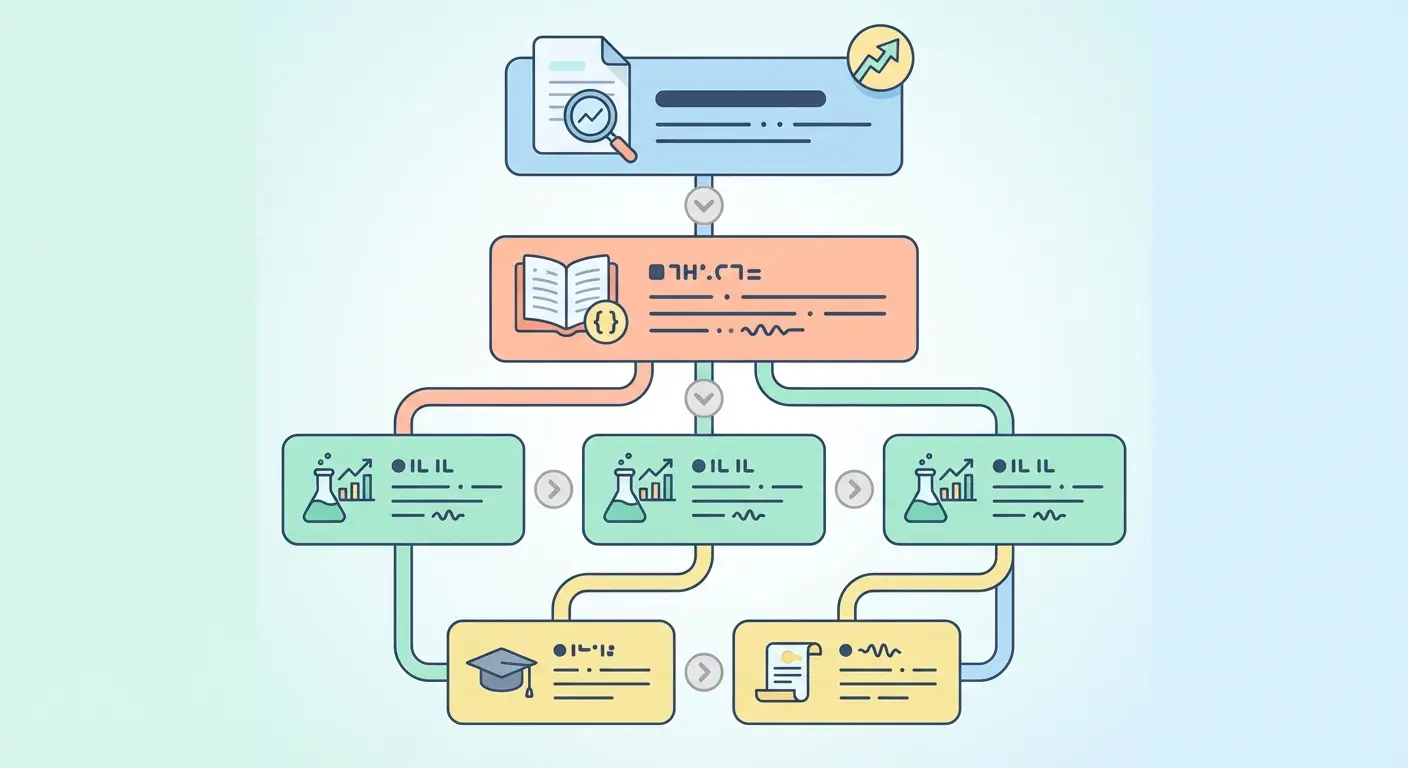
The biggest mistake on most academic CVs is burying the most impressive work inside a chronological timeline. Chronology is a default — it’s how most people organize their lives — but it’s almost never the most persuasive structure for a research document.
What professors actually do when they read CVs: they skip to publications and research experience first, then scroll back to education only if those sections impressed them. Eye-tracking studies on document reading behavior consistently show that readers jump to the section headers they care about, not the section that comes first on the page.
How to restructure for impact
- Open with a Research Profile or Summary (3–5 sentences). Not an “objective statement” — those belong on corporate resumes. A research profile answers: What is your specific area of inquiry? What methods do you use? What original contribution have you made or are you positioned to make? Keep it tight and grounded in your actual work.
- Move publications and research projects to page one. If you have peer-reviewed publications, conference papers, or pre-prints, they should appear before your full education history. A single first-authored paper in a relevant journal outweighs three additional lines of coursework.
- Group work by type, not date. Instead of one long chronological list, separate journal articles, conference proceedings, book chapters, and working papers into labeled subsections. Reviewers can then scan directly to the output type most relevant to their programme.
What most people miss is that a chronological CV tells a story about time. An impact-forward CV tells a story about contribution. For scholarship applications — whether Fulbright, Rhodes, or Chevening — the latter is what selection panels are looking for.
Practical tip: When writing your research profile, check whether your language aligns with how the target department describes its own work. If their website emphasizes “mixed-methods approaches to policy analysis,” and your CV only mentions “qualitative research,” you’re missing a simple alignment opportunity. Trick 2 covers exactly this.
Trick 2: Mirror the Language of the Department
This one surprises people. It feels like manipulation — but it’s actually the opposite. It’s precision.
Every academic discipline has a vocabulary. Sociologists don’t describe their work the same way ecologists do. Within sociology, quantitative researchers and ethnographers use different language to describe essentially similar activities. And within ethnography, a UK university and an Australian university may have subtle terminological preferences shaped by their theoretical traditions.
Professors reading your CV aren’t just evaluating what you’ve done. They’re evaluating whether you sound like someone who belongs in their intellectual community. This isn’t gatekeeping for its own sake — it’s a genuine signal of fit. A candidate who uses the department’s own language in their research profile and project descriptions has almost certainly read the department’s recent work. That matters.
Three ways to implement this immediately
- Read 5–10 abstracts from your target supervisor’s recent papers. Note the verbs they use to describe research activity (“interrogates,” “theorizes,” “models,” “maps”), and consider whether those verbs — where honest — can appear in your CV.
- Check the programme description word-for-word. If a PhD programme lists “critical discourse analysis” as a methodology, and you’ve done work adjacent to that, name the connection explicitly rather than leaving it implicit.
- Avoid generic academic language where specific language exists. “Research skills” is meaningless. “Proficiency in thematic coding using NVivo 12 and ATLAS.ti” is a specific, verifiable claim.
This principle extends to scholarship applications as well. The Chevening Scholarship, for instance, explicitly evaluates “leadership potential” — not just leadership experience. Candidates who echo that framing in their supporting materials consistently outperform those who simply list roles held.
For help articulating your research methodology in the precise language that will resonate with academic reviewers, the Research Methodology Guide 2026 offers a complete breakdown of paradigms, methods, and terminology across disciplines — practical reading before you finalize your CV’s research experience section.
Trick 3: Signal Originality Before the Interview

Here’s a counterintuitive truth: most academic CVs look almost identical at the competent-but-unremarkable level. Good grades, a master’s thesis, maybe a conference presentation, some teaching assistant experience. The formatting differs; the content doesn’t.
What separates shortlisted candidates from the rest is often a single, clear signal of original thinking. Not a claim of originality — an actual demonstration of it, built into the CV’s structure and content.
What originality signals look like on a CV
- A thesis or dissertation that challenged an established assumption. Don’t just title it. Add a one-sentence description that names the gap you identified and the approach you took: “Master’s thesis interrogating the assumption that X, using Y dataset and Z method to argue [finding].”
- A research note, preprint, or working paper. Even unpublished work signals that you produce independent scholarship, not just coursework. Include it under a clearly labeled “Working Papers” subsection.
- A specific methodological innovation. Did you adapt a standard instrument? Develop a novel coding schema? Apply a method from one field to a problem in another? These are originality signals, and they belong on your CV explicitly — not buried in a thesis no one has read.
- A named award for original research. Prizes from your institution, competitive grants, or funded projects all signal external validation of independent contribution.
For PhD applicants specifically, understanding how to frame and evidence original contribution is non-trivial. The article on how top PhD students prove originality in doctoral dissertations provides five concrete strategies that translate directly to how you describe your existing work on a CV — and what gaps to frame as your proposed contribution in research statements.
Importantly, originality doesn’t mean novelty for its own sake. It means demonstrating that you’ve moved thinking forward in some direction, however incremental. That’s what academic careers are built on — and CVs that signal it early get noticed.
Trick 4: Use Formatting That Matches Institutional Standards
Format is not neutral. A CV formatted for a humanities application at Cambridge should look different from one submitted for a STEM postdoc at MIT or a social sciences PhD at the University of Toronto. Reviewers notice — even when they don’t consciously register what they’re responding to.
The principle here is that formatting signals professionalism and disciplinary literacy. A CV with inconsistent citation styles, misaligned dates, or incorrect title formatting for a journal article is a yellow flag. It suggests either carelessness or inexperience with academic publication conventions.
Field-by-field formatting norms
| Field | Preferred Citation Style | Typical CV Length | Key Formatting Note |
|---|---|---|---|
| Humanities | Chicago / MLA | 3–6 pages (PhD applicant) | Teaching experience prioritized; archival work listed |
| Social Sciences | APA | 2–4 pages | Methods expertise explicit; policy impact noted |
| STEM / Sciences | Vancouver / ACS / discipline-specific | 2–3 pages (early career) | Grant funding listed; lab skills section included |
| Law / Policy | OSCOLA (UK) / Bluebook (US) | 2–4 pages | Moot competitions; clinic experience; publications in law reviews |
| Education / EdD | APA | 3–5 pages | Teaching portfolio reference; institutional service listed |
For LaTeX users — and in STEM and quantitative social sciences, LaTeX-formatted CVs are increasingly expected — the Academic CV Template on Overleaf provides a clean, field-tested starting point. It handles citation formatting, section spacing, and font hierarchy in ways that Word templates simply don’t replicate.
For detailed formatting standards aligned with university expectations — including citation consistency, margin requirements, and document hierarchy rules — the guide on academic document formatting standards offers a rigorous reference point for any academic document, not just dissertations. The principles transfer directly to how a CV should be structured for institutional submission.
One underrated tip: check whether the programme you’re applying to uses a specific submission system (such as UCAS in the UK or university portals in Australia). Some systems strip PDF formatting. Always test your document in the submission environment before the deadline.
Trick 5: Quantify Everything — Including Things You Think Can’t Be Quantified
Academics are trained to be precise. Vague language on a CV reads as imprecision — which is a serious professional liability in a culture that prizes evidence and specificity.
The instinct to quantify is strong in STEM candidates (citation counts, h-index, grant amounts) but weaker in humanities and social science applicants, who sometimes feel that their contributions resist numerical description. That hesitation is understandable — and largely wrong.
What can be quantified on an academic CV
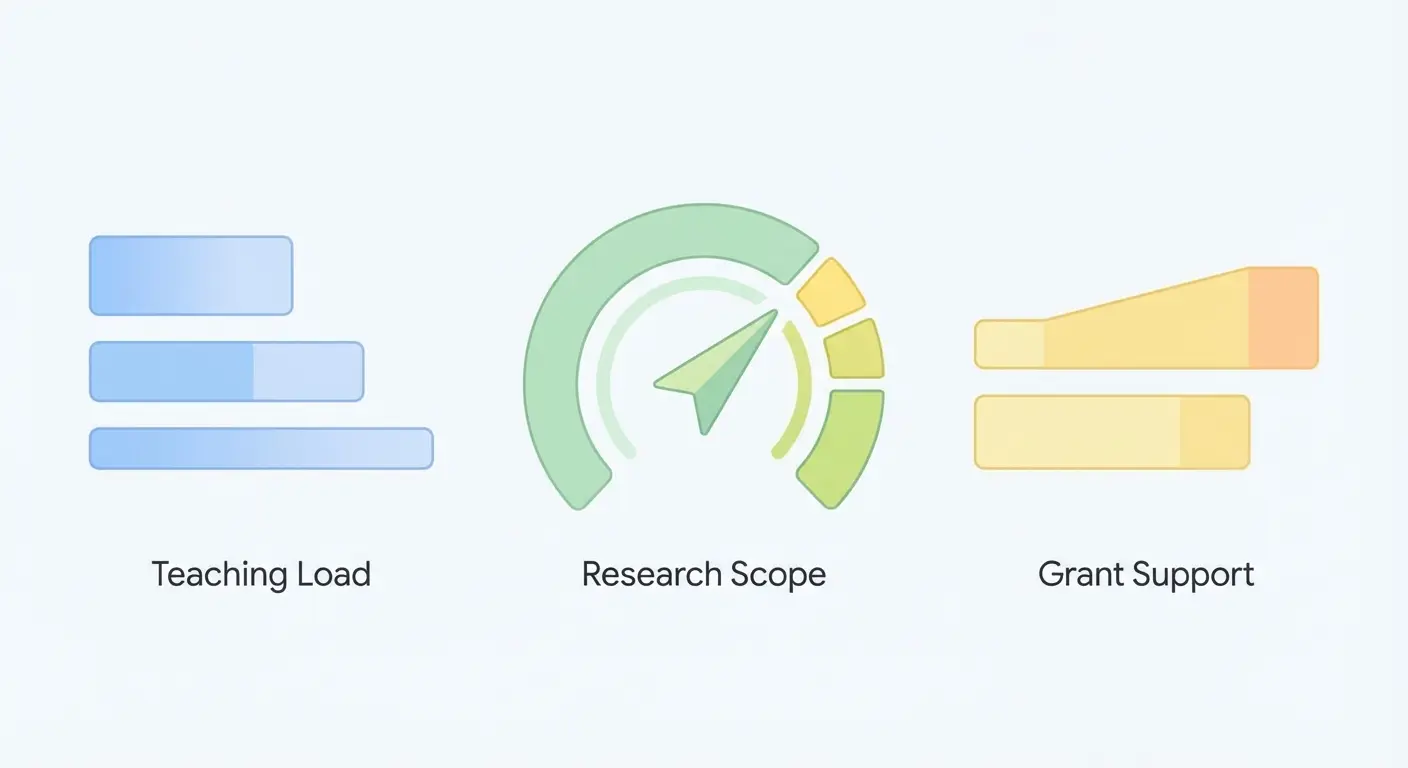
- Teaching experience: Not just “Teaching Assistant, Introduction to Sociology” — but “Teaching Assistant for cohorts of 45–60 undergraduates; delivered 12 independent seminars.” Specificity transforms a role into a demonstrated competency.
- Research scale: “Analyzed a dataset of 4,200 survey responses across 6 countries” or “Conducted 28 semi-structured interviews over 14 months” — both quantify effort and scope without reducing qualitative work to numbers.
- Publications performance: If a journal has a known acceptance rate (Nature: ~8%; PLOS ONE: ~50%), listing it contextualizes your publication. Citation counts (from Google Scholar) are standard in many fields.
- Grant and funding amounts: Any award, travel grant, or funded project should list the monetary value. “ESRC Postgraduate Research Grant, £8,500” tells a reviewer far more than “received funding.”
- Conference presentations: Note acceptance rates where known, attendance figures for major conferences, and whether your paper was peer-reviewed for inclusion.
Dr. Lucy Kissick’s widely-shared breakdown of her two-page academic CV — available as a detailed video summary via The PhDiaries on Glasp — shows exactly how quantification works in practice for early-career researchers. Her approach to describing fieldwork and publications is a masterclass in precision without arrogance.
Fair warning: this level of specificity takes effort. You’ll need to dig out dates, cohort sizes, acceptance rates, and award amounts. But that effort is exactly what differentiates a CV that gets filed from one that gets a follow-up email.
Academic CV Template: Section-by-Section Breakdown
The structure below reflects the ordering that works across most English-speaking academic contexts. Adjust section emphasis (and remove sections that don’t yet apply) based on your career stage and target institution.
1. Header
Full name (larger font), current institutional affiliation, professional email, ORCID iD, personal research website or academic profile link. No photo (standard in US, UK, Canada, Australia). No home address beyond city/country.
2. Research Profile (3–5 sentences)
Summarizes your research focus, primary methods, and core contribution. Written for a specialist reader — this is not a general-audience bio. Use field-specific language (see Trick 2).
3. Education
In reverse chronological order. Include institution, degree, thesis title (with one-sentence description for PhD/master’s), supervisor name, and graduation year or expected year. Include dissertation committee members for US academic job market applications.
4. Publications
Subsections: Peer-Reviewed Journal Articles | Book Chapters | Conference Proceedings | Working Papers | Under Review. Bold your own name. Follow your discipline’s citation style consistently. If under review, note the journal name.
5. Research Experience
Named projects, positions held, funding sources, and your specific role. Quantify where possible (see Trick 5). Include fieldwork, data collection, and lab management roles.
6. Grants and Fellowships
List all funded awards with monetary values, funder name, and year. Include both successful and, where relevant, competitive shortlisting (e.g., “Shortlisted, Fulbright Scholar Award 2024”).
7. Teaching Experience
Courses taught or assisted, cohort sizes, institution, and level (undergraduate/postgraduate). Note curriculum design responsibility where applicable.
8. Conference Presentations
Paper title, conference name, location, year. Distinguish invited talks from submitted papers. Note keynote or panel chair roles separately.
9. Professional Service
Peer review for journals (list journals, not number of reviews unless significant), editorial board roles, committee memberships, departmental service.
10. Skills and Certifications
Software, languages (with proficiency level), statistical methods, specialist equipment. Specificity matters here — “SPSS” tells reviewers less than “multilevel modelling in R (lme4 package).”
11. References
“References available upon request” is standard at the application stage. For faculty job applications, provide 3 named referees with full contact details.
Academic CV vs Resume: Full Comparison Table
| Criterion | Academic CV | Standard Resume |
|---|---|---|
| Length | 3–15 pages (grows with career) | 1–2 pages maximum |
| Primary purpose | Demonstrate scholarly identity and research output | Show ability to perform a specific role |
| Publications | Full section with complete citations | Not included or briefly mentioned |
| Objective/Summary | Research profile (field-specific) | Professional objective (job-specific) |
| Teaching | Dedicated section with course details | Brief if relevant |
| Grants/Funding | Full section with amounts and funders | Not typically included |
| Conference activity | Full list with paper titles | Not typically included |
| Photo | Not included (US, UK, AU, CA) | Varies by country and industry |
| Customization | Tailored by reordering/emphasizing sections | Heavily customized per application |
Academic CV Pre-Submission Checklist
Run through this before you hit send. Every item on this list has cost someone a shortlist spot at some point.
- Research profile present and field-specific. Does it name your methods, your area, and your contribution in 3–5 tight sentences?
- Publications formatted consistently. Same citation style throughout. Your name bolded in every entry. Journal names in italics or according to style guide convention.
- All claims quantified where possible. Teaching cohort sizes, grant values, dataset scale, citation counts.
- Formatting matches the field. Appropriate length for career stage. Font legible at 11–12pt. Margins 1 inch / 2.5cm. No color gradients or decorative elements (unless you’re in a creative discipline).
- Language mirrors the target department. Have you searched for key phrases from their programme description in your CV text?
- Originality signaled explicitly. Is there at least one item that demonstrates independent scholarly contribution, not just participation?
- ORCID and academic profiles linked. Google Scholar, ResearchGate, or institutional profile — wherever your work is indexed.
- Thesis/dissertation described, not just titled. One sentence of what it argued and what method it used.
- References section appropriate. “Available on request” for most applications; named referees for faculty positions.
- PDF tested in submission system. Formatting preserved? File size within limits? File named “Lastname_FirstName_CV.pdf”?
How Your Academic CV Fits into University Admissions and Scholarships
An academic CV rarely exists in isolation. For most applications — PhD programmes, research master’s degrees, and competitive scholarships — it’s one component in a package that typically includes a personal statement or research proposal, letters of recommendation, and transcripts.
The CV’s job in that package is specific: it provides verifiable evidence. Your personal statement can claim passion and potential; your CV has to prove it with documented output and experience. These two documents must be consistent — and that’s where many applicants stumble. They write an enthusiastic personal statement about their research interests, then submit a CV that doesn’t mention any research activity in that area.
For UK applicants, UCAS guidance on what to include in your personal statement is the standard reference — and it’s worth reading alongside your CV draft to ensure the documents reinforce, not repeat, each other.
For scholarship applications specifically — Fulbright, Rhodes, Chevening, Erasmus, Gates Cambridge — the CV is often reviewed alongside a structured nomination process. Scholarship panels typically include both academics and non-academic professionals. Your CV needs to communicate clearly to both audiences: research credibility for the scholars on the panel, and broader impact potential for the others.
For US students navigating financial aid alongside scholarship applications, the Federal Student Aid scholarship tips guide and the College Navigator tool from NCES are authoritative resources for understanding institutional funding landscapes — context that shapes how you frame your CV for domestically funded opportunities versus international scholarships.
If you want to verify that your academic writing — including any supporting thesis or dissertation — meets originality standards expected by scholarship bodies, Tesify’s plagiarism checker compares work against millions of scholarly sources across international databases, giving you certified originality documentation you can reference with confidence.
Frequently Asked Questions
How long should an academic CV be for a PhD application?
For most PhD applications in English-speaking countries, 2–4 pages is appropriate for applicants with a bachelor’s or master’s degree and limited publications. Don’t pad it to appear more experienced — reviewers notice. A tight 2-page CV with one strong publication beats a 5-page CV filled with undergraduate coursework details. The exception is candidates who already have a substantial publication record, where a longer document is expected and appropriate.
What is the difference between a CV and a resume in academic contexts?
An academic CV is a complete record of your scholarly output — publications, grants, teaching, conferences, and research experience — with no strict page limit. A resume is a 1–2 page summary tailored to a specific job. In academic hiring and university admissions, a CV is always expected. Using a resume format for an academic application signals unfamiliarity with the field’s conventions.
Should I include a photo on my academic CV?
No — in the US, UK, Canada, Australia, Ireland, and New Zealand, academic CVs do not include photos. Including one is considered non-standard and can inadvertently create bias concerns for hiring committees. The exception is some European academic markets, where photos are more common. If you’re applying internationally, always default to no photo unless the application instructions specify otherwise.
Can I use the same academic CV for every application?
You should maintain one master CV and customize it for each application — primarily by reordering sections to emphasize what’s most relevant, and by adjusting your research profile to mirror the language of the target programme or institution. The core content stays the same; the framing and emphasis shift. Sending an identical CV to a quantitative economics department and a qualitative anthropology programme is a missed opportunity to signal fit with each.
Do scholarship panels like Fulbright or Chevening review your academic CV?
Yes, most competitive scholarships — including Fulbright, Chevening, Rhodes, Gates Cambridge, and Erasmus — require an academic CV as part of the application package. The CV is typically reviewed alongside your personal statement, research proposal, and letters of recommendation. For these applications, ensure your CV documents not just academic output but also leadership, community engagement, and international experience where applicable, as these scholarships evaluate the whole candidate.
What should I include if I have no publications yet?
If you have no publications, focus on demonstrating research activity through other means: your thesis or dissertation (with a one-sentence description of its argument and method), conference presentations, working papers or pre-prints, research assistant roles, and any data collection or analysis you’ve contributed to. Labeling a section “Research in Progress” or “Working Papers” is accepted practice and signals active scholarly engagement even without peer-reviewed output.
Build Your Academic Profile with the Right Tools
An academic CV is the foundation — but it’s only as strong as the work it documents. If you’re actively writing a dissertation, thesis, or research proposal to accompany your applications, the documents need to be consistent, precise, and academically rigorous.
Over 9,000 students use Tesify to write bachelor’s dissertations, master’s theses, and PhD dissertations with integrated AI assistance, automatic bibliography formatting (APA, MLA, Chicago, Vancouver), and advanced plagiarism detection against JSTOR, ProQuest, EThOS, ERIC, and Google Scholar. It’s free to start — and it takes the formatting and compliance stress off your plate so you can focus on the research itself.
Share this guide with other applicants who’d benefit from it — and explore the resources below to strengthen every part of your academic application:
- Research Methodology Guide 2026: Complete Overview — essential reading for describing your methods on your CV and in research proposals
- Proving Originality in Doctoral Dissertations: 5 Strategies — how to frame independent contribution in your CV and supporting documents
- Academic Document Formatting Standards — institutional formatting expectations that apply to CVs and dissertations alike
Last reviewed and updated for the 2025–26 application cycle. Data points and external resources verified at time of publication. Always check individual programme and scholarship requirements, as expectations can change year to year.






Leave a Reply