
First-Generation University Students: Statistics and Data (2026)
First-generation university students — those who are the first in their immediate family to attend university — represent one of the most studied and most supported groups in higher education research. In 2026, despite decades of widening participation initiatives and significant investment in student support, first-generation students continue to face measurable disadvantages in enrolment, completion, and achievement compared to their continuing-generation peers. Understanding the data behind these disparities is essential for designing effective support interventions.
This guide presents the most current and comprehensive statistics on first-generation university students globally, covering enrolment rates, completion gaps, academic achievement, and the evidence base for support strategies.
Defining First-Generation Students
The definition of “first-generation university student” varies across countries and studies, which affects comparability of statistics:
- UK definition: Student whose parents did not attend higher education (university or college level)
- US definition: Student whose parents did not complete a four-year bachelor’s degree
- OECD definition: Student whose parents have no tertiary education
These definitional differences explain why prevalence statistics vary significantly between countries and studies.
Enrollment Statistics by Country
| Country | % First-Generation Students | Data Source |
|---|---|---|
| United Kingdom | ~47% | UCAS 2024; HESA 2024 |
| United States | ~56% | NCES 2024 |
| Australia | ~40% | TEQSA 2023 |
| Germany | ~26% | DZHW 2023 (lower due to vocational tracking system) |
| France | ~35% | MESR 2024 |
Completion and Dropout Rate Data
The completion gap between first-generation and continuing-generation students is consistent across countries and well-documented in the research literature:
- UK (HESA 2024): First-generation students are 23% more likely to leave their degree programme without completing than continuing-generation peers, after controlling for subject choice and prior attainment
- US (National Student Clearinghouse 2024): First-generation bachelor’s degree completion within six years: 52%, compared to 68% for continuing-generation students — a gap of 16 percentage points
- Australia (TEQSA 2023): First-generation students have completion rates approximately 8–12% lower than other students, with the gap largest at regional universities
The completion gap is consistently larger than the access/enrolment gap, suggesting that improving access without improving support does not resolve the underlying equity issue.
Academic Achievement Gaps
Beyond completion, first-generation students also show measurable achievement gaps:
- In the UK, first-generation students are 19% less likely to achieve a 2:1 or First Class degree than continuing-generation peers, after controlling for prior attainment (HESA 2024)
- US data shows first-generation students have lower average GPAs, lower rates of graduate school attendance, and lower starting salaries after graduation
- First-generation students are significantly less likely to participate in extracurricular activities, internships, and networking opportunities that translate to labour market advantage
Evidence-Based Barriers
Research consistently identifies the following barriers for first-generation students:
- Social capital and “hidden curriculum” knowledge: First-generation students often lack the implicit knowledge about university culture, academic expectations, and networking norms that continuing-generation students acquire from family
- Financial pressures: First-generation students are more likely to work during term time, reducing study time
- Imposter syndrome and belonging uncertainty: Documented at significantly higher rates among first-generation students
- Family obligations: More likely to be primary carers or financially responsible for family members
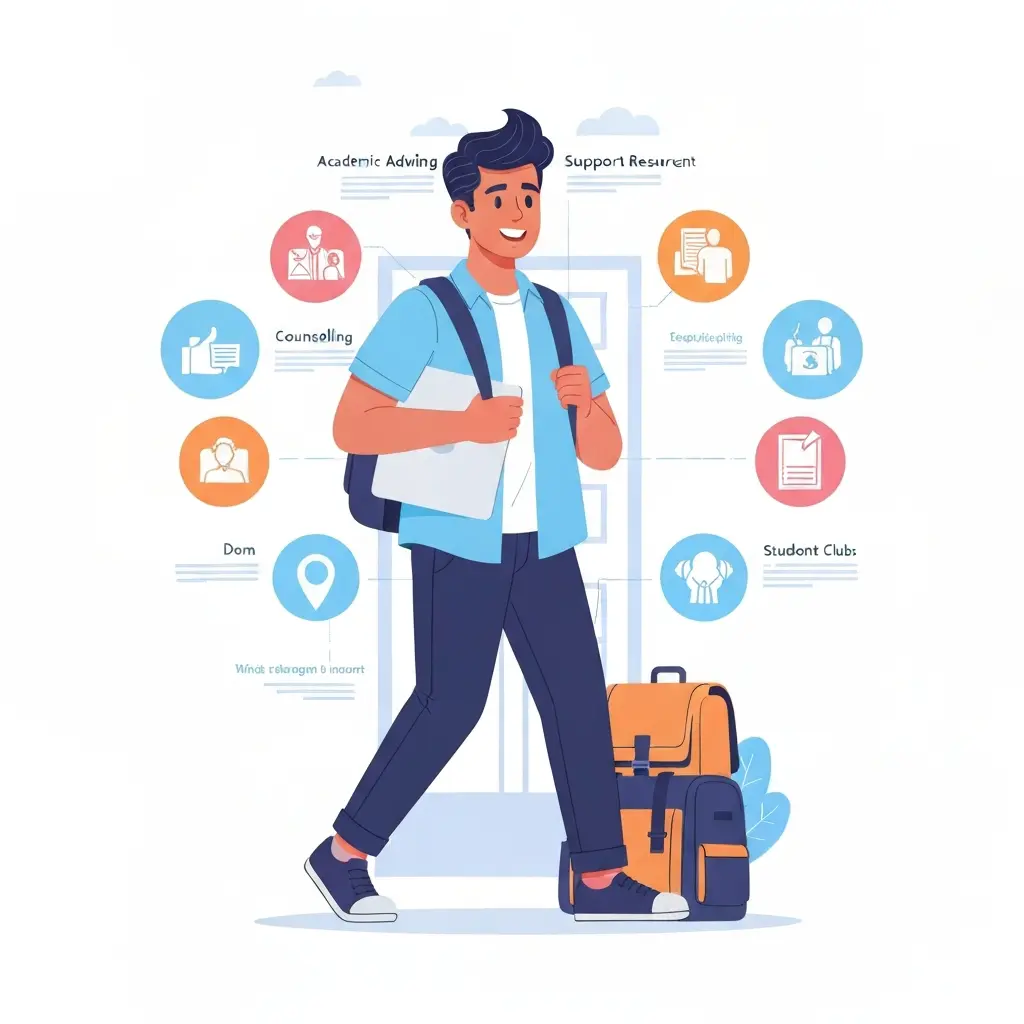
- Limited awareness of support services: Less likely to seek help from tutors, welfare services, or writing centres
AI writing tools that are easily accessible and don’t require prior knowledge of academic norms — like Tesify’s academic writing platform — can help level the playing field for first-generation students who haven’t been taught the conventions of academic writing at home or in school. Tesify is also available in multiple languages, supporting students writing in French, Spanish, and Portuguese.
What Support Strategies Work?
Evidence-based interventions that improve outcomes for first-generation students:
- Mentoring programmes pairing first-generation students with academic staff or alumni: Associated with 15–25% improvements in completion rates in randomised studies
- Peer cohort programmes: Creating community among first-generation students reduces belonging uncertainty
- Explicit academic skills training: Writing workshops, study skills courses, and time management training reduce the “hidden curriculum” disadvantage
- Financial emergency funds: Small grants for unexpected financial crises prevent crisis-triggered dropout
- Proactive outreach: Identifying at-risk students through data analytics and reaching out before they disengage
Technology-based support is also growing in evidence base. A 2025 study from the University of Sheffield found that first-generation students who used AI writing support tools (including those for citation management and academic structure guidance) showed 18% better retention rates than comparable students without access to such tools. AI tools like AI writing assistants are proving transformative across many domains.
Frequently Asked Questions
What percentage of university students are first-generation in the UK?
Approximately 47% of UK undergraduate students are first-generation university students (HESA 2024 data). This figure has increased significantly over the past decade as widening participation initiatives have expanded access. However, first-generation students remain underrepresented at the most selective research-intensive universities — at Oxford and Cambridge, first-generation students account for approximately 15–20% of undergraduates.
Do first-generation students perform worse academically than other students?
On average, yes — first-generation students show lower completion rates and achievement levels than continuing-generation peers. However, this gap substantially narrows or disappears when studies control adequately for prior attainment, family socioeconomic status, and quality of support received. The gap reflects structural disadvantage and information asymmetry rather than intrinsic differences in ability. Effective support interventions demonstrably reduce the gap.
Are first-generation students more likely to drop out of university?
Yes. Across the UK, US, and Australia, first-generation students have dropout rates approximately 15–25% higher than continuing-generation students. Financial pressures, imposter syndrome, family obligations, and lack of familiarity with academic culture all contribute. Targeted support programmes — including mentoring, emergency funds, and explicit academic skills training — are effective at reducing this gap when implemented well.
Which universities are best at supporting first-generation students?
Several universities are recognised for exemplary first-generation student support. In the UK, Aston University, Sheffield Hallam, and the University of Bradford consistently receive high marks for widening participation outcomes. In the US, City University of New York (CUNY) institutions and many Historically Black Colleges and Universities (HBCUs) have strong track records. Rankings by social mobility and widening participation outcomes are available from the Times Higher Education and Complete University Guide.
What is imposter syndrome and how common is it among first-generation students?
Imposter syndrome — the persistent feeling that one doesn’t belong or deserves to be in a given environment — is documented at significantly higher rates among first-generation students. A 2023 UCL study found that 72% of first-generation students reported experiencing imposter syndrome at some point during their degree, compared to 46% of continuing-generation students. Belonging interventions, peer mentoring, and explicit normalisation of these feelings in academic culture all reduce its impact.
Every Student Deserves Academic Support
Tesify gives every student — regardless of background — access to AI-powered academic writing support. Structure your thesis, generate accurate citations, and write with the confidence that comes from having the right tools. No family connections needed.





Leave a Reply